

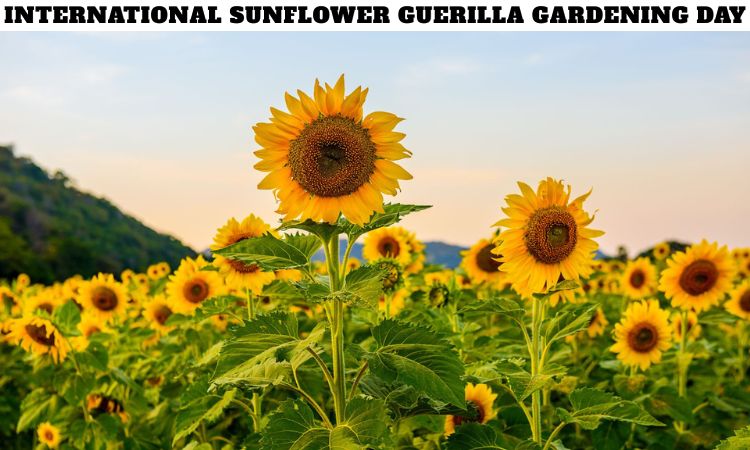
International Sunflower Guerilla Gardening Day, celebrated every year on May 1, is a bold and inspiring global movement that transforms neglected urban spaces into vibrant landscapes through the planting of sunflowers. On this unique day, communities, environmental activists, gardeners, and ordinary citizens unite to reclaim abandoned lots, roadside patches, empty sidewalks, and forgotten public spaces by sowing sunflower seeds. Through this act, we not only beautify dull environments but also promote biodiversity, sustainability, and community spirit.
This day symbolizes far more than gardening. It represents peaceful activism, ecological responsibility, and creative civic engagement. By planting sunflowers—bright, resilient, and highly visible—we make a statement about reclaiming our environment and encouraging greener cities.
How Did International Sunflower Guerilla Gardening Day Begin?
The roots of guerilla gardening trace back to the 1970s when activists began planting in neglected urban spaces without formal permission. Their mission was simple: convert wasted land into thriving green zones. Over time, this movement evolved globally, inspiring eco-conscious individuals to use gardening as a form of environmental protest.
International Sunflower Guerilla Gardening Day was established as a dedicated celebration of this concept, focusing specifically on sunflowers because of their striking appearance, ecological value, and symbolic connection to hope, positivity, and resilience. The sunflower’s ability to thrive in poor soil conditions made it an ideal choice for urban interventions.
May 1 was chosen because it aligns with spring in many parts of the world, offering optimal planting conditions and symbolizing renewal.
Why Are Sunflowers the Symbol of Guerilla Gardening?
Sunflowers hold exceptional significance for guerilla gardeners due to their practical and symbolic qualities:
- Easy to grow in challenging environments
- Highly visible, drawing public attention
- Attract pollinators like bees and butterflies
- Improve soil health through phytoremediation
- Represent positivity, peace, and environmental activism
Their towering stems and bright yellow blooms can transform even the bleakest urban corner into a symbol of hope. Sunflowers also encourage community interaction, as their cheerful presence often sparks curiosity and conversation.
How Does Guerilla Gardening Benefit Urban Communities?
The impact of sunflower guerilla gardening extends beyond aesthetics. When we plant sunflowers in neglected spaces, we create meaningful environmental and social change.
Environmental Benefits
- Supports bees, butterflies, and local ecosystems
- Reduces urban heat through added greenery
- Enhances air quality
- Improves soil structure
- Encourages biodiversity
Social Benefits
- Builds neighborhood pride
- Inspires civic engagement
- Raises awareness about sustainability
- Encourages outdoor activity
- Strengthens community bonds
Psychological Benefits
Green spaces have been shown to reduce stress, improve mood, and foster mental well-being. Bright sunflowers particularly contribute to emotional positivity.
How Can We Participate in International Sunflower Guerilla Gardening Day?
Participating is simple, accessible, and impactful. We can join the movement by following a few strategic steps:
1. Identify Neglected Spaces
Look for barren roadside strips, abandoned lots, or unused public patches that could benefit from greenery.
2. Choose Suitable Sunflower Seeds
Select hardy, fast-growing sunflower varieties suited to local climate conditions.
3. Prepare Seed Bombs
Seed bombs are small balls of clay, compost, and seeds that can be tossed into hard-to-reach places.
4. Plant Responsibly
Focus on public or neglected areas without disrupting protected ecosystems or private property.
5. Share the Movement
Use social media, local groups, or community events to inspire others.
What Are Seed Bombs and Why Are They Popular?
Seed bombs have become a signature tool of guerilla gardening. They are compact mixtures of soil, clay, and seeds that protect seeds until rainfall helps them germinate.
Advantages of Seed Bombs
- Easy to distribute
- Low cost
- Effective in inaccessible areas
- Eco-friendly
- Great for large-scale community action
Seed bombs make gardening activism creative, efficient, and engaging for all age groups.
What Challenges Do Guerilla Gardeners Face?
While the movement is positive, guerilla gardeners may encounter certain obstacles:
- Legal restrictions in some urban areas
- Soil contamination
- Lack of water access
- Public misunderstanding
- Maintenance issues
To overcome these, many communities collaborate with local councils or organize volunteer maintenance teams.
How Does International Sunflower Guerilla Gardening Day Promote Sustainability?
This celebration supports long-term ecological awareness by encouraging sustainable urban transformation. It promotes:
- Native pollinator support
- Reduced carbon footprint
- Organic gardening practices
- Community-led environmentalism
- Public awareness of neglected spaces
By planting sunflowers, we demonstrate that environmental action does not always require massive resources—small acts can create visible, lasting change.
Can Schools and Families Join This Movement?
Absolutely. International Sunflower Guerilla Gardening Day is ideal for educational and family participation. Children learn about ecology, responsibility, and activism through hands-on experience.
Activities for Schools
- Seed bomb workshops
- Community garden projects
- Pollinator education
- Sustainability lessons
Family Ideas
- Neighborhood planting walks
- Balcony sunflower projects
- Community clean-up events
These activities create intergenerational awareness and foster environmental stewardship.
What Are the Best Sunflower Varieties for Guerilla Gardening?
Several sunflower varieties are especially effective:
- Mammoth Sunflower – Tall and highly visible
- Dwarf Sunspot – Great for smaller spaces
- Autumn Beauty – Multi-colored blooms
- Russian Giant – Hardy and dramatic
- Lemon Queen – Excellent for pollinators
Choosing the right variety depends on location, climate, and visual goals.
How Can Communities Make a Bigger Impact on May 1?
For broader influence, communities can organize:
- Public planting campaigns
- Urban beautification drives
- Environmental workshops
- Seed-sharing stations
- Social media awareness challenges
When neighborhoods act collectively, they can dramatically reshape local landscapes and inspire municipal support.
Why Does This Day Matter in Modern Cities?
As cities continue expanding, green spaces often diminish. International Sunflower Guerilla Gardening Day serves as a reminder that urban residents can actively reshape their surroundings. It demonstrates that environmental action is not limited to governments or organizations—individuals can drive visible change.
Sunflowers, with their brightness and resilience, become living symbols of hope in concrete environments. Through each planted seed, we contribute to a greener, healthier, and more connected world.
What Lasting Legacy Can Sunflower Guerilla Gardening Create?
The long-term impact includes:
- Beautified neighborhoods
- Increased ecological literacy
- More pollinator-friendly habitats
- Community resilience
- Inspiration for future urban greening projects
This movement proves that one seed can spark transformation, and one day can inspire year-round action.
Frequently Asked Questions (FAQs)
1. When is International Sunflower Guerilla Gardening Day celebrated?
It is celebrated annually on May 1.
2. What is guerilla gardening?
Guerilla gardening is the act of planting in neglected or unused spaces to improve the environment.
3. Why are sunflowers used?
Sunflowers are resilient, attractive, pollinator-friendly, and symbolize positivity.
4. Is guerilla gardening legal?
Legality varies by location, so it is best to act responsibly and consider local guidelines.
5. What are seed bombs?
Seed bombs are small balls of seeds, compost, and clay used for easy planting.
6. Can children participate?
Yes, it is a family-friendly environmental activity.
7. Do sunflowers help pollinators?
Yes, they attract bees, butterflies, and birds.
8. Can this movement improve cities?
Yes, it enhances biodiversity, beauty, and community engagement.
9. What tools are needed?
Seeds, soil, compost, clay, water, and basic gardening supplies.
10. How can we spread awareness?
Through social media, local events, schools, and community gardening projects.