

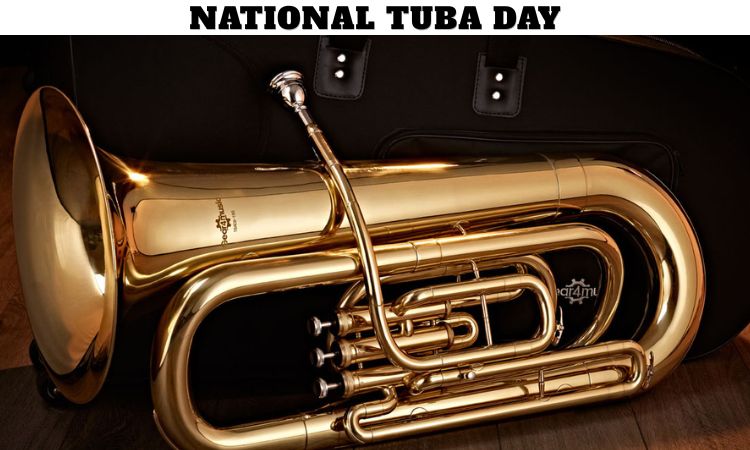
Every year on May 1, musicians, educators, marching bands, orchestras, and music enthusiasts celebrate National Tuba Day, a spirited tribute to one of the largest and most sonorous instruments in the brass family. Often underestimated because of its size or supporting role, the tuba is an essential musical force that provides harmony, rhythm, and foundational depth across countless genres.
National Tuba Day honors the instrument’s remarkable versatility, rich history, and critical role in shaping ensembles ranging from concert bands and orchestras to jazz groups and marching bands. More than a novelty due to its impressive size, the tuba is a symbol of musical power, precision, and artistic expression.
What Is National Tuba Day, and Why Is It Celebrated on May 1?
National Tuba Day is observed annually on May 1 to recognize the tuba’s importance in music education, performance, and culture. The day was created to celebrate tubists and encourage greater appreciation for an instrument that often serves as the backbone of brass and wind ensembles.
Though the tuba may not always command melodic spotlight, its role is indispensable. By delivering low-frequency support and rhythmic grounding, it shapes the sound of entire musical groups.
May 1 gives musicians and audiences a chance to spotlight the artistry behind this extraordinary instrument.
What Is a Tuba and Why Is It So Important in Music?
The tuba is the largest and lowest-pitched standard brass instrument. Known for its deep, resonant sound, it typically serves as the bass voice in brass sections.
Its primary functions include:
- Providing a harmonic foundation
- Supporting rhythm
- Reinforcing bass lines
- Adding fullness to ensemble sound
- Enhancing orchestral balance
Without the tuba, many ensembles would lose crucial depth and sonic stability.
Its commanding tone can be gentle and lyrical or bold and thunderous, making it far more versatile than many realize.
How Did the Tuba Originate?
The modern tuba was developed in the early 19th century, with its invention commonly credited to Wilhelm Friedrich Wieprecht and Johann Gottfried Moritz in Germany around 1835.
Designed to improve upon earlier bass brass instruments, the tuba offered:
- Greater tonal consistency
- Improved valve technology
- Enhanced range
- Better intonation
Its invention revolutionized brass music by creating a reliable low brass voice.
Since then, the tuba has evolved into multiple forms used in orchestral, military, jazz, and educational settings.
What Are the Different Types of Tubas?
Tubas come in several variations, each suited to specific musical contexts:
- BB-flat tuba
- CC tuba
- E-flat tuba
- F tuba
- Sousaphone
- Euphonium-related low brass relatives
The sousaphone, often seen in marching bands, is particularly iconic because it wraps around the player’s body for mobility.
Each type offers unique tonal and practical advantages depending on genre and performance environment.
Why Is the Tuba Essential in Marching Bands and Orchestras?
In marching bands, the tuba or sousaphone delivers rhythmic pulse and bass projection across large outdoor spaces. It helps maintain tempo while reinforcing musical energy.
In orchestras, the tuba contributes grandeur, emotional intensity, and dramatic weight. Composers often use it to evoke:
- Heroism
- Power
- Darkness
- Humor
- Majesty
From symphonies to halftime shows, the tuba provides the sonic anchor that supports every layer above it.
How Does National Tuba Day Support Music Education?
National Tuba Day plays an important role in encouraging music students to appreciate low brass instruments. Because students may gravitate toward more visibly prominent instruments, the tuba can sometimes be overlooked.
This observance helps educators highlight:
- Ensemble importance
- Teamwork in music
- Brass technique
- Diverse career paths
- Instrumental variety
By celebrating tubists, schools can inspire new generations to embrace this vital musical role.
Can the Tuba Be a Solo Instrument?
Absolutely. While often associated with accompaniment, the tuba can also be a compelling solo instrument.
Modern composers and performers have expanded tuba repertoire to include:
- Concertos
- Jazz solos
- Chamber music
- Contemporary works
- Experimental genres
Skilled tubists demonstrate agility, lyricism, and emotional range that challenge stereotypes about the instrument.
National Tuba Day helps showcase this artistic potential.
What Are Some Famous Uses of the Tuba in Music?
The tuba appears in a wide variety of genres:
- Classical symphonies
- Military bands
- Jazz ensembles
- Brass quintets
- Film scores
- New Orleans brass bands
Its distinctive voice can add humor, suspense, grandeur, or warmth depending on context.
Composers from Richard Wagner to John Williams have used low brass powerfully, reinforcing the tuba’s cultural importance.
How Can People Celebrate National Tuba Day?
National Tuba Day can be celebrated through:
- Attending band performances
- Listening to brass music
- Supporting school music programs
- Learning about tuba history
- Watching solo performances
- Sharing appreciation for tubists
Music educators often use the day to spotlight student musicians and host performances or workshops.
Why Is the Tuba Often Underrated?
Because it usually provides background support rather than a leading melody, the tuba can be overlooked by casual listeners. Yet this supporting role is precisely what makes it indispensable.
Much like a building’s foundation, the tuba creates stability, balance, and strength.
National Tuba Day helps shift perception by recognizing that musical excellence often depends on those who hold everything together.
What Does National Tuba Day Teach Us About Music and Teamwork?
National Tuba Day is ultimately about appreciation—not only for an instrument, but for the broader lesson that every role matters.
The tuba reminds us that power can be subtle, support can be transformative, and foundational contributions deserve recognition.
On May 1, we celebrate the instrument that gives music its grounding force, honoring the players whose breath, skill, and rhythm create the sonic bedrock of ensembles worldwide.
The tuba is more than brass—it is the heartbeat beneath the harmony.
Frequently Asked Questions (FAQs)
1. When is National Tuba Day celebrated?
National Tuba Day is celebrated every year on May 1.
2. What is the purpose of National Tuba Day?
It honors the tuba and its importance in music.
3. Who invented the modern tuba?
Wilhelm Friedrich Wieprecht and Johann Gottfried Moritz are credited with its development.
4. Is the tuba the largest brass instrument?
Yes, it is generally the largest standard brass instrument.
5. What is a sousaphone?
A sousaphone is a marching version of the tuba designed for mobility.
6. Can the tuba play solo music?
Yes, the tuba has solo repertoire across multiple genres.
7. What role does the tuba play in bands?
It provides bass, rhythm, and harmonic support.
8. Is the tuba used in jazz?
Yes, especially in brass bands and traditional jazz styles.
9. Why is the tuba important in orchestras?
It adds depth, power, and low-end resonance.
10. How can people celebrate National Tuba Day?
By enjoying performances, supporting music education, and appreciating tubists.