

What Is Oak Apple Day and Why Is It Celebrated on May 29?
Oak Apple Day, observed every year on May 29, is a historic English celebration that commemorates the restoration of the monarchy in England in 1660 and honors King Charles II. The observance marks the return of the king to the throne after years of political conflict and republican rule during the English Civil War period.
The day is closely associated with the story of King Charles II hiding inside an oak tree after the Battle of Worcester in 1651 to escape capture by parliamentary forces. According to historical accounts, the oak tree helped protect him while he avoided enemy soldiers before eventually fleeing to safety.
Oak Apple Day became an important annual celebration in England for many years. People traditionally wore oak leaves or oak apples as symbols of loyalty to the monarchy and remembrance of the king’s escape and restoration.
Although it is no longer an official public holiday, Oak Apple Day continues to be remembered through local traditions, historical reenactments, church ceremonies, and cultural events in some parts of England.
Who Was King Charles II and Why Is He Connected to Oak Apple Day?
King Charles II was the monarch restored to the English throne in 1660 after the collapse of the Commonwealth government that followed the English Civil War. He was the son of King Charles I, whose execution in 1649 led to a period of republican government under Oliver Cromwell.
After years in exile, Charles II returned to England and became king during what became known as the Restoration period. His return marked the reestablishment of the monarchy and significant political and cultural changes in England.
Charles II is closely connected to Oak Apple Day because of the famous story involving the oak tree that helped him escape after the Battle of Worcester. This dramatic event became a symbol of survival, loyalty, and royal restoration.
The observance honors both the king’s return to power and the historical importance of the monarchy within British history.
What Is an Oak Apple?
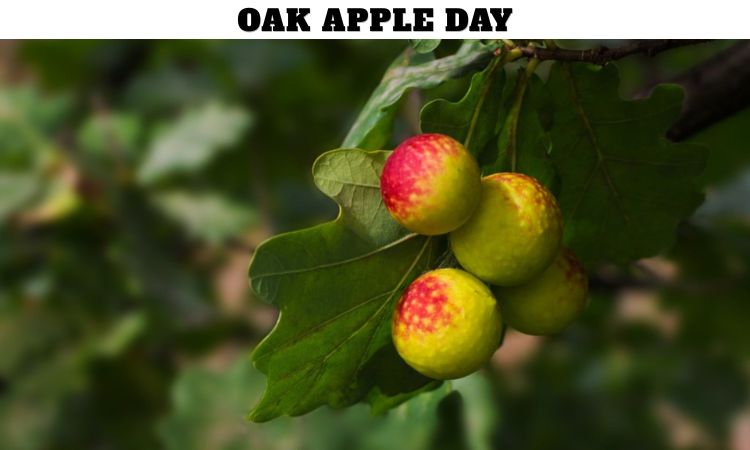
An oak apple is a round growth or gall that forms on oak trees due to the activity of certain tiny wasps. These insects lay eggs in oak tree tissue, causing the tree to develop a protective spherical growth around the larvae.
Oak apples are usually brown or green and resemble small apples, which explains their name. Although they are not actual fruits, they became symbolic during Oak Apple Day celebrations because of their connection to oak trees and the story of Charles II.
People traditionally wore oak apples, oak leaves, or sprigs of oak branches on May 29 as symbols of loyalty and remembrance. In some communities, individuals who failed to wear oak decorations were playfully teased or criticized during celebrations.
The oak tree itself became a powerful symbol of strength, endurance, and protection in British culture because of its role in the king’s escape story.
How Did the English Civil War Influence Oak Apple Day?
The English Civil War played a major role in the creation of Oak Apple Day. The conflict occurred during the 17th century between supporters of King Charles I and parliamentary forces led by Oliver Cromwell.
After years of war and political instability, King Charles I was executed, and England became a republic known as the Commonwealth. The monarchy was abolished temporarily, and Cromwell ruled as Lord Protector.
Following Cromwell’s death and continued political unrest, support for restoring the monarchy grew stronger. Charles II was invited back to England in 1660, officially restoring the monarchy and ending the republican period.
Oak Apple Day was established to celebrate this restoration and symbolize national unity after years of division and conflict. The observance became an annual reminder of political change and historical continuity within England.
Why Did Oak Trees Become Symbolic in British History?
Oak trees have long symbolized strength, endurance, protection, and resilience in British culture and history. The story of Charles II hiding in an oak tree strengthened this symbolism and connected oak trees with loyalty to the monarchy.
The Royal Oak, as the famous tree became known, entered British folklore and national identity. Images of oak trees appeared in artwork, literature, architecture, and royal symbols following the Restoration.
Many pubs, inns, and public buildings across Britain were named “The Royal Oak” in honor of the king’s escape story. Oak branches and leaves became widely recognized as patriotic symbols during Restoration celebrations.
The oak tree’s historical importance continued influencing British traditions long after Oak Apple Day stopped being an official holiday.
How Was Oak Apple Day Traditionally Celebrated?
Oak Apple Day was once celebrated with public festivities, parades, church services, bell ringing, bonfires, and community gatherings throughout England. People decorated buildings, streets, and homes with oak branches and leaves to honor the monarchy.
Wearing oak leaves or oak apples became one of the most recognizable customs associated with the day. In some towns, individuals who forgot to wear oak decorations were jokingly punished through playful teasing or minor pranks.
Churches often held special services to commemorate the Restoration and pray for the monarchy. Public celebrations sometimes included music, dancing, feasts, and local ceremonies.
Military units and civic organizations also participated in formal observances. The celebrations reflected both political loyalty and public enthusiasm during the Restoration era.
Although modern celebrations are more limited, some communities continue preserving these historical customs.
Why Is Oak Apple Day Historically Important?
Oak Apple Day is historically important because it commemorates a major turning point in British political history. The restoration of the monarchy ended years of civil conflict and republican government, shaping the future of England’s political system.
The observance also reflects how public holidays and traditions were used to reinforce political unity and national identity. Oak Apple Day became a symbol of loyalty to the crown and remembrance of historical events.
The celebration highlights the importance of storytelling and symbolism in history. The image of the king hiding in an oak tree became one of the most memorable stories of the Restoration period.
Historians continue studying Oak Apple Day because it offers insight into 17th-century politics, royal symbolism, and the relationship between monarchy and public culture.
How Is Oak Apple Day Remembered Today?
Although Oak Apple Day is no longer widely celebrated across the United Kingdom, some towns and historical societies continue observing the tradition through local events and ceremonies.
Communities with strong historical connections to the Restoration may organize reenactments, parades, educational programs, and church services. Historical sites associated with Charles II and the Royal Oak story often attract visitors interested in British history.
Museums and cultural organizations may also use the day to educate people about the English Civil War, the Restoration, and traditional customs associated with Oak Apple Day.
In some areas, oak leaves are still worn symbolically as part of local traditions. The observance remains an interesting example of how historical events continue influencing cultural identity and collective memory.
What Lessons Can Be Learned From Oak Apple Day?
Oak Apple Day teaches important lessons about resilience, political change, national unity, and historical memory. The story of Charles II surviving during a dangerous period of conflict reflects themes of endurance and perseverance.
The observance also highlights how societies use symbols, traditions, and public celebrations to preserve history and strengthen cultural identity. The oak tree became more than a natural object; it became a national symbol connected with survival and restoration.
Oak Apple Day encourages interest in history and reminds people that political events can shape traditions and cultural customs for generations. It also demonstrates the role of storytelling in preserving historical events within public memory.
The day continues inspiring appreciation for heritage, history, and the lasting impact of cultural traditions.
Why Does Oak Apple Day Continue to Fascinate Historians and Culture Enthusiasts?
Oak Apple Day continues fascinating historians because it combines politics, folklore, monarchy, symbolism, and public celebration in a unique historical tradition. The observance reflects how historical events become woven into cultural practices and national identity.
The dramatic story of Charles II escaping capture and hiding in an oak tree remains one of the most memorable episodes in British royal history. Historians and cultural enthusiasts study the observance to better understand Restoration England and the political climate of the 17th century.
The tradition also demonstrates how local customs and public holidays can evolve over time while preserving connections to historical events. Even though Oak Apple Day is no longer a national holiday, its legacy survives through historical education and cultural remembrance.
Oak Apple Day remains an important reminder of England’s complex political history and the enduring power of symbols and traditions.
Frequently Asked Question (FAQs)
1. When is Oak Apple Day celebrated?
Oak Apple Day is celebrated every year on May 29.
2. What does Oak Apple Day commemorate?
The day commemorates the restoration of King Charles II to the English throne in 1660.
3. Why is the oak tree important in Oak Apple Day?
The oak tree symbolizes the tree where Charles II reportedly hid after the Battle of Worcester.
4. What is an oak apple?
An oak apple is a round gall that forms on oak trees due to insect activity.
5. Who was King Charles II?
Charles II was the king restored to the English throne after the Commonwealth period.
6. How was Oak Apple Day traditionally celebrated?
People wore oak leaves, attended church services, held parades, and organized public festivities.
7. Is Oak Apple Day still an official holiday?
No, it is no longer an official public holiday in the United Kingdom.
8. What historical event led to Oak Apple Day?
The observance originated after the restoration of the monarchy following the English Civil War and Commonwealth period.
9. Why are oak trees symbolic in British culture?
Oak trees symbolize strength, protection, resilience, and loyalty in British history.
10. How is Oak Apple Day remembered today?
Some communities remember the day through local ceremonies, reenactments, and historical education programs.