

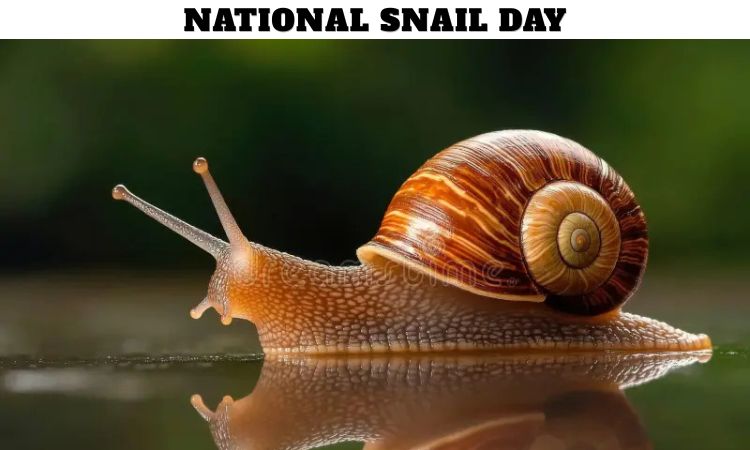
What Is National Snail Day and Why Is It Celebrated on May 29?
National Snail Day, celebrated every year on May 29, is a fun and educational observance dedicated to appreciating snails and raising awareness about their role in nature and ecosystems. Although often overlooked because of their slow movement and small size, snails are fascinating creatures that contribute significantly to environmental balance and biodiversity.
The day encourages people to learn more about snails, their habitats, their biological characteristics, and their importance in the natural world. Nature enthusiasts, educators, gardeners, and wildlife organizations use the occasion to promote curiosity and appreciation for these unique mollusks.
National Snail Day also highlights the importance of protecting natural habitats where snails thrive. Environmental awareness and biodiversity conservation are important themes connected to the observance.
From their spiral shells to their slow and steady movement, snails have inspired scientific research, cultural symbolism, and public fascination for centuries. National Snail Day reminds people that even the smallest creatures play valuable roles in maintaining healthy ecosystems.
What Makes Snails Unique Among Animals?
Snails are unique because of their spiral shells, slow movement, and specialized anatomy. They belong to a group of animals known as mollusks, which also includes slugs, clams, and octopuses.
One of the most recognizable features of a snail is its shell, which serves as protection from predators and harsh environmental conditions. Most snails can retract their soft bodies inside the shell when threatened.
Snails move using a muscular foot that produces mucus, helping them glide across surfaces smoothly. Although they are known for moving slowly, this method allows them to travel across rough terrain while reducing friction and injury.
Another fascinating characteristic is their sensory tentacles. Snails use these tentacles to detect light, smell, and environmental changes. Their simple yet effective adaptations have helped them survive in various environments for millions of years.
National Snail Day celebrates the remarkable biology and survival strategies of these small but important creatures.
Where Do Snails Live?
Snails can be found in many habitats around the world, including forests, gardens, wetlands, deserts, freshwater environments, and oceans. Different species of snails are adapted to different climates and ecosystems.
Land snails prefer moist environments because they need humidity to survive and prevent dehydration. They are commonly found in gardens, leaf litter, and wooded areas where they can find food and shelter.
Freshwater snails live in ponds, lakes, rivers, and streams, while marine snails inhabit oceans and coastal ecosystems. Some species thrive in tropical regions, while others are adapted to colder climates.
The wide distribution of snails demonstrates their ability to adapt to different environmental conditions. National Snail Day encourages appreciation for the diversity of snail species found across the globe.
Why Are Snails Important to Ecosystems?
Snails play an important role in maintaining ecological balance. Many snail species help decompose organic matter by feeding on dead plants, fungi, algae, and decaying material. This process contributes to nutrient recycling and soil health.
Snails also serve as a food source for birds, reptiles, amphibians, mammals, fish, and insects. Their presence supports food chains and biodiversity within ecosystems.
Some freshwater snails help control algae growth and improve water quality by feeding on organic material in aquatic environments. In gardens and forests, snails contribute to natural decomposition processes that enrich soil fertility.
Scientists also study snails to better understand environmental health because some species are sensitive to pollution and habitat changes. National Snail Day highlights the ecological importance of even the smallest animals in nature.
How Have Snails Appeared in Culture and History?
Snails have appeared in mythology, art, literature, and cultural symbolism throughout history. In many cultures, snails symbolize patience, persistence, calmness, and steady progress because of their slow movement.
Ancient civilizations often associated spiral snail shells with growth, continuity, and natural cycles. The spiral shape has inspired artistic and architectural designs across different societies.
Snails also appear in children’s stories, educational materials, and folklore. Their unusual appearance and slow pace have made them memorable creatures in storytelling and visual art.
In some countries, certain snail species are considered culinary delicacies and are used in traditional dishes. Snails have also contributed to scientific discoveries in biology and medicine.
National Snail Day celebrates the cultural, scientific, and historical significance of these fascinating creatures.
What Do Snails Eat?
Snails have varied diets depending on their species and habitat. Many land snails feed on leaves, fruits, vegetables, fungi, and decaying plant material. Some species consume algae and microscopic organisms.
Freshwater and marine snails often eat algae, aquatic plants, and organic debris found in water environments. Certain snail species are herbivores, while others may consume small insects or animal matter.
Snails use a specialized tongue-like structure called a radula to scrape and consume food. This unique feeding mechanism allows them to process different types of organic material efficiently.
Because some snails feed on garden plants, gardeners may sometimes view them as pests. However, many snail species provide ecological benefits through decomposition and nutrient recycling.
National Snail Day encourages balanced understanding of snails and their role within ecosystems.
How Do Snails Protect Themselves?
Snails have several natural defense mechanisms that help them survive in the wild. Their shells provide physical protection from predators, harsh weather, and environmental threats.
When threatened, many snails retreat completely inside their shells and seal the opening with mucus or a protective structure called an operculum. This helps reduce water loss and prevents predators from easily reaching them.
Their mucus also serves important protective functions by helping movement and reducing friction. In some species, mucus may contain chemicals that discourage predators.
Camouflage is another survival strategy. Many snails blend into leaves, rocks, or soil to avoid detection by predators such as birds and reptiles.
National Snail Day highlights the remarkable adaptations that allow these small animals to survive in diverse environments.
Why Are Snails Important for Scientific Research?
Snails have contributed significantly to scientific research in biology, ecology, and medicine. Scientists study snails to understand nervous systems, environmental changes, and evolutionary adaptation.
Some snail species are used in environmental monitoring because they are sensitive to pollution and habitat disturbances. Changes in snail populations can help scientists assess ecosystem health.
Research involving snail mucus has also attracted interest in skincare and medical applications due to its moisturizing and regenerative properties.
Marine snails have contributed to studies involving toxins and neurological science. Their simple nervous systems provide valuable insights into how nerve cells function.
National Snail Day recognizes the scientific importance of snails and their contributions to environmental and medical research.
How Is National Snail Day Celebrated?
National Snail Day is celebrated through educational activities, nature exploration, wildlife observation, and environmental awareness programs. Schools, nature centers, and wildlife organizations often use the day to teach people about snail biology and ecosystems.
Gardening groups may discuss environmentally friendly ways to manage snails while protecting biodiversity. Nature enthusiasts often spend time observing snails in gardens, forests, or wetlands and photographing different species.
Children’s educational activities such as snail crafts, science projects, and storytelling sessions are also popular during the observance. Social media users share interesting snail facts and wildlife photography to spread awareness about these unique creatures.
Some people celebrate the day by learning about local snail species and supporting habitat conservation efforts. National Snail Day encourages curiosity, environmental appreciation, and respect for biodiversity.
Why Does National Snail Day Continue to Matter Today?
National Snail Day remains important because it encourages people to value biodiversity and recognize the importance of small creatures in maintaining ecological balance. Many species around the world face threats from pollution, habitat destruction, climate change, and environmental degradation.
The observance helps promote environmental education and encourages responsible interaction with nature. By learning about snails, people gain greater understanding of ecosystems and the interconnectedness of living organisms.
National Snail Day also reminds people that every species, regardless of size or popularity, contributes to the health and stability of natural environments. Appreciating wildlife diversity can inspire stronger support for conservation and environmental protection.
The day continues to inspire curiosity, scientific interest, and respect for the natural world while celebrating one of nature’s most distinctive and fascinating animals.
Frequently Asked Question (FAQs)
1. When is National Snail Day celebrated?
National Snail Day is celebrated every year on May 29.
2. What is the purpose of National Snail Day?
The day promotes awareness about snails, biodiversity, and environmental conservation.
3. What type of animal is a snail?
A snail is a mollusk, which is a group of soft-bodied animals.
4. Why do snails have shells?
Shells protect snails from predators, harsh weather, and dehydration.
5. Where do snails live?
Snails live in forests, gardens, wetlands, freshwater environments, and oceans.
6. What do snails eat?
Snails eat plants, algae, fungi, decaying organic matter, and sometimes small organisms.
7. Why are snails important to ecosystems?
They help decompose organic material and serve as food for many animals.
8. How do snails move?
Snails move using a muscular foot and mucus that helps them glide across surfaces.
9. Are snails useful for scientific research?
Yes, scientists study snails for environmental monitoring, biology, and medical research.
10. How can people celebrate National Snail Day?
People can observe snails in nature, learn about biodiversity, support conservation, and participate in educational activities.