

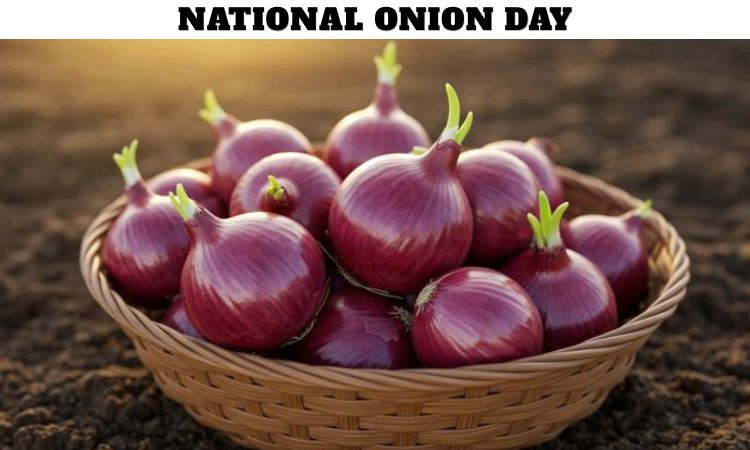
What Is National Onion Day and Why Is It Celebrated on June 27?
National Onion Day is celebrated annually on June 27 to honor one of the most widely used and versatile vegetables in the world—the onion. This special food holiday recognizes the importance of onions in global cuisine, agriculture, and everyday cooking. From soups and salads to curries, stews, and stir-fries, onions form the foundation of countless dishes across cultures.
Although onions may bring tears to the eyes, they also add flavor, aroma, texture, and nutritional value to meals. National Onion Day provides an opportunity for home cooks, professional chefs, farmers, and food enthusiasts to appreciate the many contributions onions make to kitchens worldwide.
The observance encourages people to explore different onion varieties, experiment with new recipes, and learn more about the history and benefits of this humble yet essential vegetable. Whether consumed raw, caramelized, grilled, roasted, or fried, onions continue to be an indispensable ingredient in culinary traditions around the globe.
National Onion Day serves as a reminder that even the simplest ingredients can have an extraordinary impact on food culture and daily life.
How Did Onions Become Such an Important Food?
Onions have been cultivated and consumed for thousands of years, making them one of the oldest known vegetables in human history. Archaeological evidence suggests that onions were grown as early as 5000 years ago, and possibly even earlier.
Ancient civilizations highly valued onions because they were easy to cultivate, transport, and store. Their long shelf life made them particularly useful in times when refrigeration did not exist.
The ancient Egyptians regarded onions as symbols of eternity due to their circular shape and concentric layers. Onions were often included in religious ceremonies and even placed in tombs alongside mummies.
The Greeks and Romans also incorporated onions into their diets. Athletes in ancient Greece reportedly consumed onions to enhance physical performance, while Roman soldiers relied on them as part of their daily meals.
As trade expanded across continents, onions spread to various regions and became integrated into numerous culinary traditions. Today, onions are cultivated worldwide and remain among the most commonly used vegetables in global cuisine.
Why Are Onions Considered Essential in Cooking?
Onions are often regarded as the cornerstone of cooking because they provide depth, flavor, and aroma to countless recipes. Many cuisines begin with sautéing onions as the first step in meal preparation.
When cooked, onions release natural sugars that create a rich and savory taste. Their flavor changes depending on preparation methods. Raw onions tend to have a sharp and pungent taste, while cooked onions become sweeter and milder.
Onions complement a wide variety of ingredients, including meats, vegetables, grains, legumes, and spices. Their versatility allows them to be used in appetizers, main courses, side dishes, sauces, and condiments.
Many culinary traditions rely heavily on onions. French cuisine features onion soup and mirepoix, Indian cuisine uses onions as the base for curries, and Mexican dishes often include onions in salsas and fillings.
Without onions, many classic recipes would lose their distinctive flavor profiles. National Onion Day celebrates this remarkable ability to transform simple ingredients into delicious meals.
What Are the Different Types of Onions?
Numerous onion varieties are cultivated around the world, each possessing unique characteristics and culinary applications.
Yellow onions are among the most commonly used varieties. They have a balanced flavor that becomes sweet when cooked, making them suitable for soups, stews, and sautéed dishes.
White onions offer a sharper and more pungent taste. They are frequently used in Mexican cuisine, fresh salsas, and salads.
Red onions are known for their vibrant color and mild flavor. They are often consumed raw in salads, sandwiches, and pickled preparations.
Sweet onions, such as Vidalia and Walla Walla onions, contain higher natural sugar levels and are ideal for caramelizing or eating raw.
Green onions, also known as scallions or spring onions, feature long green stalks and a mild flavor. They are commonly used as garnishes and in stir-fries.
Shallots, although technically distinct from common onions, are closely related and prized for their delicate flavor.
National Onion Day encourages people to explore these varieties and discover new culinary possibilities.
What Nutritional Benefits Do Onions Provide?
Beyond their culinary value, onions offer several important nutritional benefits. They are low in calories while providing essential vitamins, minerals, and beneficial plant compounds.
Onions contain vitamin C, which supports immune function and helps protect cells from oxidative stress. They also provide vitamin B6, folate, and potassium.
One of the most notable components found in onions is quercetin, a naturally occurring antioxidant. Antioxidants help neutralize free radicals and support overall health.
Onions also contain sulfur compounds responsible for their distinctive aroma and flavor. These compounds have been the subject of extensive scientific research regarding their potential health-supporting properties.
Additionally, onions provide dietary fiber, which contributes to digestive health and promotes feelings of fullness.
Although onions should be consumed as part of a balanced diet rather than as a standalone health solution, their nutritional profile makes them a valuable addition to many meals.
National Onion Day highlights not only the flavor of onions but also their contribution to healthy eating patterns.
Why Do Onions Make People Cry?
One of the most fascinating aspects of onions is their ability to trigger tears during preparation. This reaction occurs due to a natural defense mechanism developed by the plant.
When an onion is cut, its cells are damaged, releasing enzymes and sulfur-containing compounds. These substances react to form a volatile gas known as syn-propanethial-S-oxide.
As this gas reaches the eyes, it reacts with moisture to create mild sulfuric compounds. The eyes respond by producing tears to wash away the irritant.
Fortunately, several techniques may help reduce tearing while cutting onions. Chilling onions before slicing can slow chemical reactions, while using a sharp knife minimizes cell damage.
Some people also cut onions under running water or wear protective eyewear to limit exposure to irritating compounds.
Despite the temporary tears, most cooks agree that the flavor onions provide is well worth the inconvenience.
How Are Onions Used in Different Cuisines Around the World?
Onions play a central role in culinary traditions across nearly every continent.
In Indian cuisine, onions often serve as the base for curries, gravies, and masalas. Slowly cooked onions contribute richness and complexity to many dishes.
French cuisine is famous for French onion soup, a comforting dish featuring caramelized onions and melted cheese. Onions are also an essential component of mirepoix, a flavor base consisting of onions, carrots, and celery.
Mexican cuisine frequently incorporates onions into tacos, salsas, fajitas, and guacamole. Both raw and cooked onions are widely used.
Middle Eastern dishes often feature onions in rice preparations, grilled meats, stews, and salads.
Asian cuisines utilize onions in stir-fries, soups, noodle dishes, and sauces. Green onions are particularly popular throughout East Asia.
African and Mediterranean culinary traditions similarly rely on onions as foundational ingredients.
National Onion Day celebrates this remarkable global presence and recognizes onions as a unifying ingredient in diverse food cultures.
How Can People Celebrate National Onion Day?
There are many enjoyable ways to celebrate National Onion Day.
One popular option is preparing favorite dishes that prominently feature onions. Homemade onion soup, onion rings, caramelized onions, or stuffed onions can make excellent celebratory meals.
Food enthusiasts may choose to experiment with unfamiliar onion varieties or try recipes from different international cuisines.
Visiting local farmers’ markets provides an opportunity to learn about seasonal onion varieties while supporting local agriculture.
Families can celebrate by cooking together and exploring the many culinary uses of onions. Educational activities can help children understand how onions are grown and harvested.
Gardening enthusiasts may consider planting onions in home gardens, as they are relatively easy to cultivate in suitable conditions.
Restaurants and food businesses may also create special onion-themed dishes or promotions in honor of the day.
Regardless of how it is celebrated, National Onion Day encourages appreciation for this versatile and valuable vegetable.
What Role Do Onion Farmers Play in Agriculture?
Onion farmers play an essential role in global food production. Their efforts ensure a steady supply of one of the world’s most widely consumed vegetables.
Growing onions requires careful planning, soil preparation, irrigation management, and pest control. Farmers must monitor weather conditions and determine optimal harvest times to maximize quality and yield.
Many regions specialize in onion production due to favorable climates and growing conditions. Large-scale commercial farms supply domestic and international markets, while smaller farms often provide fresh produce to local communities.
The onion industry contributes significantly to agricultural economies through employment, trade, and food processing activities.
Farmers also adapt to changing environmental conditions by adopting sustainable practices, improving water efficiency, and utilizing innovative technologies.
National Onion Day recognizes the dedication and expertise of growers whose hard work makes onions readily available year-round.
Why Does National Onion Day Continue to Matter?
National Onion Day continues to matter because it celebrates an ingredient that has shaped culinary traditions, supported agriculture, and nourished populations for thousands of years.
Despite the emergence of countless modern food trends, onions remain indispensable in kitchens worldwide. Their versatility, affordability, flavor, and nutritional value ensure their ongoing relevance.
The observance also encourages greater appreciation for agriculture and the individuals who cultivate essential food crops. Understanding where food comes from can strengthen connections between consumers and producers.
Food holidays like National Onion Day remind people to celebrate everyday ingredients that are often taken for granted. By recognizing the importance of onions, the holiday highlights the profound impact that simple foods can have on culture, nutrition, and community.
Ultimately, National Onion Day honors a remarkable vegetable that continues to enrich meals and bring flavor to tables around the world every single day.
Frequently Asked Questions (FAQs)
1. When is National Onion Day celebrated?
National Onion Day is celebrated annually on June 27.
2. What is National Onion Day?
It is a food holiday dedicated to celebrating onions and their importance in cooking and agriculture.
3. Why are onions important in cooking?
Onions add flavor, aroma, texture, and depth to a wide variety of dishes.
4. What are the main types of onions?
Common varieties include yellow, white, red, sweet, and green onions.
5. Why do onions make people cry?
Cutting onions releases compounds that irritate the eyes, causing tear production.
6. Are onions nutritious?
Yes, onions provide vitamins, minerals, antioxidants, and dietary fiber.
7. Can onions be eaten raw?
Yes, many onion varieties can be enjoyed raw in salads, sandwiches, and salsas.
8. How can I celebrate National Onion Day?
You can cook onion-based dishes, try new recipes, visit farmers’ markets, or plant onions in a garden.
9. Which cuisine uses onions the most?
Onions are widely used in numerous cuisines, including Indian, French, Mexican, Middle Eastern, and Asian cooking.
10. How long have humans cultivated onions?
Onions have been cultivated for at least 5,000 years.