

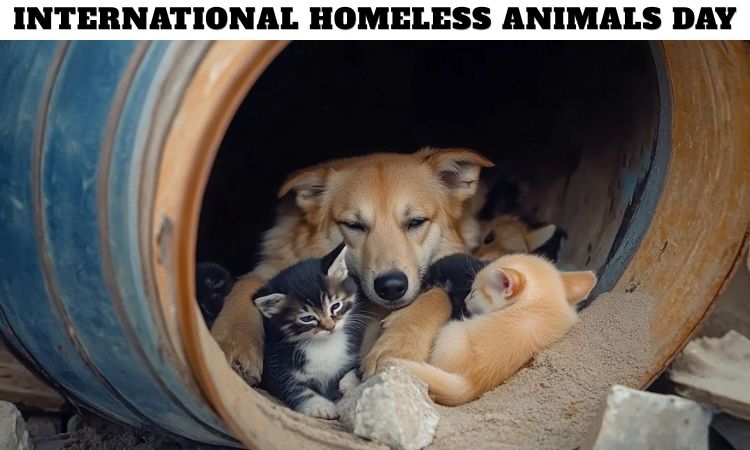
What Is International Homeless Animals Day and Why Is It Observed on August 16?
International Homeless Animals Day is observed every year on August 16 to raise awareness about animals that are abandoned, neglected, lost, or living without permanent homes. The day focuses attention on the millions of dogs, cats, and other companion animals that struggle to survive without reliable food, shelter, veterinary care, or human protection.
Homeless animals often face challenges that people may not notice. They can be exposed to extreme weather, hunger, injuries, disease, traffic accidents, cruelty, and conflicts with other animals. Even animals that once lived in homes can find themselves on the streets after being abandoned or becoming lost.
International Homeless Animals Day encourages people to look beyond the idea of simply finding homes for individual animals. It also promotes responsible pet ownership, adoption, sterilization, identification, rescue, and humane population-control programs.
The day serves as a reminder that preventing animal homelessness is a shared responsibility. Individuals, shelters, rescue organizations, veterinarians, communities, and governments can all contribute to creating safer lives for animals.
How Did International Homeless Animals Day Begin?
International Homeless Animals Day was created to draw global attention to the problem of companion-animal homelessness and uncontrolled animal populations. It has become an opportunity for animal welfare groups and communities to organize activities that encourage adoption and responsible pet care.
The observance is particularly important because animal homelessness is not limited to one country or region. Different communities experience the problem in different ways, but the underlying causes are often similar. Unplanned breeding, abandonment, lack of sterilization, inadequate identification, irresponsible ownership, and insufficient access to veterinary care can all contribute to the growing number of animals without homes.
Over the years, animal welfare groups have used this day to organize adoption events, educational programs, fundraising campaigns, memorial activities, vaccination drives, and sterilization initiatives.
International Homeless Animals Day therefore combines awareness with action. It is not only about recognizing the existence of homeless animals but also about encouraging practical solutions that can reduce suffering.
Why Is Animal Homelessness Such an Important Issue?
Animal homelessness is a serious welfare concern because animals living without stable homes are vulnerable to numerous dangers. A dog or cat living on the street may struggle to find enough food and clean water every day. Injured animals may have no one to take them to a veterinarian, while sick animals can suffer for long periods without treatment.
Weather can also become a major threat. Extreme heat, heavy rain, cold temperatures, and storms can be particularly dangerous for animals without shelter.
Homeless animals may also be involved in road accidents or become victims of intentional cruelty. Puppies and kittens born outdoors can face high mortality because they may not receive adequate nutrition, vaccinations, or medical care.
The problem can also affect communities. Large populations of free-roaming animals may lead to concerns involving traffic safety, sanitation, noise, and disease management. Humane and scientifically informed animal welfare programs can help address these challenges while protecting animals and people.
What Are the Main Causes of Animal Homelessness?
There is no single reason why animals become homeless. Several factors can contribute to the problem.
One of the most common causes is unplanned breeding. When pets are not sterilized, they can produce litters that owners may be unable or unwilling to care for. Those animals can eventually end up abandoned or surrendered to shelters.
Abandonment is another major factor. Some people take responsibility for a pet without fully understanding the time, financial commitment, and care involved. When circumstances change, they may leave the animal behind instead of seeking responsible alternatives.
Lost pets can also become homeless. Without identification such as a collar, tag, or microchip, it may be difficult to reunite an animal with its family.
Other causes include financial hardship, inadequate pet-friendly housing, lack of access to veterinary services, irresponsible breeding, and insufficient public awareness about animal care.
Understanding these causes is important because solving animal homelessness requires prevention as well as rescue.
How Does Adoption Help Homeless Animals?
Adoption gives homeless animals an opportunity to live in a safe and stable environment. Instead of purchasing an animal, people can consider welcoming a rescued dog, cat, or another suitable companion into their family.
Adoption can also reduce pressure on animal shelters and rescue organizations. When an animal moves into a permanent home, shelter space becomes available for another animal that needs assistance.
However, adoption should always be approached as a long-term commitment. A pet requires food, veterinary care, exercise, attention, training, and emotional support. Prospective adopters should consider their lifestyle, living situation, budget, and ability to care for an animal for its entire life.
International Homeless Animals Day is a good opportunity to encourage people to think carefully about adoption rather than treating animals as temporary possessions.
Why Is Spaying and Neutering Important?
Spaying and neutering are important tools for reducing the number of unwanted animals. When fewer animals reproduce without planning, fewer puppies and kittens are born into situations where homes may not be available.
Sterilization can therefore play an important role in long-term animal population management. It can also reduce the number of animals entering shelters or living on the streets.
Responsible pet owners can discuss sterilization with a qualified veterinarian and determine the appropriate option based on the animal’s age, health, breed, and individual circumstances.
Community-based sterilization programs can also help manage free-roaming animal populations humanely. When combined with vaccination, identification, adoption, and public education, these programs can contribute to sustainable animal welfare efforts.
How Can People Help Homeless Animals on August 16?
There are many ways to support homeless animals without adopting one.
People can donate food, blankets, medicines, or financial support to legitimate animal shelters and rescue groups. Volunteering at a shelter can also make a meaningful difference. Animals need cleaning, feeding, exercise, socialization, and attention, and shelters often depend heavily on volunteers.
Another option is fostering. A foster family temporarily cares for an animal until a permanent home is found. Fostering can be especially valuable for young, elderly, injured, or frightened animals that may struggle in a shelter environment.
People can also share adoption information online, help lost animals reunite with their families, or support local sterilization and vaccination programs.
Even small actions can contribute to better outcomes for animals.
How Can Responsible Pet Ownership Prevent Homelessness?
Responsible pet ownership begins before an animal enters a home. People should think carefully about whether they have the time, resources, space, and commitment required to care for a pet.
Pets should receive appropriate food, clean water, veterinary attention, exercise, identification, and companionship. Owners should also take reasonable precautions to prevent animals from becoming lost.
Identification is particularly important. A collar and identification tag can provide immediate information, while permanent identification methods can improve the chances of reunification if a pet becomes lost.
Pet owners should also understand that animals are lifelong responsibilities. Moving, changing jobs, having children, or experiencing financial difficulties can create challenges, but abandonment should never be the first solution. Responsible owners should seek assistance from shelters, rescue organizations, veterinarians, or trusted community resources when problems arise.
What Activities Can Be Organized for International Homeless Animals Day?
Animal welfare organizations and communities can mark August 16 with practical and educational activities.
Adoption drives can help introduce homeless animals to potential families. Donation campaigns can collect food, bedding, toys, and medical supplies for shelters. Educational programs can teach children and adults about animal welfare and responsible ownership.
Communities can also organize vaccination and sterilization initiatives, volunteer days, fundraising events, pet identification campaigns, and social media awareness campaigns.
Schools can participate by teaching students about kindness toward animals and the importance of treating pets responsibly.
The most effective activities are those that create lasting benefits rather than awareness for only one day. A successful August 16 campaign can inspire people to volunteer regularly, adopt responsibly, support shelters, or help prevent unwanted litters throughout the year.
How Can Communities Create a Better Future for Homeless Animals?
Reducing animal homelessness requires long-term cooperation. Shelters alone cannot solve the problem because they often respond to homelessness after it has already occurred.
Communities can focus on prevention through accessible sterilization, vaccination, identification, adoption, education, and responsible ownership programs. Governments and local organizations can work together to develop humane animal-management policies and improve access to veterinary services.
Public education is equally important. People need to understand that abandoning an animal does not solve a problem. It simply transfers the responsibility and often exposes the animal to greater risks.
Communities can also encourage collaboration between shelters, veterinarians, rescue groups, volunteers, and pet owners. When these groups work together, animals have better opportunities to receive care and find permanent homes.
Why Should We Remember International Homeless Animals Day Beyond August 16?
International Homeless Animals Day is observed on August 16, but the issue it represents exists throughout the year. Animals do not stop needing food, shelter, medical treatment, or protection when the awareness day ends.
The greatest value of this observance is its ability to turn awareness into continuing action. Someone might learn about adoption on August 16 and adopt months later. Another person might begin volunteering. A pet owner might decide to have their animal sterilized. Someone else might start identifying their pets properly.
Every responsible decision can help prevent future homelessness.
The day also encourages people to recognize homeless animals as living beings capable of experiencing pain, fear, comfort, affection, and happiness. Providing them with humane treatment is not simply an act of charity; it reflects the kind of community people want to build.
International Homeless Animals Day reminds us that every animal deserves the opportunity to live safely and with dignity. By choosing adoption, supporting rescue organizations, practicing responsible pet ownership, and encouraging humane population-control measures, individuals can help create meaningful change.
Frequently Asked Questions (FAQs)
1. When is International Homeless Animals Day observed?
International Homeless Animals Day is observed annually on August 16. It raises awareness about homeless animals and promotes adoption, responsible pet ownership, sterilization, rescue, and animal welfare.
2. What is the purpose of International Homeless Animals Day?
The purpose is to bring attention to animal homelessness and encourage practical solutions. The day promotes humane treatment, adoption, responsible ownership, and efforts to prevent unwanted animals from ending up on the streets or in shelters.
3. How can I celebrate International Homeless Animals Day?
You can celebrate by adopting or fostering an animal, donating to a shelter, volunteering, supporting sterilization programs, sharing adoption information, or educating others about responsible pet ownership.
4. Can I help homeless animals without adopting one?
Yes. You can donate supplies, volunteer at a shelter, foster animals temporarily, help reunite lost pets with their families, or support legitimate rescue and veterinary organizations.
5. Why is pet sterilization important?
Sterilization helps prevent unplanned litters and can reduce the number of animals that eventually become homeless. It is an important part of responsible pet ownership and humane population management.
6. Is adopting a shelter animal better than buying a pet?
Adoption provides a home to an animal that already needs one and can help reduce shelter overcrowding. However, every prospective pet owner should choose an animal based on their ability to provide lifelong care.
7. What are common causes of animal homelessness?
Common causes include abandonment, unplanned breeding, lost pets, irresponsible ownership, financial difficulties, inadequate identification, and limited access to veterinary or animal-welfare services.
8. How can children participate in International Homeless Animals Day?
Children can learn about responsible pet care, make donations to animal shelters with adult guidance, participate in educational activities, and help spread awareness about treating animals kindly and respectfully.
9. What should I do if I find a homeless or lost animal?
Approach the animal carefully and prioritize safety. If possible, contact a local animal welfare organization or veterinarian. Checking for identification can also help determine whether the animal has an owner.
10. Why is International Homeless Animals Day important?
It highlights the challenges faced by animals without permanent homes and encourages people to take action. Its message goes beyond one day by promoting long-term solutions to animal homelessness.