

Why Is International Asteroid Day Celebrated on June 30?
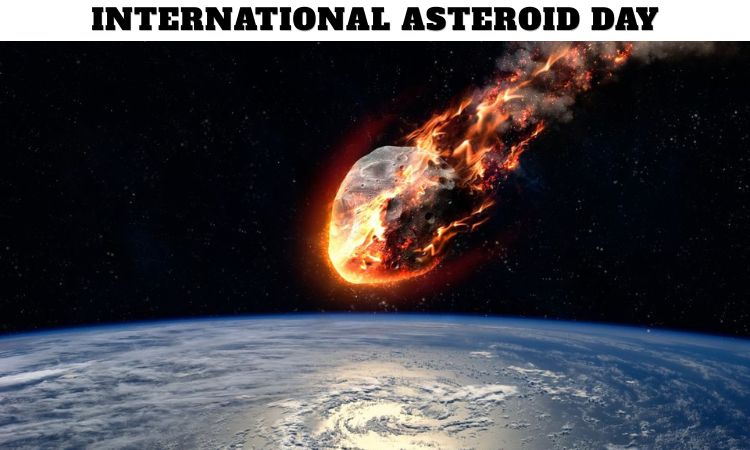
International Asteroid Day is observed annually on June 30 to raise public awareness about asteroids, their impact on Earth, and the importance of planetary defense. The day encourages people around the world to learn more about these fascinating celestial objects and the scientific efforts aimed at detecting and tracking potentially hazardous asteroids.
Asteroids have played a crucial role in shaping the history of our solar system. Scientists believe that studying asteroids can provide valuable insights into the formation of planets and the origins of life on Earth. At the same time, some asteroids pose a potential threat if their trajectories bring them close to Earth.
International Asteroid Day highlights the importance of global cooperation in monitoring near-Earth objects and developing strategies to protect the planet from possible asteroid impacts. Through educational events, scientific discussions, and public outreach programs, the observance aims to inspire curiosity about space while promoting awareness of planetary safety.
The annual event serves as a reminder that understanding the cosmos is essential not only for scientific advancement but also for the long-term protection of humanity.
What Is the History of International Asteroid Day?
International Asteroid Day was established in 2015 by a group of scientists, astronauts, filmmakers, and space enthusiasts who sought to increase public awareness about asteroid impacts and the need for planetary defense.
The initiative was co-founded by notable individuals including Brian May, filmmaker Grig Richters, astronaut Rusty Schweickart, and scientist Danica Remy.
In 2016, the United Nations officially recognized June 30 as International Asteroid Day. The date was chosen to commemorate the anniversary of the 1908 Tunguska event, the largest recorded asteroid impact event in modern history.
The Tunguska event occurred in a remote region of Siberia, where a massive explosion flattened millions of trees across a vast area. Although the impact happened in an unpopulated area, it demonstrated the potentially devastating consequences of asteroid collisions.
Since its establishment, International Asteroid Day has grown into a global educational initiative involving scientists, educational institutions, space agencies, and astronomy enthusiasts worldwide.
What Are Asteroids and Why Are They Important?
Asteroids are rocky objects that orbit the Sun. Most asteroids are found in the asteroid belt located between the orbits of Mars and Jupiter, although many travel throughout different regions of the solar system.
These celestial bodies vary greatly in size. Some are only a few meters across, while others measure hundreds of kilometers in diameter. Unlike planets, asteroids do not possess sufficient mass to become spherical due to their own gravity.
Asteroids are considered remnants from the early formation of the solar system approximately 4.6 billion years ago. Because they have remained relatively unchanged, they provide scientists with valuable information about the materials and conditions that existed during the solar system’s formation.
Studying asteroids can reveal clues about planetary evolution, the origins of water on Earth, and even the building blocks of life. Scientists also explore the possibility of utilizing asteroid resources in future space missions.
In addition to their scientific importance, understanding asteroids is essential because some near-Earth asteroids have orbits that bring them close to our planet.
Why Was June 30 Chosen for International Asteroid Day?
June 30 was selected as International Asteroid Day because it marks the anniversary of the 1908 Tunguska event in Siberia, Russia.
On June 30, 1908, a powerful explosion occurred over the Tunguska region. Scientists believe the event was caused by an asteroid or comet fragment entering Earth’s atmosphere and exploding before reaching the ground.
The explosion released an enormous amount of energy, estimated to be equivalent to several million tons of TNT. Approximately 80 million trees were flattened across an area exceeding 2,000 square kilometers.
Fortunately, the remote location meant that relatively few human casualties occurred. However, the event demonstrated the destructive potential of even relatively small celestial objects.
If a similar event occurred over a densely populated urban area today, the consequences could be catastrophic. Therefore, the anniversary serves as a powerful reminder of the need for continued asteroid detection, monitoring, and preparedness.
How Do Scientists Detect Potentially Hazardous Asteroids?
Scientists around the world continuously monitor the skies to identify and track asteroids that may pose a threat to Earth. Specialized telescopes and observatories play a crucial role in detecting near-Earth objects.
Space agencies such as NASA and the European Space Agency operate programs dedicated to discovering and tracking asteroids.
Advanced survey systems scan large portions of the sky every night, searching for moving objects. Once detected, astronomers calculate an asteroid’s orbit to determine whether it could approach Earth in the future.
Computers process vast amounts of observational data to predict asteroid trajectories many years or even decades in advance. Continuous observations help refine these predictions and reduce uncertainties.
International collaboration is essential because asteroid detection requires observations from multiple locations around the world. By sharing data and expertise, scientists can improve planetary defense capabilities and enhance global preparedness.
What Is Planetary Defense?
Planetary defense refers to the coordinated efforts aimed at detecting, tracking, characterizing, and potentially deflecting asteroids or comets that could collide with Earth.
The primary objective of planetary defense is to identify hazardous objects as early as possible. Early detection provides valuable time to assess risks and, if necessary, implement mitigation strategies.
Scientists are investigating various techniques for altering the trajectory of potentially dangerous asteroids. One promising method involves using spacecraft to intentionally collide with an asteroid in order to slightly change its orbit.
A major milestone in planetary defense occurred in 2022 when NASA successfully conducted the Double Asteroid Redirection Test, commonly known as DART. The mission demonstrated that it is possible to alter the orbit of an asteroid through a kinetic impact.
Planetary defense requires international cooperation because asteroid impacts represent a global risk that transcends national boundaries. Governments, research institutions, and space agencies continue to work together to strengthen Earth’s defensive capabilities.
How Is International Asteroid Day Celebrated Around the World?
International Asteroid Day is celebrated through a wide range of educational and public outreach activities.
Space agencies, observatories, museums, and educational institutions often organize lectures, workshops, and public discussions focusing on asteroids and planetary defense.
Astronomy clubs host stargazing sessions that allow participants to observe celestial objects and learn about the solar system. Many organizations also provide virtual events, webinars, and live-streamed presentations featuring leading scientists and astronauts.
Science centers frequently conduct interactive exhibitions that explain asteroid science, impact events, and space exploration technologies.
Schools participate by organizing classroom activities, science projects, essay competitions, and educational presentations designed to inspire students’ interest in astronomy and space science.
Social media campaigns, documentaries, and online educational resources further expand public awareness, making International Asteroid Day a truly global observance.
Why Is Public Awareness About Asteroids Important?
Public awareness plays a critical role in planetary defense and scientific literacy. Understanding asteroids helps individuals appreciate both the opportunities and challenges associated with space exploration.
Many people are unaware that Earth regularly encounters small asteroids and meteoroids. Although most burn up harmlessly in the atmosphere, larger objects can pose significant risks.
Educating the public about asteroid science reduces misinformation and promotes informed discussions about space-related issues. Increased awareness can also encourage support for scientific research, space missions, and international collaboration.
Moreover, public engagement inspires future generations to pursue careers in science, technology, engineering, and mathematics. The next generation of astronomers, engineers, and planetary scientists may play a vital role in protecting Earth from future asteroid threats.
International Asteroid Day provides an ideal platform for fostering scientific curiosity and promoting a deeper understanding of our place in the universe.
How Do Asteroids Contribute to Space Exploration?
Asteroids represent valuable targets for future space exploration. Because they contain materials that have remained largely unchanged since the formation of the solar system, they offer unique scientific opportunities.
Several space missions have already visited asteroids to collect data and samples. These missions have enhanced our understanding of asteroid composition, structure, and evolution.
Scientists are also investigating the potential for asteroid mining. Some asteroids contain significant quantities of metals, water, and other resources that could support future long-duration space missions.
Water extracted from asteroids could potentially be converted into drinking water, breathable oxygen, or rocket fuel for spacecraft operating in deep space.
As humanity expands its presence beyond Earth, asteroids may become important stepping stones for exploration and resource utilization. International Asteroid Day highlights these possibilities while emphasizing responsible and sustainable exploration.
Why Does International Asteroid Day Matter for the Future?
International Asteroid Day remains highly relevant because it addresses both scientific discovery and planetary safety. As technology advances, humanity’s ability to detect and respond to asteroid threats continues to improve.
However, maintaining effective planetary defense requires ongoing investment in research, international cooperation, and public education. Asteroid impacts, although rare, have the potential to produce significant consequences on a global scale.
The observance encourages governments, scientific organizations, and citizens to support initiatives that enhance our understanding of near-Earth objects and strengthen preparedness.
International Asteroid Day also inspires curiosity about space, fostering innovation and encouraging future generations to explore the universe.
Ultimately, the day reminds humanity that Earth exists within a dynamic cosmic environment and that protecting our planet is a shared global responsibility.
Frequently Asked Questions (FAQs)
1. When is International Asteroid Day celebrated?
International Asteroid Day is observed every year on June 30.
2. Why is International Asteroid Day celebrated?
The day raises awareness about asteroids, asteroid impacts, and planetary defense.
3. Why was June 30 chosen for this observance?
June 30 marks the anniversary of the 1908 Tunguska event in Siberia.
4. What are asteroids?
Asteroids are rocky objects that orbit the Sun and are remnants from the early solar system.
5. Who established International Asteroid Day?
It was founded in 2015 by scientists, astronauts, and space advocates.
6. Which organization officially recognized International Asteroid Day?
The United Nations officially recognized the observance in 2016.
7. What is planetary defense?
Planetary defense involves detecting, tracking, and potentially deflecting hazardous asteroids.
8. How do scientists track asteroids?
Scientists use telescopes, observatories, and computer models to monitor asteroid trajectories.
9. How can schools celebrate International Asteroid Day?
Schools can organize science activities, astronomy presentations, and educational projects.
10. Why are asteroids important to science?
Asteroids provide valuable information about the formation and evolution of the solar system.