

What Is Bahamas Independence Day and Why Is It Celebrated?
Bahamas Independence Day is celebrated every year on July 10 to commemorate the day the Commonwealth of The Bahamas gained independence from the United Kingdom in 1973. This important national holiday represents the country’s freedom, self-governance, and the determination of the Bahamian people to build their own future. It is one of the most significant occasions in the nation’s calendar, bringing together citizens from across the islands to celebrate their shared history, culture, and achievements.
The Bahamas is an archipelago consisting of more than 700 islands and cays located in the Atlantic Ocean. Before gaining independence, the islands were governed as a British colony for several centuries. July 10 marks the beginning of a new chapter in the nation’s history, allowing Bahamians to establish their own democratic government while remaining a member of the Commonwealth of Nations.
Today, Bahamas Independence Day is much more than a historical anniversary. It is a celebration of national pride, cultural heritage, unity, and hope for the future. Communities gather to honor the sacrifices of past leaders and recognize the progress the country has made since becoming an independent nation.
How Did The Bahamas Gain Independence?
The road to independence was gradual rather than sudden. The Bahamas had been under British colonial rule since the early eighteenth century. Over time, political reforms allowed greater local participation in government. During the twentieth century, the demand for self-governance grew stronger as many Caribbean nations pursued independence.
The political landscape changed significantly in the 1960s when local leadership gained greater control over internal affairs. Democratic institutions became stronger, and discussions regarding full independence gained momentum. These efforts were supported by leaders who believed the country was ready to govern itself while maintaining positive international relationships.
On July 10, 1973, The Bahamas officially became an independent sovereign nation. Although it gained complete political independence, it chose to remain a member of the Commonwealth, recognizing the British monarch as the ceremonial Head of the Commonwealth rather than the ruler of the country.
The transition was peaceful and marked by celebrations across the islands. The lowering of the British flag and the raising of the Bahamian flag symbolized the beginning of a new era filled with opportunity, responsibility, and national pride.
Why Is July 10 An Important Date In Bahamian History?
July 10 is one of the most meaningful dates in Bahamian history because it represents freedom, democracy, and self-determination. It marks the day when Bahamians took full responsibility for governing their own nation and shaping their future according to their own values and aspirations.
The date also reminds citizens of the efforts made by generations of political leaders, activists, and ordinary people who believed in the vision of an independent Bahamas. Their dedication laid the foundation for modern democratic institutions, economic development, and international recognition.
Each Independence Day encourages Bahamians to reflect on their country’s journey while looking ahead to future opportunities. It serves as an annual reminder that national progress depends on unity, responsible leadership, education, and civic participation.
Who Were The Key Leaders Behind Bahamas Independence?
Several influential leaders played important roles in guiding The Bahamas toward independence. Among the most recognized is Sir Lynden Pindling, often referred to as the “Father of the Nation.” As Prime Minister, he led the country through the negotiations and political changes that resulted in independence in 1973.
Sir Lynden Pindling advocated for greater equality, democratic governance, and national development. His leadership helped strengthen local political institutions and inspired confidence in the country’s ability to govern itself.
Other political figures, community leaders, and public servants also contributed to the independence movement through negotiations, public service, and efforts to build national consensus. Their combined work ensured that the transition from colonial rule to independence occurred peacefully and successfully.
Their legacy continues to inspire future generations to participate actively in building a stronger and more prosperous Bahamas.
How Is Bahamas Independence Day Celebrated?
Bahamas Independence Day is celebrated with enthusiasm throughout the islands. The festivities usually begin several days before July 10 and include cultural events, concerts, educational activities, sporting competitions, and community gatherings.
One of the highlights of the celebrations is the national flag-raising ceremony, where government officials, military personnel, and citizens come together to honor the country’s sovereignty. Patriotic speeches, the singing of the national anthem, and ceremonial events reinforce the importance of national unity.
Colorful parades featuring marching bands, dancers, cultural performers, and community organizations fill the streets with excitement. Traditional Junkanoo performances, known for elaborate costumes, energetic dancing, and rhythmic music, are often included in Independence Day festivities.
Fireworks displays light up the night sky in many communities, creating memorable moments for families and visitors alike. Schools, churches, and civic organizations also organize special programs that educate young people about the country’s history and the meaning of independence.
Families frequently celebrate together by preparing traditional Bahamian meals, attending festivals, and participating in local events that showcase the country’s rich cultural traditions.
What Are The National Symbols Honored During The Celebration?
National symbols play an important role during Bahamas Independence Day celebrations. The Bahamian flag is proudly displayed on homes, government buildings, schools, and businesses throughout the country.
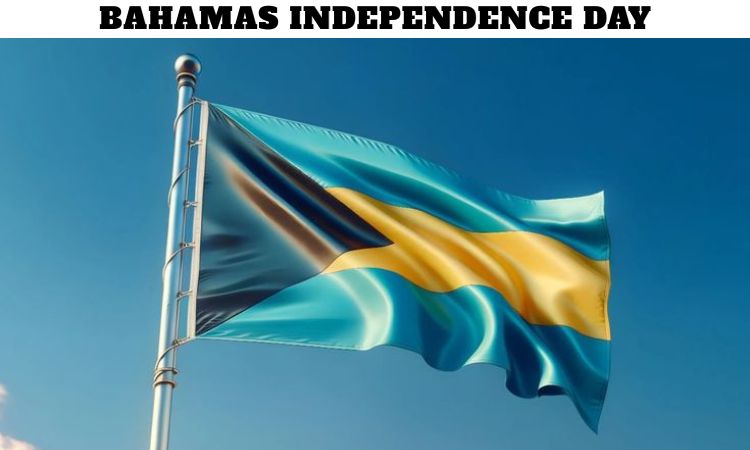
The flag consists of three horizontal stripes of aquamarine, gold, and aquamarine, with a black equilateral triangle on the left side. The aquamarine symbolizes the surrounding sea, the gold represents the country’s sandy beaches and natural resources, and the black triangle signifies the strength, determination, and unity of the Bahamian people.
The national anthem is performed during official ceremonies, reminding citizens of their shared identity and commitment to the nation.
Other national symbols, including the coat of arms, national bird, and national flower, are also highlighted during educational programs and cultural events, helping younger generations appreciate their country’s heritage.
What Cultural Traditions Make Bahamas Independence Day Special?
Culture is at the heart of Bahamas Independence Day celebrations. Music, dance, storytelling, art, and local cuisine all contribute to the festive atmosphere.
Junkanoo is perhaps the most recognizable cultural tradition associated with Bahamian celebrations. Participants wear vibrant handmade costumes decorated with colorful paper, beads, feathers, and other creative materials. Accompanied by drums, cowbells, whistles, and brass instruments, performers dance through the streets in energetic parades that reflect the nation’s African heritage and creative spirit.
Traditional Bahamian foods are also enjoyed during Independence Day celebrations. Dishes featuring seafood, peas and rice, conch salad, baked crab, grilled fish, and tropical fruits are commonly shared among families and friends.
Local artists and craftsmen display handmade products, paintings, wood carvings, jewelry, and woven items during festivals, celebrating the creativity and entrepreneurial spirit of Bahamians.
These traditions help preserve cultural identity while encouraging younger generations to appreciate their heritage.
How Has The Bahamas Developed Since Independence?
Since achieving independence in 1973, The Bahamas has made significant progress in many areas. Democratic governance has remained an important foundation of the nation, with regular elections and constitutional institutions supporting political stability.
Tourism has become one of the country’s largest industries, attracting millions of visitors each year with its beautiful beaches, clear waters, luxury resorts, and marine attractions. Financial services, maritime industries, and international trade have also contributed to economic growth.
Education and healthcare have expanded over the decades, improving opportunities for many citizens. Investments in infrastructure, transportation, and communication have helped connect the country’s many islands and support economic development.
Like many island nations, The Bahamas continues to face challenges, including climate change, hurricanes, economic fluctuations, and environmental conservation. Nevertheless, Independence Day serves as a reminder of the country’s resilience and determination to overcome obstacles through cooperation and innovation.
Why Does Bahamas Independence Day Matter To The World?
Although Bahamas Independence Day is a national celebration, it also carries international significance. The country’s peaceful transition to independence reflects broader movements toward self-determination that occurred across the Caribbean during the twentieth century.
The Bahamas maintains strong diplomatic relationships with countries around the world and actively participates in international organizations. Its strategic location, vibrant tourism industry, financial sector, and commitment to regional cooperation make it an important member of the global community.
For visitors, Independence Day offers an opportunity to experience authentic Bahamian culture beyond its famous beaches and resorts. Tourists attending Independence Day celebrations often gain a deeper appreciation for the nation’s history, traditions, and welcoming spirit.
The holiday also reminds people everywhere of the universal values of freedom, democracy, national identity, and cultural preservation.
What Lessons Can We Learn From Bahamas Independence Day?
Bahamas Independence Day teaches valuable lessons about perseverance, unity, responsible leadership, and national pride. It demonstrates that peaceful political change is possible through dialogue, democratic participation, and collective determination.
The celebration encourages citizens to appreciate their freedoms while recognizing the responsibilities that come with independence. Democracy requires active participation, respect for laws, and a commitment to serving future generations.
The holiday also highlights the importance of preserving cultural traditions while embracing modernization and global cooperation. The Bahamas has successfully maintained its unique identity while participating in international trade, tourism, diplomacy, and environmental initiatives.
For people around the world, Bahamas Independence Day serves as an inspiring reminder that national success is built through education, community involvement, cultural pride, and a shared vision for a better future.
As July 10 is celebrated each year, Bahamians proudly honor their history while continuing to build a nation known for its resilience, hospitality, and vibrant culture. Independence Day remains a symbol of freedom and hope, inspiring present and future generations to contribute positively to their country’s continued growth and prosperity.
Frequently Asked Questions (FAQs)
1. When is Bahamas Independence Day celebrated?
Bahamas Independence Day is celebrated every year on July 10.
2. Why is Bahamas Independence Day important?
It marks the day The Bahamas gained independence from the United Kingdom in 1973.
3. In which year did The Bahamas become independent?
The Bahamas became an independent nation on July 10, 1973.
4. Who is known as the Father of the Nation in The Bahamas?
Sir Lynden Pindling is widely recognized as the Father of the Nation.
5. Is The Bahamas still part of the Commonwealth?
Yes, The Bahamas remains a member of the Commonwealth of Nations.
6. How do people celebrate Bahamas Independence Day?
People celebrate with parades, flag-raising ceremonies, Junkanoo performances, fireworks, concerts, and community events.
7. What is Junkanoo?
Junkanoo is a traditional Bahamian festival featuring colorful costumes, music, dancing, and street parades.
8. What do the colors of the Bahamian flag represent?
Aquamarine represents the sea, gold symbolizes the sandy beaches and natural resources, and the black triangle stands for the strength and unity of the Bahamian people.
9. What is the capital of The Bahamas?
The capital city of The Bahamas is Nassau.
10. Why do tourists visit The Bahamas during Independence Day?
Many visitors come to experience authentic Bahamian culture, patriotic celebrations, music, food, and traditional festivals.