

Why Is the Colombia Corpus Christi Holiday Celebrated on June 8?
The Colombia Corpus Christi Holiday is one of the most important religious observances in the country’s Catholic tradition. Celebrated around June 8 in 2026, Corpus Christi honors the Eucharist and commemorates the belief in the real presence of Jesus Christ in the consecrated bread and wine. The feast is deeply rooted in Catholic teachings and serves as a day of worship, reflection, gratitude, and community participation.
The name Corpus Christi comes from Latin and means “Body of Christ.” The celebration focuses on the sacrament of Holy Communion, which holds a central place in Catholic faith and practice. Throughout Colombia, churches organize special Masses, religious processions, and community gatherings that allow believers to express their devotion and strengthen their spiritual connection.
For many Colombians, Corpus Christi is more than a religious event. It is also a cultural tradition that has been passed down through generations. The holiday brings together families, communities, and parish members in a shared expression of faith and heritage. Through prayer, music, and public celebrations, Colombians honor a tradition that has remained meaningful for centuries.
What Is the Origin of Corpus Christi?
The Feast of Corpus Christi originated in medieval Europe during the thirteenth century. The celebration was inspired by the visions of Saint Juliana of Liège, a Belgian nun who believed there should be a special feast dedicated solely to the Eucharist.
Her devotion and efforts eventually gained support from Church leaders. In 1264, Pope Urban IV officially established Corpus Christi as a feast day for the Catholic Church through the papal bull Transiturus de Hoc Mundo. The purpose was to emphasize the importance of the Eucharist and encourage public expressions of faith.
As Catholicism spread throughout Europe and later to the Americas, Corpus Christi became an important observance in many countries. Spanish missionaries and colonizers introduced the feast to Latin America, including Colombia, where it became integrated into local religious and cultural traditions.
Over time, the celebration evolved into one of the most respected Catholic observances in the country, combining religious worship with community involvement and cultural expression.
Why Is Corpus Christi Important in Colombia?
Colombia has a long history of Catholic influence, and many national traditions are closely tied to religious observances. Corpus Christi remains important because it highlights one of the central beliefs of the Catholic faith: the presence of Christ in the Eucharist.
The holiday provides believers with an opportunity to deepen their spiritual commitment and reflect on the significance of Holy Communion. It also serves as a reminder of the values associated with Christian teachings, including faith, compassion, humility, and service to others.
Beyond its religious significance, Corpus Christi strengthens social bonds within communities. Families gather for worship and celebration, while churches become centers of spiritual and cultural activity. The observance encourages unity and participation, creating a sense of belonging among community members.
The enduring popularity of Corpus Christi demonstrates how religious traditions continue to shape cultural identity and community life in Colombia.
How Is Corpus Christi Celebrated in Colombia?
The celebration of Corpus Christi in Colombia typically begins with special church services. During these services, priests deliver sermons focused on the Eucharist and its importance in Catholic life. Many churches also organize Eucharistic adoration, allowing worshippers to spend time in prayer and reflection.
One of the most recognizable aspects of the holiday is the Corpus Christi procession. During these public events, clergy carry the Blessed Sacrament through streets decorated with flowers, banners, and religious symbols. The procession is accompanied by prayers, hymns, and expressions of devotion from participants.
Many towns and cities transform public spaces into vibrant displays of faith. Streets may be adorned with colorful decorations, floral arrangements, and religious artwork created by local residents.
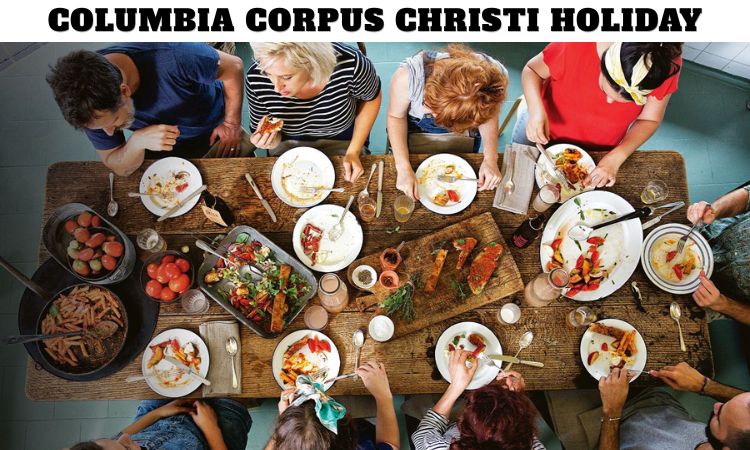
Following religious activities, families often gather to share meals and celebrate together. In some communities, cultural events, traditional music performances, and local festivals are held alongside religious observances, creating a festive atmosphere that reflects Colombia’s rich cultural heritage.
What Does the Eucharist Symbolize During Corpus Christi?
The Eucharist is the heart of the Corpus Christi celebration. According to Catholic doctrine, the Eucharist commemorates the Last Supper, where Jesus shared bread and wine with his disciples and instructed them to continue the practice in remembrance of him.
Catholics believe that during Mass, the bread and wine become the body and blood of Christ through a sacred transformation known as transubstantiation. This belief makes the Eucharist one of the most sacred elements of Catholic worship.
Corpus Christi provides an opportunity to honor this sacrament publicly and to reflect on its spiritual significance. The celebration encourages believers to renew their faith and appreciate the role of the Eucharist in strengthening their relationship with God.
The feast also serves as a reminder of Christ’s sacrifice and his message of love, forgiveness, and unity.
How Did Corpus Christi Become a Colombian Tradition?
The history of Corpus Christi in Colombia dates back to the colonial era when Spanish missionaries introduced Catholic religious practices throughout the region. As churches were established and local communities embraced Christianity, Corpus Christi became part of the annual religious calendar.
Over generations, Colombian communities developed their own customs and traditions associated with the feast. While the core religious meaning remained unchanged, local cultural influences shaped the way the holiday was celebrated.
Many communities incorporated regional music, artistic expressions, and festive gatherings into the observance. This blending of faith and culture helped make Corpus Christi a distinctive part of Colombian heritage.
Today, the holiday reflects both its European religious origins and the unique traditions that have developed within Colombian society.
What Traditions Are Common During Corpus Christi?
Several traditions are closely associated with Corpus Christi celebrations in Colombia.
Religious processions remain the most visible and widely recognized custom. These events allow believers to publicly demonstrate their faith while honoring the Eucharist.
Church decorations are another important tradition. Congregations often spend days preparing floral displays, banners, candles, and sacred artwork to enhance the beauty of worship spaces.
Special prayers and Eucharistic adoration sessions provide opportunities for spiritual reflection and devotion. Many worshippers attend additional church services during the holiday period.
Family gatherings are also an essential part of the celebration. Sharing meals and spending time together reinforces the values of community and togetherness that are central to the holiday.
In some regions, cultural performances, music, and local festivities add a celebratory dimension to the observance, making it both a religious and social occasion.
How Does Corpus Christi Strengthen Communities?
One of the most meaningful aspects of Corpus Christi is its ability to bring people together. The holiday encourages participation from individuals of all ages and backgrounds, fostering a strong sense of community spirit.
Organizing celebrations often requires cooperation among parish members, volunteers, and local leaders. This collaborative effort helps strengthen relationships and promotes teamwork.
Public processions create shared experiences that unite communities in a common expression of faith. Families and neighbors gather to participate in traditions that have been maintained for generations.
The emphasis on unity, worship, and service reflects broader Christian values that encourage individuals to support and care for one another. As a result, Corpus Christi contributes not only to spiritual growth but also to social cohesion.
Why Does Corpus Christi Continue to Matter Today?
In today’s rapidly changing world, Corpus Christi remains relevant because it offers an opportunity for reflection, gratitude, and spiritual renewal. Many people find comfort in traditions that connect them to their faith, family history, and cultural identity.
The holiday encourages individuals to pause and consider the values that guide their lives. Themes such as compassion, faith, sacrifice, and community remain meaningful regardless of changing social and technological circumstances.
Corpus Christi also preserves important cultural traditions that might otherwise be lost over time. Through annual celebrations, younger generations learn about their religious heritage and the significance of longstanding customs.
For believers, the feast remains a powerful reminder of the importance of the Eucharist and the enduring message of Christian faith.
What Is the Lasting Significance of the Colombia Corpus Christi Holiday?
The Colombia Corpus Christi Holiday continues to serve as a bridge between faith, culture, and community. Its centuries-old traditions provide opportunities for worship, celebration, and reflection while reinforcing shared values and beliefs.
The observance highlights the importance of the Eucharist in Catholic life and encourages believers to strengthen their spiritual commitment. At the same time, it preserves cultural practices that contribute to Colombia’s rich heritage.
As communities gather each year to celebrate Corpus Christi, they honor both religious teachings and historical traditions. The holiday remains a testament to the enduring influence of faith in shaping personal lives and community identity.
By bringing people together in worship and celebration, Corpus Christi continues to inspire unity, gratitude, and devotion throughout Colombia.
Frequently Asked Questions (FAQs)
1. What is the Colombia Corpus Christi Holiday?
The Colombia Corpus Christi Holiday is a Catholic feast that honors the Body of Christ and celebrates the Eucharist.
2. What does Corpus Christi mean?
Corpus Christi is a Latin phrase that translates to “Body of Christ.”
3. Why is Corpus Christi celebrated?
It is celebrated to honor the Eucharist and affirm Catholic beliefs regarding the presence of Christ in Holy Communion.
4. When is Corpus Christi observed in Colombia?
The holiday is observed according to the Catholic liturgical calendar and is commonly recognized in June.
5. How do Colombians celebrate Corpus Christi?
Celebrations include Mass, religious processions, prayers, church decorations, and family gatherings.
6. What is the significance of the Eucharist?
The Eucharist is considered the body and blood of Christ in Catholic belief and is central to the celebration of Corpus Christi.
7. Who established the Feast of Corpus Christi?
Pope Urban IV officially established the feast in 1264.
8. Are processions important during Corpus Christi?
Yes, public processions are among the most important traditions associated with the holiday.
9. Is Corpus Christi only celebrated in Colombia?
No, Corpus Christi is celebrated in many Catholic countries around the world.
10. Why is Corpus Christi still relevant today?
It promotes faith, cultural preservation, community unity, and spiritual reflection.