

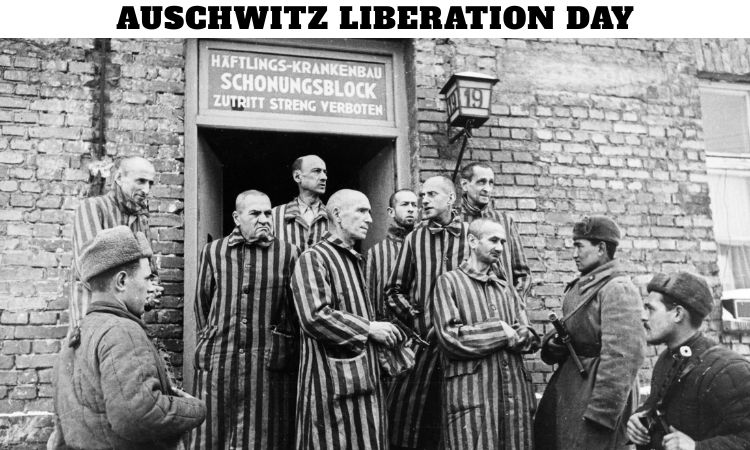
Auschwitz Liberation Day, observed annually on January 27, stands as one of the most solemn and significant days in global history. We commemorate the liberation of the Auschwitz-Birkenau concentration and extermination camp in 1945 by Soviet forces, marking a pivotal moment that exposed the full horror of the Holocaust to the world. This day is not merely a historical remembrance; it is a global call to preserve memory, uphold human dignity, and prevent future atrocities born of hatred, intolerance, and indifference.
We recognize Auschwitz Liberation Day as a cornerstone of historical awareness, reminding humanity of the consequences of systematic oppression and genocide. It is a day of reflection, education, and moral responsibility that transcends borders, cultures, and generations.
Historical Background of Auschwitz-Birkenau
The Auschwitz concentration camp, located in Nazi-occupied Poland, was established in 1940 and expanded into a vast complex comprising Auschwitz I, Auschwitz II-Birkenau, and Auschwitz III-Monowitz. Designed initially as a detention center, it soon became the largest Nazi extermination camp, where over 1.1 million people were murdered, the vast majority of them Jews, along with Roma, Poles, Soviet prisoners of war, and others deemed undesirable by the Nazi regime.
Auschwitz-Birkenau symbolized the industrial scale of genocide. Gas chambers, crematoria, forced labor, medical experiments, starvation, and brutal punishments defined daily life for prisoners. Liberation on January 27, 1945, revealed thousands of survivors—emaciated, ill, and traumatized—and mountains of evidence that documented crimes against humanity on an unprecedented scale.
The Significance of January 27
January 27 has been internationally recognized as International Holocaust Remembrance Day, a designation adopted by the United Nations in 2005. This date was chosen specifically to honor the liberation of Auschwitz and to ensure that the victims of the Holocaust are never forgotten.
We observe this day to:
Honor the millions of victims murdered during the Holocaust
Remember the survivors and their testimonies
Educate future generations about the dangers of antisemitism, racism, and extremism
Reinforce global commitments to human rights and justice
January 27 serves as a reminder that remembrance is not passive—it is an active moral obligation.
Life Inside Auschwitz: A Testament to Human Suffering
Life in Auschwitz was defined by systematic dehumanization. Prisoners were stripped of their identities, assigned numbers, and subjected to relentless brutality. Daily existence involved forced labor under inhumane conditions, minimal food rations, exposure to disease, and constant fear of selection for death.
Children, women, and the elderly were often sent directly to gas chambers upon arrival. Families were torn apart within minutes. Despite unimaginable suffering, many prisoners displayed extraordinary resilience—sharing food, offering comfort, and preserving fragments of humanity in the darkest circumstances.
These stories form the core of Auschwitz Liberation Day, reminding us not only of cruelty but also of the enduring strength of the human spirit.
Liberation of Auschwitz: What the World Discovered
When Soviet troops entered Auschwitz on January 27, 1945, they discovered approximately 7,000 surviving prisoners. What they found shocked the world: warehouses filled with personal belongings—shoes, suitcases, eyeglasses, hair—painful evidence of mass murder.
The liberation marked the beginning of global awareness of the Holocaust’s full scale. Survivors’ testimonies, photographs, and documents became crucial in post-war trials and historical records. Auschwitz Liberation Day stands as the moment when silence was broken, and truth emerged with undeniable force.
Global Commemoration and Education
Today, Auschwitz Liberation Day is observed worldwide through memorial ceremonies, educational programs, museum exhibitions, and survivor testimonies. Governments, institutions, and communities come together to reaffirm the importance of Holocaust education.
We emphasize that remembrance must be paired with education. Teaching the history of Auschwitz helps combat Holocaust denial and distortion, which remain serious threats to historical truth. Education empowers individuals to recognize early signs of hatred and discrimination, fostering a culture of empathy and accountability.
Auschwitz as a Symbol Against Genocide
Auschwitz has become a universal symbol of genocide and a warning against unchecked power, propaganda, and indifference. Its legacy extends beyond Jewish history; it represents a collective human tragedy.
We view Auschwitz Liberation Day as a moral compass—one that urges societies to confront injustice wherever it appears. From ethnic cleansing to systemic discrimination, the lessons of Auschwitz remind us that silence enables cruelty.
Survivor Voices: Preserving Living Memory
As time passes, the number of Holocaust survivors continues to decline. Their voices are invaluable. Survivor testimonies provide personal perspectives that historical records alone cannot convey. These accounts humanize statistics and ensure that memory remains vivid and personal.
We stress the urgency of preserving these voices through recordings, memoirs, and educational initiatives. Auschwitz Liberation Day amplifies survivor stories, ensuring that future generations understand not only what happened, but why it must never happen again.
The Role of Museums and Memorials
Institutions such as the Auschwitz-Birkenau State Museum play a crucial role in preserving history. These sites serve as places of remembrance, research, and learning. Visitors from around the world walk the grounds to bear witness to the past and reflect on its meaning.
Memorials reinforce collective memory and provide spaces for mourning and reflection. They remind us that remembrance is an active process requiring care, accuracy, and respect.
Why Auschwitz Liberation Day Still Matters Today?
In a world still grappling with hatred, xenophobia, and violence, Auschwitz Liberation Day remains profoundly relevant. It challenges us to confront uncomfortable truths and examine our responsibilities as global citizens.
We reaffirm that remembrance is a safeguard. By remembering Auschwitz, we resist apathy and commit ourselves to defending human dignity, protecting minorities, and standing against injustice in all its forms.
Conclusion: A Commitment to Never Forget
Auschwitz Liberation Day is more than a date on the calendar. It is a solemn reminder of humanity’s darkest chapter and a powerful call to conscience. We honor the victims, remember the survivors, and commit ourselves to preserving truth.