

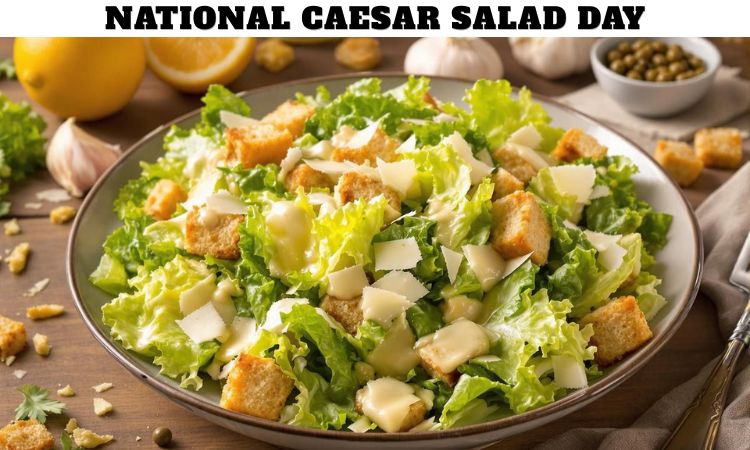
What Is National Caesar Salad Day?
National Caesar Salad Day, observed annually on July 4, celebrates one of the world’s most famous and beloved salads: the Caesar salad. Known for its crisp romaine lettuce, creamy dressing, crunchy croutons, and savory Parmesan cheese, Caesar salad has become a staple on restaurant menus and dining tables across the globe.
This culinary holiday provides food enthusiasts with an opportunity to appreciate the rich history and enduring popularity of this classic dish. Whether served as an appetizer, side dish, or main course topped with grilled chicken, shrimp, or salmon, Caesar salad continues to be a favorite among people of all ages.
National Caesar Salad Day encourages individuals to revisit traditional recipes, experiment with creative variations, and celebrate the culinary legacy of a dish that has stood the test of time.
Why Is National Caesar Salad Day Celebrated on July 4?
National Caesar Salad Day is celebrated on July 4 to honor the origins and widespread appeal of Caesar salad. Although the exact reasons behind selecting this date remain unclear, the observance aligns perfectly with summertime dining traditions.
July is a popular month for outdoor gatherings, family meals, picnics, and holiday celebrations. Fresh salads are especially appealing during warm weather, making Caesar salad an ideal addition to summer menus.
The holiday also highlights the dish’s influence on international cuisine. Over the decades, Caesar salad has evolved from a simple restaurant creation into a globally recognized culinary classic. National Caesar Salad Day offers an opportunity to celebrate this achievement while encouraging people to enjoy fresh, flavorful ingredients.
Who Invented Caesar Salad?
Caesar salad was invented by Caesar Cardini, an Italian-born restaurateur who operated restaurants in Mexico and the United States during the early twentieth century.
According to popular accounts, the salad originated on July 4, 1924, at Cardini’s restaurant in Tijuana, Mexico. During a busy Independence Day weekend, the kitchen reportedly experienced ingredient shortages. Using available ingredients, Caesar Cardini created a simple yet flavorful salad that quickly impressed guests.
Prepared tableside, the original Caesar salad combined romaine lettuce, olive oil, garlic, coddled eggs, Worcestershire sauce, lemon juice, Parmesan cheese, croutons, and seasonings.
The dish gained immediate popularity among Hollywood celebrities and international travelers visiting Tijuana. As word spread, Caesar salad became a signature menu item and eventually achieved worldwide fame.
Today, Caesar Cardini’s culinary creation remains one of the most iconic salads ever developed.
What Ingredients Are Traditionally Used in Caesar Salad?
Traditional Caesar salad features a relatively simple list of ingredients, yet the combination produces a rich and distinctive flavor profile.
Classic ingredients include:
- Crisp romaine lettuce
- Garlic
- Olive oil
- Lemon juice
- Worcestershire sauce
- Coddled or raw egg
- Parmesan cheese
- Homemade croutons
- Black pepper
Many modern recipes also include anchovies or anchovy paste, although historical accounts differ regarding whether anchovies were present in the original recipe. Worcestershire sauce itself contains anchovy, contributing a savory umami flavor.
The success of Caesar salad lies in the careful balance of creamy, tangy, salty, and crunchy elements. Fresh, high-quality ingredients are essential for achieving the authentic taste that has made the dish so popular.
How Did Caesar Salad Become Popular Worldwide?
Caesar salad’s global success can be attributed to several factors, including celebrity endorsements, restaurant expansion, and culinary adaptability.
In the early twentieth century, Hollywood actors, socialites, and tourists frequently visited Tijuana. Many dined at Caesar Cardini’s establishment and enthusiastically shared their experiences with others.
As the salad gained recognition, restaurants throughout North America began adding it to their menus. Its popularity expanded internationally as chefs adapted the recipe to suit local tastes and available ingredients.
Television cooking programs, cookbooks, and food media further contributed to the dish’s reputation. Today, Caesar salad appears in casual dining establishments, fine dining restaurants, hotel buffets, and home kitchens around the world.
Its enduring popularity demonstrates the universal appeal of fresh ingredients combined with bold flavors.
What Are Some Popular Variations of Caesar Salad?
Although the classic recipe remains widely loved, numerous variations have emerged over the years.
Some popular versions include:
- Chicken Caesar Salad: Grilled or roasted chicken transforms the salad into a satisfying main course.
- Shrimp Caesar Salad: Seafood lovers often enjoy Caesar salad topped with grilled shrimp.
- Salmon Caesar Salad: Fresh or smoked salmon adds richness and nutritional value.
- Kale Caesar Salad: Kale serves as an alternative to romaine lettuce for added texture and nutrients.
- Vegan Caesar Salad: Plant-based versions replace eggs, anchovies, and cheese with vegan alternatives.
- Pasta Caesar Salad: Pasta is incorporated to create a more substantial dish.
- Avocado Caesar Salad: Avocado contributes creaminess and healthy fats.
- These variations demonstrate the versatility of Caesar salad while preserving its signature flavors.
Is Caesar Salad Healthy?
Caesar salad can be a nutritious meal choice when prepared thoughtfully and consumed as part of a balanced diet.
Romaine lettuce provides vitamins A, C, and K, as well as folate and dietary fiber. Parmesan cheese supplies calcium and protein, while olive oil contributes heart-healthy fats.
However, traditional Caesar dressing can be relatively high in calories, sodium, and fat. Portion size and ingredient selection therefore play important roles in determining the salad’s overall nutritional profile.
Health-conscious individuals often modify recipes by:
- Using lighter dressings.
- Increasing vegetable content.
- Adding lean proteins.
- Reducing cheese quantities.
- Incorporating whole-grain croutons.
When prepared with fresh ingredients and appropriate portions, Caesar salad can be both flavorful and nutritious.
How Can People Celebrate National Caesar Salad Day?
National Caesar Salad Day offers numerous opportunities for culinary enjoyment and creativity.
One of the simplest ways to celebrate is by preparing homemade Caesar salad using fresh ingredients. Making dressing from scratch allows individuals to experience authentic flavors while customizing recipes according to personal preferences.
Additional celebration ideas include:
- Dining at a restaurant known for its Caesar salad.
- Hosting a salad-themed gathering with friends and family.
- Experimenting with new Caesar salad variations.
- Learning to prepare traditional tableside Caesar salad.
- Sharing favorite recipes with others.
- Exploring the history of Caesar Cardini and his culinary legacy.
Food enthusiasts may also compare regional interpretations of Caesar salad or organize tasting events featuring different dressings and ingredient combinations.
These activities make National Caesar Salad Day both educational and delicious.
Why Does Caesar Salad Continue to Remain Popular?
Few dishes have maintained their popularity for as long as Caesar salad. Its enduring success stems from its simplicity, versatility, and balanced flavors.
The combination of crisp greens, creamy dressing, crunchy croutons, and savory cheese appeals to a broad range of tastes. Additionally, the salad adapts easily to changing dietary preferences and culinary trends.
Restaurants appreciate Caesar salad because it complements numerous cuisines and menu styles. Home cooks value its straightforward preparation and customizable nature.
The salad’s rich history and association with culinary tradition further enhance its appeal. Nearly a century after its creation, Caesar salad remains a timeless favorite enjoyed across generations and cultures.
What Is the Lasting Legacy of National Caesar Salad Day?
National Caesar Salad Day celebrates more than a single recipe. It honors culinary creativity, innovation, and the enduring power of simple ingredients.
The holiday reminds people that iconic dishes often emerge from unexpected circumstances and that great food can transcend borders, cultures, and generations.
By celebrating National Caesar Salad Day each July 4, food lovers preserve an important piece of culinary history while continuing to enjoy one of the world’s most recognizable salads. Whether served traditionally or with modern adaptations, Caesar salad remains a delicious symbol of creativity, freshness, and shared dining experiences.
Frequently Asked Questions (FAQs)
1. When is National Caesar Salad Day celebrated?
National Caesar Salad Day is celebrated annually on July 4.
2. Who invented Caesar salad?
Caesar salad was created by restaurateur Caesar Cardini in 1924.
3. Where was Caesar salad invented?
Caesar salad was invented in Tijuana, Mexico.
4. What are the main ingredients in a traditional Caesar salad?
Traditional Caesar salad includes romaine lettuce, Parmesan cheese, croutons, dressing, garlic, lemon juice, and Worcestershire sauce.
5. Is Caesar salad healthy?
Caesar salad can be healthy when prepared with fresh ingredients and consumed in moderation.
6. Why is Caesar salad so popular?
Its balanced flavors, versatility, and rich history contribute to its popularity.
7. Can Caesar salad be made vegetarian?
Yes, vegetarian versions can be prepared without anchovies or by using vegetarian substitutes.
8. What protein is commonly added to Caesar salad?
Grilled chicken is one of the most common protein additions.
9. How can people celebrate National Caesar Salad Day?
People can celebrate by making homemade Caesar salad, dining out, or trying new recipe variations.
10. What makes Caesar dressing unique?
Caesar dressing combines creamy, tangy, and savory flavors that distinguish it from other salad dressings.