

Why Is National Meteor Watch Day Celebrated on June 30?
National Meteor Watch Day is observed annually on June 30 to encourage people to look up at the night sky and appreciate the beauty and wonder of meteors. The day serves as an opportunity for astronomy enthusiasts, families, students, and casual stargazers to learn more about meteor showers, space science, and the fascinating objects that travel through our solar system.
Meteors, commonly known as shooting stars, have fascinated humanity for thousands of years. Ancient civilizations often viewed them as supernatural signs or messages from the heavens. Today, scientists understand meteors as natural celestial phenomena that provide valuable information about the origins and evolution of our solar system.
National Meteor Watch Day inspires people to step away from artificial lights, spend time outdoors, and reconnect with the universe. The observance also promotes scientific curiosity and encourages individuals of all ages to explore astronomy and space science.
Whether someone is an experienced astronomer or a beginner simply enjoying a clear night sky, National Meteor Watch Day offers a chance to appreciate the vastness and beauty of the cosmos.
What Is the History of National Meteor Watch Day?
National Meteor Watch Day is a modern observance created to celebrate meteor watching and encourage public interest in astronomy. Unlike some traditional holidays, the day does not commemorate a specific historical event. Instead, it was established as an educational and recreational observance dedicated to skywatching.
The timing of the celebration near the beginning of summer in the Northern Hemisphere provides favorable conditions for outdoor stargazing in many regions. Warm weather and longer evenings often make June an excellent time for families and astronomy enthusiasts to gather outdoors and observe the night sky.
Over time, National Meteor Watch Day has gained popularity through astronomy clubs, science organizations, educational institutions, and social media communities. The observance aligns with broader efforts to promote science education and inspire future generations to pursue interests in astronomy, physics, engineering, and space exploration.
Although the holiday is primarily observed in the United States, its message of appreciating the wonders of the night sky resonates with people worldwide.
What Is a Meteor and How Is It Different from a Meteorite?
Understanding meteors begins with understanding the terminology associated with these celestial objects.
A meteoroid is a small piece of rock or debris traveling through space. These objects can originate from asteroids, comets, or fragments left behind during collisions between celestial bodies.
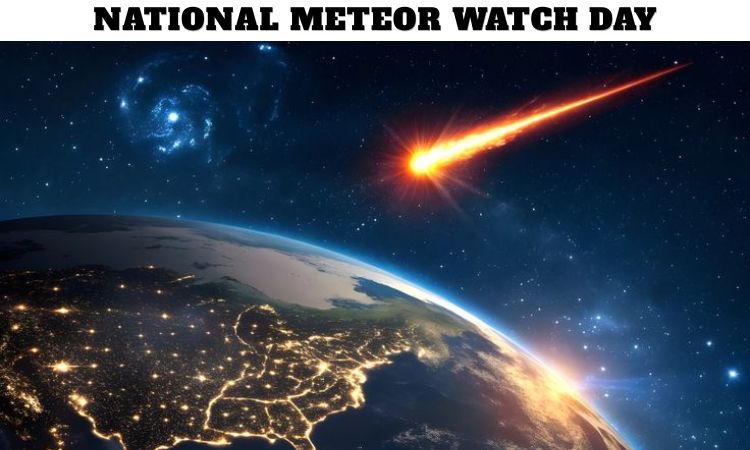
When a meteoroid enters Earth’s atmosphere at high speed, friction with atmospheric gases causes it to heat up and glow brightly. This luminous streak of light is called a meteor, often referred to as a shooting star.
If part of the object survives its journey through the atmosphere and reaches Earth’s surface, the remaining fragment is known as a meteorite.
Many people use these terms interchangeably, but scientists distinguish them based on where the object is located and whether it survives atmospheric entry.
National Meteor Watch Day provides an excellent opportunity to learn about these differences and deepen one’s understanding of space science.
Why Do Meteors Appear as Shooting Stars?
Meteors are often called shooting stars because they create bright streaks of light that appear to move rapidly across the sky. However, meteors are not stars at all.
As meteoroids enter Earth’s atmosphere, they typically travel at speeds ranging from approximately 11 to 72 kilometers per second. The tremendous speed compresses and heats the air surrounding the object, causing both the meteoroid and nearby atmospheric gases to glow intensely.
The resulting flash of light creates the familiar appearance of a shooting star. Most meteors are relatively small, often no larger than grains of sand or small pebbles. Despite their tiny size, they can produce spectacular displays because of their extremely high velocities.
The glowing trail usually lasts only a few seconds before the object completely burns up in the atmosphere. Larger objects may produce exceptionally bright meteors known as fireballs, which can sometimes be visible even during daylight hours.
Observing these brief yet spectacular phenomena is one of the highlights of National Meteor Watch Day.
What Are Meteor Showers?
Meteor showers occur when Earth passes through streams of debris left behind by comets or, in some cases, asteroids. As our planet moves through these debris fields, numerous meteoroids enter the atmosphere and create increased meteor activity.
Meteor showers are named after the constellation from which the meteors appear to originate, known as the radiant point. For example, the famous Perseid meteor shower appears to radiate from the constellation Perseus.
Several major meteor showers occur annually, including the Perseids, Geminids, Leonids, Orionids, and Quadrantids. These events attract skywatchers worldwide because they can produce dozens or even hundreds of meteors per hour under ideal conditions.
Meteor showers provide excellent opportunities for amateur astronomers and families to observe celestial activity without specialized equipment.
National Meteor Watch Day encourages people to learn about upcoming meteor showers and prepare for future viewing experiences.
How Can People Celebrate National Meteor Watch Day?
There are many enjoyable and educational ways to celebrate National Meteor Watch Day.
One of the simplest ways is to spend time outdoors after sunset and observe the night sky. Choosing a location away from city lights significantly improves visibility and enhances the stargazing experience.
Families and friends can organize backyard stargazing gatherings, bringing blankets, reclining chairs, and refreshments for a comfortable evening under the stars.
Joining local astronomy clubs or attending public observing events hosted by observatories and science centers can provide valuable learning opportunities. Many organizations offer guided skywatching sessions led by experienced astronomers.
Educational activities such as reading astronomy books, watching documentaries about space, or participating in online astronomy courses can further enrich the experience.
Photography enthusiasts may also celebrate by attempting astrophotography, capturing images of meteors and the night sky.
Schools can organize science projects, classroom discussions, and presentations focused on meteors, meteorites, and the solar system.
What Equipment Is Needed for Meteor Watching?
One of the most appealing aspects of meteor watching is that it requires very little equipment.
Unlike many forms of astronomy, meteor observation is generally best done with the naked eye. Telescopes and binoculars limit the field of view and may cause observers to miss meteors appearing elsewhere in the sky.
Comfort is often more important than technology. Observers should bring reclining chairs, sleeping bags, blankets, or camping mats to avoid neck strain during prolonged skywatching sessions.
Warm clothing is recommended, even during summer, because nighttime temperatures can drop significantly in some locations.
Red-filtered flashlights are useful for preserving night vision while reading star charts or moving around in the dark.
Mobile applications designed for astronomy can help users identify constellations, planets, and upcoming meteor showers.
With clear skies, patience, and minimal equipment, almost anyone can enjoy National Meteor Watch Day.
Why Is Dark Sky Preservation Important for Meteor Watching?
Artificial light pollution has become one of the greatest obstacles to observing the night sky. Excessive outdoor lighting reduces visibility, making it difficult to see faint stars and meteors.
Dark sky preservation efforts aim to minimize unnecessary artificial lighting and protect natural nighttime environments. Reducing light pollution benefits astronomers, wildlife, ecosystems, and human health.
National Meteor Watch Day highlights the importance of preserving dark skies so future generations can continue to experience the beauty of celestial phenomena.
Communities can contribute by using shielded lighting fixtures, turning off unnecessary lights, and supporting dark sky conservation initiatives.
Organizations dedicated to dark sky protection work worldwide to raise awareness and establish designated dark sky parks and reserves where exceptional stargazing conditions are preserved.
Protecting dark skies ensures that people can continue to enjoy meteor showers and other astronomical wonders.
What Can Meteors Teach Scientists About the Solar System?
Meteors and meteorites provide scientists with valuable information about the early history of the solar system.
Many meteorites contain material that formed billions of years ago, long before Earth itself fully developed. Studying these ancient rocks allows researchers to investigate the composition and conditions present during the formation of planets.
Some meteorites contain organic compounds and water-bearing minerals, leading scientists to explore theories regarding the origins of water and life on Earth.
Meteor observations also help researchers better understand near-Earth objects, asteroid populations, and the potential risks posed by larger space objects.
Space agencies and research institutions actively study meteoroids to improve models of solar system evolution and planetary formation.
National Meteor Watch Day encourages public appreciation for the scientific significance of these seemingly simple streaks of light across the sky.
Why Does National Meteor Watch Day Matter in Today’s World?
In an increasingly digital and fast-paced world, National Meteor Watch Day offers an opportunity to slow down and reconnect with nature and science.
The observance encourages curiosity, exploration, and lifelong learning. Looking at the night sky inspires many people to ask profound questions about the universe, humanity’s place within it, and the origins of our planet.
The holiday also promotes science education by making astronomy accessible to everyone, regardless of age or background.
For families, National Meteor Watch Day provides a meaningful opportunity to spend quality time together while sharing a memorable educational experience.
As space exploration continues to advance, public interest in astronomy remains essential for inspiring future scientists, engineers, astronauts, and researchers.
Ultimately, National Meteor Watch Day celebrates humanity’s enduring fascination with the cosmos and reminds us that extraordinary wonders can often be found simply by looking up.
Frequently Asked Questions (FAQs)
1. When is National Meteor Watch Day celebrated?
National Meteor Watch Day is observed annually on June 30.
2. What is National Meteor Watch Day?
It is a day dedicated to appreciating meteors, stargazing, and promoting public interest in astronomy.
3. What is a meteor?
A meteor is the streak of light produced when a meteoroid burns up in Earth’s atmosphere.
4. Are meteors the same as shooting stars?
Yes, shooting star is the common name for a meteor.
5. Do I need a telescope to watch meteors?
No, meteors are usually best observed with the naked eye.
6. What is a meteor shower?
A meteor shower occurs when Earth passes through debris left by comets or asteroids.
7. Where is the best place to watch meteors?
Dark locations away from city lights provide the best viewing conditions.
8. Why is light pollution a problem for meteor watching?
Artificial lighting reduces visibility and makes faint meteors difficult to see.
9. Can meteorites reach Earth’s surface?
Yes, if part of a meteoroid survives atmospheric entry, it becomes a meteorite.
10. How can schools celebrate National Meteor Watch Day?
Schools can organize astronomy lessons, science projects, stargazing events, and educational presentations.