

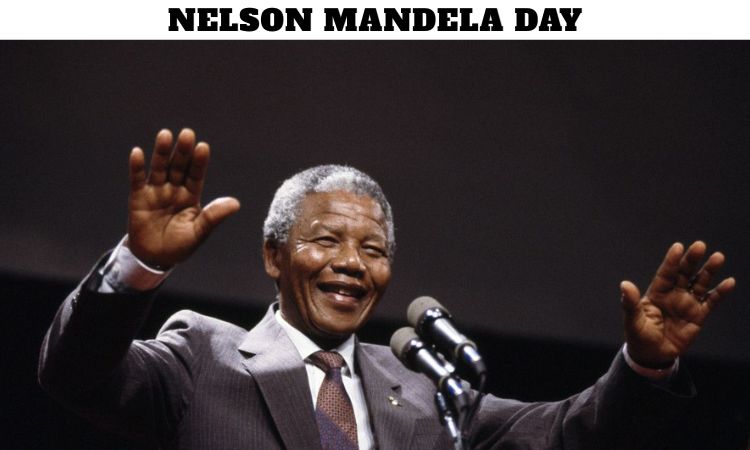
Every year on July 18, people across the globe celebrate Nelson Mandela Day, an international observance dedicated to honoring the extraordinary life, leadership, and humanitarian legacy of Nelson Rolihlahla Mandela. The day serves as a powerful reminder that every individual has the ability to make a positive difference in the lives of others. Rather than being a traditional holiday, Nelson Mandela Day encourages people to dedicate 67 minutes of their time to community service, symbolizing the 67 years Mandela spent fighting for justice, equality, democracy, and human rights.
Nelson Mandela remains one of the most respected leaders in modern history. His lifelong commitment to ending apartheid in South Africa, promoting reconciliation, and building a more peaceful society transformed not only his nation but also inspired millions worldwide. Nelson Mandela Day celebrates these achievements while encouraging everyone to continue his mission through simple yet meaningful acts of kindness.
What Is Nelson Mandela Day?
Nelson Mandela Day is an international day recognized by the United Nations to celebrate the values and legacy of Nelson Mandela. Officially observed every year on July 18, Mandela’s birthday, the day inspires individuals, organizations, schools, businesses, and governments to contribute positively to their communities.
Unlike many commemorative days that focus only on remembering historical events, Nelson Mandela Day promotes action. The central message is simple yet powerful: every person has the ability and responsibility to improve the lives of others.
Communities around the world organize volunteer drives, charity events, environmental clean-up campaigns, blood donation camps, educational workshops, and food distribution programs. These initiatives reflect Mandela’s lifelong belief that lasting change begins with ordinary people working together.
Why Is Nelson Mandela Day Celebrated on July 18?
July 18 marks the birth anniversary of Nelson Mandela, who was born in 1918 in Mvezo, South Africa. Mandela devoted nearly seven decades of his life to fighting injustice, racial discrimination, and inequality.
In 2009, the United Nations General Assembly officially declared July 18 as Nelson Mandela International Day. The first official observance took place in 2010, encouraging citizens around the world to dedicate time to community service and social development.
The day recognizes Mandela’s extraordinary contribution to peace, freedom, democracy, reconciliation, and human dignity.
Who Was Nelson Mandela?
Nelson Mandela was a lawyer, activist, political leader, and philanthropist who became the first democratically elected Black President of South Africa in 1994.
Throughout his early political career, Mandela opposed the apartheid system, which legally separated people based on race and denied fundamental rights to the Black population.
Because of his activism, Mandela was arrested and sentenced to life imprisonment in 1964. He spent 27 years in prison, mostly on Robben Island, before being released in 1990.
Instead of seeking revenge after his release, Mandela promoted reconciliation and forgiveness. His leadership helped South Africa transition peacefully from apartheid to democracy, making him a global symbol of peace and unity.
He received numerous honors, including the Nobel Peace Prize in 1993, jointly with South African President F.W. de Klerk.
Why Is Nelson Mandela’s Legacy Still Important Today?
The challenges Mandela fought against continue to exist in different forms around the world. Poverty, inequality, racism, discrimination, limited educational opportunities, and social injustice remain global concerns.
Mandela believed that education is one of the strongest tools for creating lasting change. His famous statement, “Education is the most powerful weapon which you can use to change the world,” continues to inspire students, teachers, and leaders worldwide.
His approach to leadership emphasized compassion, dialogue, inclusion, respect, and service. Rather than focusing on personal success, Mandela believed leadership should empower communities and create opportunities for future generations.
Nelson Mandela Day reminds us that these values remain just as relevant today as they were during Mandela’s lifetime.
Why Are 67 Minutes of Service Encouraged?
One of the most recognized traditions of Nelson Mandela Day is dedicating 67 minutes to helping others.
The number 67 represents the approximately 67 years Mandela devoted to public service and the struggle for human rights.
People are encouraged to spend at least 67 minutes performing acts of kindness such as volunteering at shelters, mentoring children, donating books, planting trees, cleaning neighborhoods, supporting elderly people, helping local charities, or simply assisting someone in need.
Although the symbolic commitment lasts 67 minutes, many participants continue volunteering throughout the year.
How Is Nelson Mandela Day Celebrated Around the World?
Nelson Mandela Day has become a truly global observance celebrated in schools, universities, nonprofit organizations, businesses, and local communities.
Educational institutions organize seminars, essay competitions, debates, and awareness campaigns highlighting Mandela’s life and achievements.
Community organizations arrange blood donation drives, health camps, food banks, and volunteer programs for underprivileged families.
Environmental groups participate by planting trees, reducing waste, cleaning public spaces, and promoting sustainable living.
Many businesses encourage employees to volunteer during working hours, strengthening community engagement while honoring Mandela’s values.
Families often celebrate by involving children in acts of kindness, teaching the importance of empathy, generosity, and social responsibility.
How Can Individuals Participate in Nelson Mandela Day?
Participating in Nelson Mandela Day does not require significant financial resources or elaborate planning. Even small actions can have a meaningful impact.
Individuals may volunteer at local charities, donate clothes or food, mentor students, support senior citizens, organize community clean-up events, visit hospitals, contribute to educational initiatives, or assist people experiencing homelessness.
Reading about Mandela’s life, discussing his values with children, supporting local nonprofit organizations, or simply showing kindness toward neighbors also reflects the spirit of the day.
The emphasis is not on the size of the contribution but on the willingness to create positive change.
What Values Does Nelson Mandela Day Promote?
Nelson Mandela Day promotes several universal values that continue to unite people across cultures and nations.
These values include compassion, equality, justice, human dignity, peace, respect, forgiveness, education, community service, leadership, and social responsibility.
Mandela demonstrated that even after experiencing decades of imprisonment, reconciliation is stronger than revenge. His leadership proved that lasting peace requires understanding, dialogue, and mutual respect.
These principles continue to guide organizations, governments, educators, and community leaders worldwide.
What Are Some Inspiring Facts About Nelson Mandela Day?
- Nelson Mandela Day was officially established by the United Nations in 2009.
- The first official celebration occurred in 2010.
- Nelson Mandela spent 27 years in prison for opposing apartheid.
- He became South Africa’s first Black President in 1994.
- He received the Nobel Peace Prize in 1993.
- The tradition of 67 minutes of service honors the approximately 67 years Mandela dedicated to public service.
- More than 100 countries participate in Nelson Mandela Day activities every year through volunteer work and community service.
Why Does Nelson Mandela Day Continue to Inspire Future Generations?
Nelson Mandela Day continues to inspire people because its message is timeless. It reminds us that extraordinary change often begins with ordinary acts of kindness. Mandela’s life demonstrated courage, resilience, humility, and unwavering dedication to justice despite immense personal sacrifice.
Young people especially find inspiration in Mandela’s belief that education, compassion, and service can transform societies. Schools around the world use Nelson Mandela Day as an opportunity to encourage civic responsibility, volunteerism, and leadership among students.
The observance also reinforces the idea that building stronger communities requires collective action rather than individual recognition.
As global challenges continue to evolve, Mandela’s vision of equality, dignity, and peaceful coexistence remains a guiding light for future generations.
What Is the Lasting Message of Nelson Mandela Day?
Nelson Mandela Day is far more than an annual observance—it is a global movement encouraging people to become active participants in creating a better world. Every act of generosity, no matter how small, contributes to stronger communities and greater social harmony.
By dedicating just 67 minutes to helping others, individuals honor Mandela’s extraordinary legacy while embracing the values he championed throughout his life. Whether through volunteering, supporting education, protecting the environment, or simply showing compassion to those around us, Nelson Mandela Day reminds us that each person has the power to create lasting positive change.
On July 18, let us celebrate Nelson Mandela’s remarkable journey by committing ourselves to kindness, equality, justice, and service—not only for one day but throughout the entire year.
Frequently Asked Questions (FAQs)
1. When is Nelson Mandela Day celebrated?
Nelson Mandela Day is celebrated every year on July 18, marking Nelson Mandela’s birthday.
2. Why is Nelson Mandela Day observed?
It honors Nelson Mandela’s lifelong commitment to justice, equality, democracy, peace, and human rights while encouraging community service.
3. Why are 67 minutes important on Nelson Mandela Day?
The 67 minutes represent the approximately 67 years Mandela dedicated to serving humanity.
4. Who established Nelson Mandela Day?
The United Nations General Assembly officially established Nelson Mandela International Day in 2009.
5. What is the purpose of Nelson Mandela Day?
Its purpose is to inspire individuals to improve their communities through volunteer work and acts of kindness.
6. Who was Nelson Mandela?
Nelson Mandela was South Africa’s first democratically elected Black President, an anti-apartheid leader, and Nobel Peace Prize laureate.
7. How can people celebrate Nelson Mandela Day?
People can volunteer, donate, mentor students, plant trees, clean neighborhoods, or support charitable organizations.
8. Is Nelson Mandela Day a public holiday?
No. It is an international observance focused on service and community engagement rather than a public holiday.
9. What values does Nelson Mandela Day promote?
The day promotes equality, compassion, justice, peace, forgiveness, education, leadership, and social responsibility.
10. Why is Nelson Mandela still remembered today?
He is remembered for ending apartheid, promoting reconciliation, defending human rights, and inspiring millions through his leadership and compassion.