

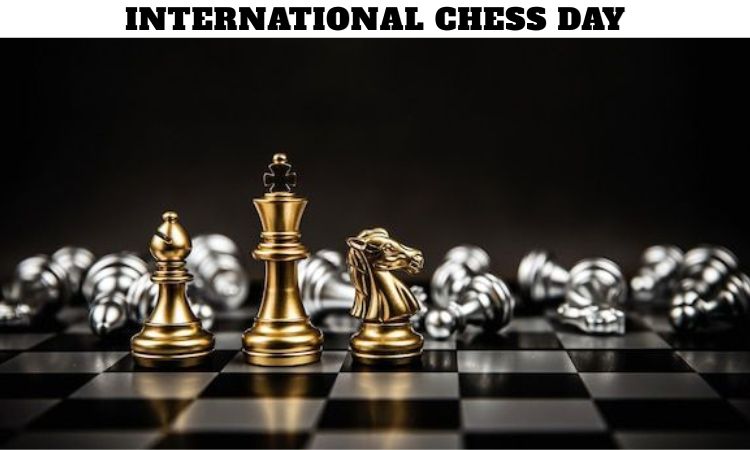
International Chess Day is celebrated every year on July 20 to honor one of the world’s oldest and most intellectually demanding games. Chess has been played for centuries and continues to captivate millions of people across cultures, languages, and generations. The day commemorates the founding of the International Chess Federation (FIDE) on July 20, 1924, in Paris. Since then, chess has evolved from a royal pastime into a globally recognized sport, educational tool, and cultural bridge.
The celebration of International Chess Day highlights the importance of strategic thinking, patience, concentration, and creativity. Whether played casually in parks, competitively in tournaments, or digitally through online platforms, chess remains a game that challenges the mind and encourages lifelong learning. Players of all ages participate in events, exhibitions, workshops, and friendly matches to celebrate the game and its enduring legacy.
What is the history of International Chess Day?
International Chess Day was established to mark the creation of FIDE, the organization responsible for governing international chess competitions and promoting the game worldwide. FIDE was founded in 1924 with the motto “Gens Una Sumus,” which translates to “We are one family.” This motto reflects the unifying nature of chess, a game that brings together people from different nations and backgrounds.
In 1966, UNESCO officially recognized July 20 as International Chess Day, giving the celebration global visibility. Over the decades, the day has grown into an international event supported by chess federations, schools, community organizations, and online chess platforms. The United Nations also acknowledged the educational and cultural value of chess when the General Assembly proclaimed July 20 as World Chess Day in 2019, further strengthening its international significance.
Why is International Chess Day celebrated on July 20?
July 20 was chosen because it marks the anniversary of FIDE’s founding in Paris in 1924. The date symbolizes the beginning of organized international cooperation in chess. By celebrating on this day, the global chess community recognizes the role FIDE has played in standardizing rules, organizing championships, supporting players, and expanding the reach of the game.
The date also serves as a reminder of chess’s ability to connect people across political, cultural, and linguistic boundaries. International Chess Day is not only about competition; it is also about friendship, learning, and mutual respect among players worldwide.
How did chess become a global game?
Chess originated from earlier strategy games that developed in ancient India before spreading to Persia, the Middle East, and eventually Europe. Over centuries, the rules evolved into the modern form of chess known today. The game gained popularity among scholars, nobles, military leaders, and ordinary citizens alike.
With the rise of international travel, printed books, and organized tournaments in the nineteenth century, chess became increasingly global. The establishment of FIDE accelerated this process by creating a unified framework for international competition. In recent decades, online platforms have made chess accessible to anyone with an internet connection, allowing millions of players to compete and learn regardless of location.
What makes chess unique among games?
Chess is often described as a perfect balance between simplicity and complexity. The rules are relatively straightforward, yet the number of possible positions is extraordinarily large. Every move requires careful evaluation of threats, opportunities, and long-term plans.
Unlike games that rely heavily on chance, chess is primarily a contest of skill, preparation, and decision-making. Players must analyze patterns, calculate variations, and adapt to changing circumstances. This combination of logic, creativity, and psychological insight is one reason chess has remained popular for centuries.
How does chess benefit the brain?
Research and educational programs have shown that chess can support cognitive development in several ways. Regular play may improve concentration, memory, problem-solving ability, and strategic thinking. Children who learn chess often develop better planning skills and greater patience when approaching complex tasks.
For adults, chess provides mental stimulation that encourages continuous learning and analytical thinking. The game requires players to evaluate multiple possibilities before making decisions, which can strengthen reasoning and decision-making abilities. Many educators use chess as a tool to teach critical thinking and perseverance.
What role does chess play in education?
Schools around the world increasingly incorporate chess into extracurricular activities and educational programs. Teachers value chess because it encourages focus, discipline, and logical reasoning. Students learn to think ahead, consider consequences, and develop strategies to achieve their goals.
Chess also promotes sportsmanship. Players must respect their opponents, follow established rules, and accept both victories and defeats gracefully. These lessons can extend beyond the chessboard and contribute to personal development in academic and social settings.
How is International Chess Day celebrated around the world?
Celebrations vary from country to country, but many communities organize tournaments, simultaneous exhibitions, lectures, and beginner workshops. Chess clubs often host open events where experienced players teach newcomers the basics of the game. Libraries, schools, and cultural centers may arrange educational sessions highlighting the history and significance of chess.
Online celebrations have become increasingly popular. Digital platforms host special tournaments, puzzle competitions, and livestreamed matches featuring grandmasters. These virtual events allow players from different continents to participate together, reflecting the truly global nature of modern chess.
Who are some of the most influential chess players in history?
Many legendary players have shaped the development of chess. Wilhelm Steinitz established important positional principles. José Raúl Capablanca was celebrated for his exceptional endgame technique. Bobby Fischer popularized chess in the United States and inspired a generation of players.
Garry Kasparov dominated world chess for many years and became a symbol of modern competitive play. Magnus Carlsen has brought unprecedented global attention to the game through his achievements and online presence. Each of these players contributed to chess theory, competition, and public interest in unique ways.
Why is online chess so popular today?
The growth of online chess has transformed the way people learn and play. Digital platforms offer instant matchmaking, instructional videos, puzzles, and analysis tools. Players can compete against opponents from around the world at any time of day.
The popularity of online streaming and chess content creators has also introduced the game to new audiences. Viewers can watch grandmaster tournaments, educational lessons, and entertaining commentary, making chess more accessible and engaging than ever before.
What is the future of chess?
Chess continues to evolve while preserving its traditional foundations. Advances in technology have expanded access to training resources and international competition. Artificial intelligence has deepened the understanding of chess strategy, influencing how professionals prepare for games.
At the same time, grassroots initiatives aim to introduce chess to more schools and communities. As awareness of its educational and cognitive benefits grows, chess is likely to remain an important cultural and intellectual activity for future generations.
How can beginners participate in International Chess Day?
Beginners can celebrate International Chess Day by learning the basic rules, solving simple puzzles, or playing friendly games with family and friends. Many local chess clubs welcome new players and offer introductory lessons. Online platforms also provide tutorials and practice games designed specifically for beginners.
The day is an excellent opportunity to explore chess without feeling intimidated by competitive play. The focus of International Chess Day is not only on winning games but also on enjoying the process of learning, thinking, and connecting with others through a shared interest.
What is the lasting significance of International Chess Day?
International Chess Day celebrates more than a board game. It recognizes a tradition that has connected civilizations for centuries and continues to inspire intellectual curiosity, creativity, and friendship. Chess teaches valuable lessons about planning, resilience, and thoughtful decision-making.
As millions of people gather on July 20 to play, teach, and discuss chess, they participate in a global celebration of human intelligence and cultural exchange. The enduring popularity of chess demonstrates that a simple set of pieces on a checkered board can create meaningful connections across the world and across generations.
Frequently Asked Questions (FAQs)
1. When is International Chess Day celebrated?
International Chess Day is celebrated every year on July 20.
2. Why is International Chess Day observed on July 20?
The date marks the founding of the International Chess Federation (FIDE) in Paris on July 20, 1924.
3. What is the purpose of International Chess Day?
The day promotes chess as a game of strategy, education, cultural exchange, and intellectual development.
4. Who organizes International Chess Day activities?
Activities are organized by FIDE, national chess federations, schools, clubs, community groups, and online platforms.
5. Is International Chess Day recognized by the United Nations?
Yes, the United Nations General Assembly proclaimed July 20 as World Chess Day in 2019.
6. Can beginners participate in International Chess Day?
Yes, beginners are encouraged to join friendly games, workshops, and introductory lessons.
7. What are the benefits of playing chess?
Chess can improve concentration, memory, problem-solving skills, strategic thinking, and patience.
8. How is International Chess Day celebrated online?
Online celebrations include tournaments, puzzle challenges, livestreamed matches, and educational events.
9. What does the FIDE motto “Gens Una Sumus” mean?
It means “We are one family,” emphasizing the unifying spirit of chess.
10. Why is chess considered a universal game?
Chess is played worldwide and transcends language, culture, nationality, and age, making it a truly global activity.