
What Is National U.S. Postage Stamp Day and Why Is It Celebrated on July 1?
National U.S. Postage Stamp Day is observed annually on July 1 to commemorate the history, cultural significance, and enduring importance of postage stamps in the United States. This special day recognizes the role stamps have played in communication, commerce, historical preservation, and the development of the nation’s postal system.
For generations, postage stamps have served as much more than simple proof of payment for mail delivery. They have acted as miniature works of art, historical records, educational tools, and symbols of national identity. Through their designs, stamps have celebrated presidents, historical events, scientific achievements, wildlife, cultural icons, and significant milestones in American history.
National U.S. Postage Stamp Day encourages individuals to learn about postal history, appreciate stamp artistry, reconnect through handwritten correspondence, and explore the fascinating hobby of stamp collecting.
The observance highlights the remarkable journey of the United States postal system and its continuing importance in modern society.
How Did National U.S. Postage Stamp Day Begin?
National U.S. Postage Stamp Day was established to honor the introduction and ongoing significance of postage stamps in American life. Although the exact origins of the observance are not fully documented, the holiday reflects a long-standing appreciation for the nation’s postal heritage.
The United States introduced its first official postage stamps in 1847. Prior to that time, postal rates were often paid by recipients rather than senders, and mail delivery practices lacked standardization.
The introduction of adhesive postage stamps revolutionized communication by simplifying mail processing and making postal services more accessible to the public.
As stamp collecting became increasingly popular during the nineteenth and twentieth centuries, organizations and collectors promoted awareness of postal history through commemorative observances, exhibitions, and educational programs.
National U.S. Postage Stamp Day continues this tradition by celebrating the enduring legacy of American stamps and the stories they tell.
What Is a Postage Stamp?
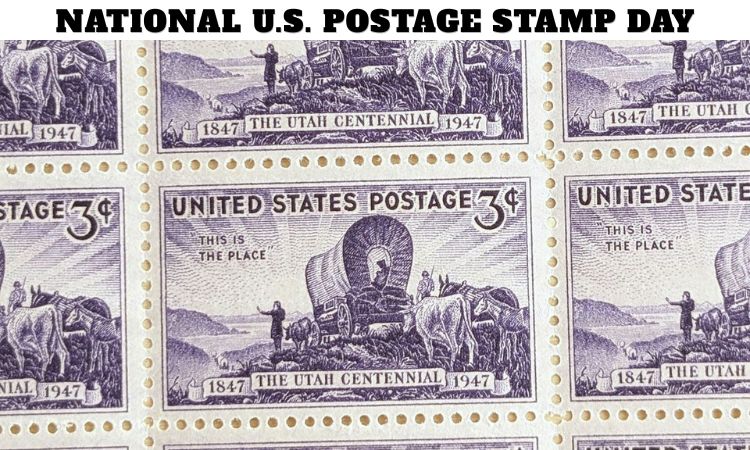
A postage stamp is a small adhesive label issued by a postal authority to indicate payment for the delivery of mail.
Typically attached to letters, postcards, and packages, stamps serve several important functions:
- Evidence of prepaid postage
- Identification of postal rates
- Promotion of national heritage
- Commemoration of significant people and events
- Artistic expression
Modern stamps often feature intricate designs, advanced printing techniques, and security features.
Beyond their practical purpose, stamps provide valuable insights into a nation’s history, culture, values, and achievements.
Because of their historical and artistic significance, many stamps become highly prized collectibles.
National U.S. Postage Stamp Day celebrates both the functional and cultural importance of these small yet meaningful objects.
When Were the First U.S. Postage Stamps Issued?
The first official United States postage stamps were issued on July 1, 1847.
These pioneering stamps featured portraits of two prominent American statesmen:
- Benjamin Franklin on the five-cent stamp
- George Washington on the ten-cent stamp
Benjamin Franklin was selected because of his important contributions to the establishment of the American postal system. George Washington was chosen in recognition of his role as the nation’s first president.
The introduction of these stamps marked a significant milestone in the modernization of postal services throughout the United States.
The issuance of the 1847 stamps simplified mail processing, increased efficiency, and encouraged broader public use of postal services.
National U.S. Postage Stamp Day commemorates this historic development and its lasting impact on communication.
Why Are Postage Stamps Historically Significant?
Postage stamps hold tremendous historical significance because they document important events, honor influential individuals, and reflect societal values.
Throughout American history, stamps have commemorated:
- Presidents and political leaders
- Military achievements
- Civil rights movements
- Scientific discoveries
- Cultural milestones
- National parks
- Space exploration
- Literary figures
Each stamp serves as a miniature historical record.
Collectors and historians often study stamps to gain insights into political developments, artistic trends, technological advancements, and social change.
Stamps also illustrate how nations choose to represent themselves and preserve collective memory.
National U.S. Postage Stamp Day highlights this important educational and historical role.
What Is Philately and Why Is It Popular?
Philately is the study and collection of postage stamps and related postal materials.
Stamp collecting is one of the world’s oldest and most popular hobbies.
Philatelists often collect stamps based on specific interests, such as:
- Historical periods
- Countries
- Themes
- Famous individuals
- Transportation
- Wildlife
- Sports
- Space exploration
Several factors contribute to philately’s popularity:
- Historical value
- Educational benefits
- Artistic appreciation
- Research opportunities
- Social interaction
- Investment potential
Stamp collecting encourages curiosity, organization, and lifelong learning.
Many collectors begin during childhood and continue pursuing the hobby throughout their lives.
National U.S. Postage Stamp Day inspires both experienced collectors and newcomers to explore philately.
How Have U.S. Postage Stamp Designs Evolved Over Time?
U.S. postage stamp designs have changed significantly since 1847.
Early stamps primarily featured portraits of national leaders and statesmen. As printing technology improved, stamp designs became increasingly sophisticated and diverse.
Modern stamps celebrate a broad range of subjects, including:
- American history
- Nature and wildlife
- Arts and entertainment
- Scientific achievements
- Sports legends
- Cultural diversity
- National holidays
- Architectural landmarks
Advancements in printing techniques have introduced:
- Multicolor printing
- Engraving
- Photography
- Self-adhesive formats
- Commemorative series
Contemporary stamps often feature highly detailed artwork created by accomplished designers and illustrators.
National U.S. Postage Stamp Day recognizes the artistic excellence represented in stamp design.
How Has the U.S. Postal System Influenced American Society?
The United States postal system has played a critical role in national development.
Historically, reliable mail delivery contributed to:
- Economic growth
- Political communication
- Educational expansion
- Social connectivity
- Westward expansion
- Commercial development
Postal services connected distant communities, facilitated business transactions, and supported democratic participation.
The postal network also helped distribute newspapers, books, government information, and personal correspondence across vast distances.
Even in the digital age, postal services remain essential for delivering packages, official documents, medications, and election materials.
National U.S. Postage Stamp Day celebrates this enduring contribution to American society.
How Can People Celebrate National U.S. Postage Stamp Day?
There are many meaningful ways to celebrate National U.S. Postage Stamp Day.
Popular activities include:
- Starting a stamp collection
- Visiting a postal museum
- Writing handwritten letters
- Organizing stamp exhibitions
- Learning about postal history
- Attending collector meetings
- Researching historic stamps
- Sharing collections with family members
Many collectors use the day to organize albums, acquire new stamps, or participate in philatelic events.
Families can also celebrate by teaching children about the history of communication and encouraging letter writing.
The observance provides an excellent opportunity to appreciate both historical traditions and personal connections.
What Are Some of the Most Famous U.S. Stamps?
Several U.S. stamps have achieved legendary status among collectors.
Notable examples include:
- The 1847 Benjamin Franklin stamp
- The 1847 George Washington stamp
- The Inverted Jenny stamp
- Columbian Exposition commemorative stamps
- The Pony Express commemoratives
- Early airmail stamps
The Inverted Jenny, issued in 1918, is especially famous because of a printing error that resulted in an airplane appearing upside down.
Rare stamps often command substantial prices at auctions due to their scarcity, historical importance, and collector demand.
National U.S. Postage Stamp Day encourages appreciation for these remarkable pieces of postal history.
Why Is Stamp Collecting Educational?
Stamp collecting offers numerous educational benefits.
Collectors often develop knowledge in areas such as:
- History
- Geography
- Politics
- Art
- Science
- Culture
- Economics
Researching stamps encourages critical thinking, attention to detail, and organizational skills.
Young collectors frequently gain a broader understanding of world events and international cultures.
Philately also promotes patience, curiosity, and lifelong learning.
Because stamps frequently commemorate significant achievements and historical figures, they serve as effective educational resources.
National U.S. Postage Stamp Day highlights the intellectual value of this rewarding hobby.
Why Does National U.S. Postage Stamp Day Continue to Matter in the Digital Age?
Although digital communication dominates modern life, National U.S. Postage Stamp Day remains highly relevant.
Physical mail continues to provide personal, tangible connections that electronic communication cannot fully replicate.
Handwritten letters often carry emotional significance and create lasting memories.
Additionally, stamps continue preserving historical narratives and artistic traditions.
The holiday reminds society of the importance of communication, heritage preservation, and meaningful human connection.
National U.S. Postage Stamp Day also encourages appreciation for the dedicated individuals who maintain postal services across the nation.
What Can We Learn from National U.S. Postage Stamp Day?
National U.S. Postage Stamp Day demonstrates that even small objects can possess tremendous historical, cultural, and educational value.
The observance teaches the importance of preserving history, honoring national achievements, and maintaining personal connections through communication.
It also highlights how innovations such as postage stamps transformed society and continue influencing daily life.
By celebrating this holiday, individuals gain a deeper appreciation for the rich legacy of the United States postal system.
National U.S. Postage Stamp Day, observed annually on July 1, commemorates the history, artistry, and significance of postage stamps in American society. From the issuance of the first U.S. stamps in 1847 to modern commemorative designs, stamps have documented the nation’s journey while connecting people across generations and distances.
Whether through collecting, historical research, or handwritten correspondence, National U.S. Postage Stamp Day provides a meaningful opportunity to celebrate one of America’s most enduring institutions.
Frequently Asked Questions (FAQs)
1. When is National U.S. Postage Stamp Day celebrated?
National U.S. Postage Stamp Day is celebrated annually on July 1.
2. Why is National U.S. Postage Stamp Day observed on July 1?
The date commemorates the issuance of the first official U.S. postage stamps on July 1, 1847.
3. What were the first U.S. postage stamps?
The first stamps featured Benjamin Franklin and George Washington.
4. What is philately?
Philately is the study and collection of postage stamps and postal history.
5. Why are postage stamps historically important?
They preserve historical events, honor important figures, and reflect cultural values.
6. How can someone start a stamp collection?
Begin by saving stamps from mail, purchasing starter collections, or joining collector organizations.
7. What is the Inverted Jenny stamp?
It is a famous U.S. stamp featuring an upside-down airplane caused by a printing error.
8. Are stamps still relevant today?
Yes, stamps continue serving postal, historical, artistic, and collectible purposes.
9. How can people celebrate National U.S. Postage Stamp Day?
People can write letters, visit museums, start collections, or study postal history.
10. What educational benefits does stamp collecting provide?
Stamp collecting promotes learning about history, geography, culture, art, and world events.