
Why Is National Paper Airplane Day Celebrated on May 26?
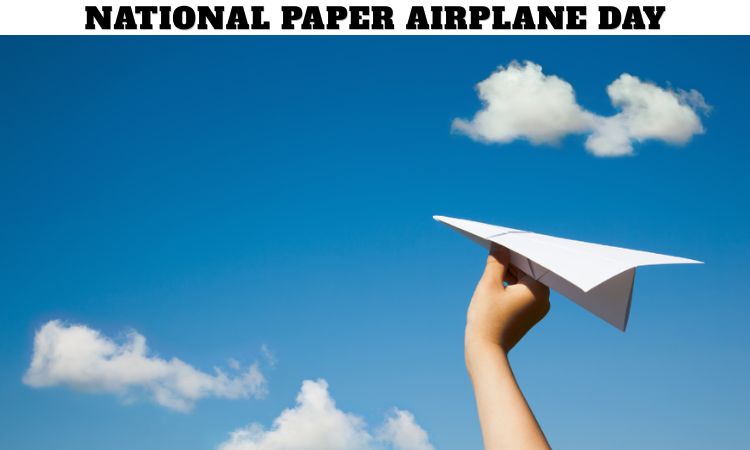
Every year on May 26, people across the United States celebrate National Paper Airplane Day, a playful and educational holiday dedicated to one of the simplest yet most entertaining inventions ever created. With only a sheet of paper and a little creativity, paper airplanes have inspired generations of children and adults to explore imagination, engineering, flight, and friendly competition.
National Paper Airplane Day recognizes the timeless joy of folding paper into flying creations and watching them glide through the air. The holiday encourages people to reconnect with creativity, curiosity, and hands-on learning while celebrating the fascinating science behind flight and aerodynamics.
Paper airplanes are more than childhood toys. They are practical examples of basic engineering principles, design experimentation, and artistic expression. Schools, families, aviation enthusiasts, and hobbyists often use the holiday to organize contests, educational workshops, and creative activities focused on flight distance, accuracy, and innovative airplane designs.
The celebration also reminds people that simple activities can inspire learning, creativity, teamwork, and fun without requiring expensive materials or advanced technology.
What Is the History of Paper Airplanes?
The history of paper airplanes dates back centuries and is closely connected to the history of paper folding and early aviation experiments. While the exact origin of paper airplanes is uncertain, historians believe that folded paper creations first appeared shortly after paper itself was invented in ancient China around two thousand years ago.
Paper folding later evolved into artistic traditions in several cultures, including the Japanese art of origami. As aviation science developed during the nineteenth and twentieth centuries, folded paper models began to resemble airplanes and gliders inspired by real aircraft.
During the early days of aviation, engineers and inventors often used paper models to test aerodynamic concepts. Small paper gliders helped researchers understand airflow, lift, balance, and wing design before constructing larger flying machines.
The popularity of paper airplanes increased dramatically after the invention of powered aircraft by aviation pioneers such as Orville Wright and Wilbur Wright. Children became fascinated with airplanes and began creating folded paper versions inspired by real aircraft.
Over time, paper airplanes became popular educational tools and recreational toys around the world. National Paper Airplane Day was established to celebrate this creative activity and recognize its role in inspiring curiosity about flight and engineering.
Why Do People Love Paper Airplanes So Much?
Paper airplanes remain popular because they combine creativity, simplicity, and entertainment in a way that appeals to people of all ages. Unlike many modern toys and electronic devices, paper airplanes require only paper, imagination, and basic folding skills.
People enjoy the challenge of designing airplanes that fly farther, faster, or more accurately than others. Every fold affects the airplane’s performance, encouraging experimentation and problem-solving.
Paper airplanes also create a sense of nostalgia. Many adults remember making airplanes during childhood at school, home, or with friends. These memories make paper airplanes emotionally meaningful across generations.
Another reason for their popularity is accessibility. Anyone can make a paper airplane regardless of age, skill level, or budget. This universal simplicity has helped paper airplanes remain relevant for decades.
The activity also promotes social interaction. Families, classmates, and coworkers often enjoy friendly paper airplane competitions and collaborative design challenges.
In educational settings, paper airplanes help students understand science and engineering concepts in a hands-on and engaging way, making learning more interactive and memorable.
How Is National Paper Airplane Day Celebrated?
National Paper Airplane Day is celebrated with a variety of creative and educational activities. Many schools organize paper airplane folding contests where students compete for longest flight distance, best design, or highest accuracy.
Families often spend time together making paper airplanes using different folding techniques and colorful paper designs. Parents and children experiment with wing shapes, nose designs, and launch styles to see how each variation affects flight performance.
Community centers, libraries, museums, and science organizations sometimes host workshops and demonstrations focused on aerodynamics and paper engineering. These events encourage participants to learn about the science of flight while having fun.
Many aviation enthusiasts celebrate the day by recreating famous aircraft designs using paper models. Others challenge themselves to invent completely original airplane structures.
Paper airplane competitions are especially popular during the holiday. Participants may compete in categories such as longest flight time, greatest distance, or most accurate landing.
Social media also plays a major role in modern celebrations. People share folding tutorials, flight videos, and creative airplane designs online, inspiring others to participate in the holiday.
Some workplaces even organize friendly office competitions to encourage creativity and teamwork among employees.
What Makes Paper Airplanes Educational?
Paper airplanes are valuable educational tools because they demonstrate important scientific and mathematical concepts in a simple and interactive way.
When building paper airplanes, students learn about aerodynamics, including lift, drag, thrust, and gravity. These are the same principles used in real aircraft engineering.
Changing the airplane’s folds, wings, or weight distribution affects how it flies, teaching lessons about balance, symmetry, and air resistance. Students can observe how small adjustments improve or reduce flight performance.
Paper airplane activities also encourage critical thinking and experimentation. Builders must test different designs, identify problems, and make improvements through trial and error.
Mathematics skills are involved as well. Measuring flight distance, comparing angles, and calculating performance help reinforce geometry and data analysis concepts.
The activity supports creativity because participants can invent unique airplane styles and decorative patterns while learning practical engineering skills.
Teachers frequently use paper airplane projects to make science lessons more engaging and hands-on for students of different age groups.
How Do Different Paper Airplane Designs Affect Flight?
The design of a paper airplane has a major impact on how it performs in the air. Different shapes and folding techniques create variations in speed, stability, distance, and flight duration.
Long and narrow airplanes usually fly faster because they experience less air resistance. These designs are often used for distance competitions.
Wide-winged airplanes glide more slowly and stay airborne longer because they generate greater lift. These designs are ideal for achieving longer flight times.
The nose of the airplane also affects performance. A heavier nose can improve stability, while lighter noses may allow for smoother gliding.
Wing angles play an important role as well. Upward wing tips can improve balance and prevent sudden crashes, while symmetrical folds help maintain straight flight paths.
Even the type of paper matters. Lightweight paper allows smoother gliding, while thicker paper may increase durability and stability.
Experimenting with these variables teaches builders how engineering decisions influence performance in both paper airplanes and real aircraft.
Why Are Paper Airplanes Connected to Aviation History?
Paper airplanes have long been connected to the history of aviation because they serve as simplified models of real aircraft and gliders.
Before building large airplanes, engineers often used small-scale models to study airflow and test wing shapes. Paper models allowed inventors to explore aerodynamic principles safely and affordably.
The Wright brothers and other aviation pioneers relied heavily on experimentation with gliders and prototypes before achieving powered flight. Paper airplane activities reflect similar principles of testing, adjustment, and innovation.
Many aerospace engineers and pilots developed an interest in aviation during childhood through activities like building model planes and paper airplanes. These simple projects often inspire curiosity about aircraft design and flight technology.
Today, aerospace educators continue using paper airplanes to introduce students to engineering careers and aviation sciences.
The connection between paper airplanes and aviation demonstrates how simple educational activities can inspire future innovation and scientific discovery.
What Are Some Popular Types of Paper Airplanes?
There are countless paper airplane designs, ranging from simple beginner folds to advanced engineering-inspired models.
The classic dart airplane is one of the most common designs. It features a pointed nose and narrow wings designed for speed and long-distance flight.
Glider airplanes have broader wings that allow them to float smoothly through the air for extended periods. These designs are ideal for indoor flying.
Stunt airplanes include special folds that allow loops, spins, or curved flight patterns. These designs are popular among hobbyists looking for creative performance.
Some builders create realistic paper airplanes modeled after fighter jets, commercial aircraft, or space shuttles. Advanced origami techniques are often used for these complex designs.
Competitive paper airplane enthusiasts continuously invent new designs optimized for world-record attempts in distance or flight duration categories.
The variety of paper airplane styles ensures that the activity remains creative and endlessly entertaining.
Why Does National Paper Airplane Day Continue to Grow in Popularity?
National Paper Airplane Day continues to grow because it combines entertainment, creativity, education, and nostalgia in a universally accessible activity.
In an increasingly digital world, many people appreciate simple hands-on experiences that encourage imagination and personal interaction. Paper airplanes provide screen-free entertainment that can be enjoyed anywhere.
Educational organizations also support the holiday because it promotes STEM learning through practical experimentation and problem-solving.
Social media has helped spread awareness by allowing people to share tutorials, competitions, and creative airplane designs with global audiences.
Families and schools value the holiday because it encourages collaboration, curiosity, and active participation without requiring expensive materials or complicated equipment.
Paper airplanes also represent timeless childhood fun. The joy of folding paper and watching it fly continues to connect generations and inspire creativity around the world.
Most importantly, National Paper Airplane Day reminds people that innovation often begins with simple ideas and curiosity. A single folded sheet of paper can spark imagination, scientific thinking, and a lifelong fascination with flight.
Frequently Asked Questions (FAQs)
1. When is National Paper Airplane Day celebrated?
National Paper Airplane Day is celebrated every year on May 26.
2. What is National Paper Airplane Day?
It is a holiday dedicated to making, flying, and enjoying paper airplanes.
3. Why are paper airplanes educational?
They help teach aerodynamics, engineering, problem-solving, and creativity.
4. Who invented paper airplanes?
There is no single inventor, but paper airplanes evolved from ancient paper folding traditions and aviation experiments.
5. What materials are needed to make a paper airplane?
Usually only a sheet of paper is needed to create a paper airplane.
6. What is the best paper airplane design for distance?
Long, narrow dart-style designs are often best for long-distance flights.
7. Can paper airplanes help students learn science?
Yes, they demonstrate concepts such as lift, drag, gravity, and airflow.
8. Are there paper airplane competitions?
Yes, many competitions focus on flight distance, accuracy, and airtime.
9. Why do people enjoy paper airplanes?
People enjoy them because they are creative, simple, entertaining, and nostalgic.
10. Is National Paper Airplane Day celebrated worldwide?
While it originated in the United States, people in many countries enjoy celebrating the holiday.