

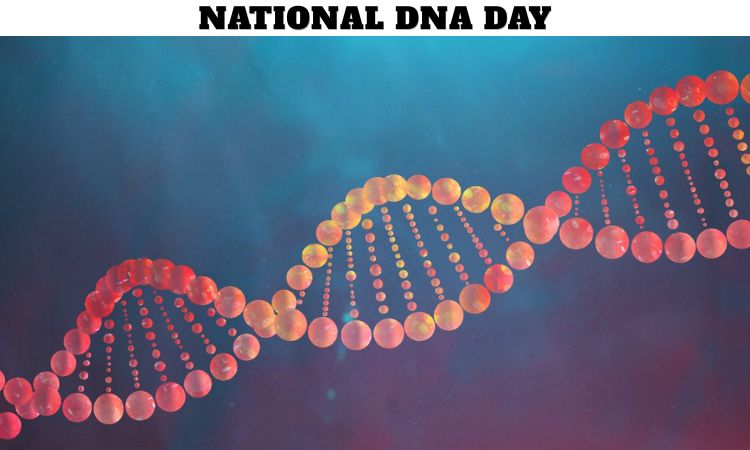
What Is National DNA Day, and Why Is It Celebrated on April 25?
National DNA Day, observed annually on April 25, commemorates one of the most significant scientific breakthroughs in human history—the discovery of the double helix structure of DNA. This date also marks the completion of the Human Genome Project, a landmark achievement that revolutionized genetics, medicine, and biotechnology.
We recognize this day to honor the scientists whose work has transformed our understanding of life at the molecular level. It serves as a powerful reminder of how DNA influences everything from our physical traits to our susceptibility to diseases.
How Did the Discovery of DNA Shape Modern Science?
The discovery of DNA’s structure in 1953 unlocked a new era in science. DNA, or deoxyribonucleic acid, carries the genetic instructions that guide the growth, development, and functioning of all living organisms.
This breakthrough laid the foundation for:
- Genetic engineering and biotechnology
- Forensic science advancements
- Personalized medicine
- Disease diagnosis and treatment innovations
We now live in an age where scientists can analyze DNA to predict health risks, develop targeted therapies, and even trace human ancestry with remarkable precision.
What Is the Human Genome Project and Why Does It Matter?
The Human Genome Project, completed in 2003, was an international research effort to map and understand all the genes in human DNA. This monumental achievement provided a complete blueprint of human genetics.
The project has had far-reaching implications:
- It enabled early detection of genetic disorders
- It accelerated drug development
- It improved cancer research and treatment strategies
- It paved the way for genomic medicine
We now have the tools to decode the genetic basis of diseases, offering hope for more effective and personalized healthcare solutions.
Why Is DNA Important in Everyday Life?
DNA is not just a scientific concept—it plays a crucial role in our daily lives. From determining our eye color to influencing our metabolism, DNA is the blueprint of life.
Key areas where DNA impacts us include:
- Health and Medicine: Identifying genetic predispositions to diseases
- Forensics: Solving crimes through DNA fingerprinting
- Agriculture: Enhancing crop yield and resistance
- Ancestry Testing: Understanding family lineage and heritage
We rely on DNA-based technologies more than ever before, making this day highly relevant in today’s world.
How Do Schools and Institutions Celebrate National DNA Day?
Educational institutions and scientific organizations celebrate National DNA Day through various activities aimed at spreading awareness and encouraging curiosity.
Common celebrations include:
- Science workshops and seminars
- DNA extraction experiments
- Essay and quiz competitions
- Interactive webinars with genetic experts
These activities help students and enthusiasts gain a deeper understanding of genetics and inspire future scientists.
What Are Some Interesting Facts About DNA?
DNA is full of fascinating characteristics that highlight its complexity and importance:
- Every human shares 99.9% of their DNA with others
- DNA in one cell, if stretched, is about 2 meters long
- Humans share about 60% of their DNA with bananas
- There are approximately 3 billion base pairs in human DNA
These facts demonstrate the incredible intricacy and universality of genetic material.
How Has DNA Research Advanced Medical Science?
DNA research has transformed modern medicine in unprecedented ways. We can now diagnose and treat diseases at a genetic level.
Major advancements include:
- Gene therapy for inherited disorders
- Targeted cancer treatments
- Pharmacogenomics for personalized drug responses
- Prenatal genetic screening
We are moving toward a future where treatments are tailored specifically to an individual’s genetic makeup.
What Role Does DNA Play in Forensic Science?
DNA has become a cornerstone of forensic investigations. By analyzing genetic material found at crime scenes, authorities can identify suspects with high accuracy.
Applications in forensics include:
- Crime scene investigation
- Paternity testing
- Identification of disaster victims
- Cold case resolution
DNA evidence has significantly improved the justice system by providing reliable and objective proof.
How Can Individuals Celebrate National DNA Day?
Celebrating National DNA Day can be both educational and engaging. Individuals can participate in various activities to deepen their understanding of genetics.
Ideas include:
- Taking an online genetics course
- Reading books on DNA and biotechnology
- Participating in science events
- Exploring ancestry through DNA testing kits
We encourage everyone to use this day as an opportunity to learn and appreciate the science behind life itself.
What Is the Future of DNA Technology?
The future of DNA research holds immense potential. Emerging technologies are pushing the boundaries of what is possible in genetics.
Key developments to watch include:
- CRISPR gene editing
- Synthetic biology
- DNA data storage
- Advanced genomic sequencing
We are entering an era where genetic engineering could solve some of humanity’s greatest challenges, from curing diseases to improving food security.
Frequently Asked Questions (FAQs)
1. What is National DNA Day?
National DNA Day is celebrated on April 25 to honor the discovery of DNA’s structure and the completion of the Human Genome Project.
2. Why is April 25 chosen for DNA Day?
It marks both the publication of DNA’s double helix structure in 1953 and the completion of the Human Genome Project in 2003.
3. What does DNA stand for?
DNA stands for Deoxyribonucleic Acid, the molecule that carries genetic information.
4. Who discovered the structure of DNA?
The structure of DNA was discovered by scientists James Watson and Francis Crick, with contributions from Rosalind Franklin.
5. What is the Human Genome Project?
It is a global scientific initiative that mapped all human genes, completed in 2003.
6. How is DNA used in medicine?
DNA helps in diagnosing diseases, developing treatments, and enabling personalized medicine.
7. Can DNA determine ancestry?
Yes, DNA testing can trace lineage and identify genetic heritage.
8. What is DNA fingerprinting?
It is a technique used to identify individuals based on unique patterns in their DNA.
9. How long is DNA in the human body?
If stretched out, DNA from one human cell would be about 2 meters long.
10. What is the future of DNA technology?
Future advancements include gene editing, synthetic biology, and personalized healthcare innovations.