

What Is National Cuban Sandwich Day?
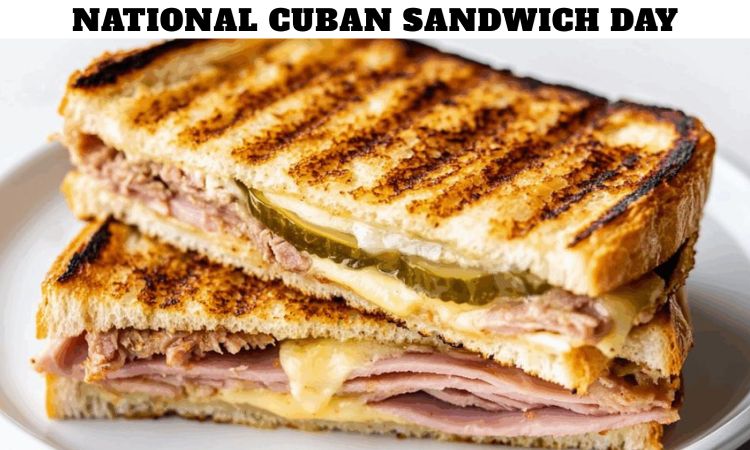
National Cuban Sandwich Day is celebrated on August 23 as a day to appreciate one of the most recognizable sandwiches associated with Cuban-American food culture. Known for its combination of roasted pork, ham, Swiss cheese, pickles, mustard, and Cuban bread, the Cuban sandwich is famous for its crispy exterior, warm filling, and balance of savory, tangy, and slightly sweet flavors.
The sandwich has a fascinating cultural history because its development is closely connected with Cuban communities in the United States, particularly in Florida. Over time, different cities and families developed their own interpretations of the sandwich, creating friendly debates about what makes an authentic Cuban sandwich.
National Cuban Sandwich Day provides an opportunity for food lovers to enjoy this classic sandwich, learn about its cultural background, visit a local Cuban restaurant, or prepare one at home.
Why Is National Cuban Sandwich Day Celebrated on August 23?
August 23 is observed as National Cuban Sandwich Day to recognize and celebrate the Cuban sandwich and the culinary traditions surrounding it. Like many food-related national days, the occasion gives people a reason to enjoy a beloved dish while learning more about its history and cultural significance.
The date also provides restaurants, food enthusiasts, families, and social media users with an opportunity to share their favorite versions of the sandwich. Some people celebrate with a traditional Cuban sandwich, while others experiment with different fillings and cooking methods.
Although the sandwich itself is much older than the modern food holiday, the celebration helps introduce this distinctive dish to people who may never have tried it.
What Is a Cuban Sandwich Made Of?
A traditional Cuban sandwich is made with a relatively simple collection of ingredients, but each one contributes to its characteristic flavor.
The essential ingredients generally include Cuban bread, roasted pork, sliced ham, Swiss cheese, pickles, and yellow mustard. Butter or another form of fat may also be used when pressing and grilling the sandwich.
Cuban bread is particularly important because its light, crisp texture works well when pressed. Roasted pork provides a rich and savory flavor, while ham adds saltiness and depth. Swiss cheese melts beautifully and helps bring the ingredients together.
Pickles provide a sharp, tangy contrast, and mustard adds acidity and a mild bite. When these ingredients are pressed together on a hot grill, the result is a warm sandwich with a crisp exterior and melted cheese.
How Did the Cuban Sandwich Become Popular?
The Cuban sandwich developed alongside Cuban immigrant communities in the United States. Its history is particularly associated with Florida, where Cuban communities established restaurants, bakeries, cafés, and social institutions.
Tampa and Miami are especially famous for their connections to the sandwich. Food historians and enthusiasts have debated the exact origins and evolution of the dish, but there is broad recognition that Cuban immigrants and the communities they established played a central role in its development.
The sandwich was practical for workers because it was filling, portable, and relatively easy to prepare. Over time, it became a staple in cafés and restaurants.
As Cuban-American cuisine gained wider recognition, the Cuban sandwich moved beyond local communities and became popular across the United States. Today, it can be found in restaurants, food trucks, cafés, and home kitchens far beyond Florida.
What Makes a Cuban Sandwich Different From Other Sandwiches?
The Cuban sandwich stands out because of its combination of ingredients and the pressing technique used to prepare it.
Unlike an ordinary cold sandwich, a Cuban sandwich is traditionally heated and pressed. The bread becomes crisp and flattened, while the cheese melts and the meats become warm. The pickles and mustard provide a contrasting tang that prevents the sandwich from tasting overly rich.
The combination of roasted pork and ham is another defining feature. The two meats have different textures and flavors, giving the sandwich more complexity than a simple ham-and-cheese sandwich.
The use of Cuban bread also contributes to its identity. Together, these characteristics make the Cuban sandwich immediately recognizable.
Is the Cuban Sandwich Originally From Cuba?
The Cuban sandwich has strong connections to Cuban cuisine and Cuban communities, but its exact origin is a subject of historical debate.
The sandwich is particularly associated with Cuban-American communities in Florida. Tampa and Miami each have important connections to its history, and different versions of the sandwich developed in these locations.
Some accounts connect the sandwich with Cuban workers and immigrant communities, where it served as a convenient meal. As Cuban communities interacted with other cultural groups, the sandwich evolved.
Therefore, rather than thinking of the Cuban sandwich as a dish with one simple point of origin, it is better understood as a product of cultural exchange and migration. Its history reflects the way food changes as communities settle in new places and interact with different culinary traditions.
How Is a Traditional Cuban Sandwich Prepared?
Preparing a Cuban sandwich starts with slicing Cuban bread horizontally. Mustard is spread over the bread, followed by layers of ham, roasted pork, Swiss cheese, and sliced pickles.
The sandwich is then assembled and brushed or lightly coated with butter on the outside if desired. It is placed in a sandwich press or on a heated cooking surface.
The sandwich is pressed until the bread becomes crisp and golden and the cheese melts. The pressure also compresses the ingredients, giving the Cuban sandwich its characteristic flattened appearance.
It is usually served hot and cut diagonally into smaller portions. The crisp bread, melted cheese, tender pork, salty ham, and tangy pickles create a satisfying combination.
What Is the Difference Between Tampa and Miami Cuban Sandwiches?
The Tampa and Miami versions of the Cuban sandwich are both famous, but there is an important difference between them.
The Tampa-style version traditionally includes an additional ingredient: salami. The inclusion of Genoa salami reflects the influence of Tampa’s Italian immigrant community and its interaction with Cuban and Spanish communities.
The Miami-style Cuban sandwich generally focuses on ham, roasted pork, Swiss cheese, pickles, mustard, and Cuban bread without salami.
This difference has contributed to a long-running culinary debate about which version is the most authentic. However, both versions have historical and cultural importance.
National Cuban Sandwich Day is a perfect opportunity to try both styles and decide which one you prefer.
Why Is Cuban Bread Important to the Sandwich?
Cuban bread plays an important role in creating the traditional texture of the Cuban sandwich.
It is generally long, light, and crusty on the outside while remaining soft inside. Traditional Cuban bread has historically been associated with a distinctive scoring and baking process, and some versions use a palmetto leaf placed along the top during baking.
The bread needs to be sturdy enough to hold several ingredients but light enough to become crisp when pressed.
Using ordinary sandwich bread can produce a tasty meal, but it will not have exactly the same texture or character as a sandwich prepared with Cuban bread.
How Can You Celebrate National Cuban Sandwich Day?
There are plenty of ways to celebrate National Cuban Sandwich Day on August 23.
The easiest option is to visit a Cuban restaurant or café and order a traditional sandwich. Trying both a classic version and a Tampa-style sandwich with salami can make the celebration more interesting.
You can also prepare Cuban sandwiches at home. Gather Cuban bread, roasted pork, ham, Swiss cheese, pickles, and mustard, then press everything together until the bread becomes crisp and the cheese melts.
Families can turn the occasion into a cooking activity by allowing everyone to assemble their own sandwiches. You can also organize a Cuban sandwich tasting featuring different variations.
Another idea is to learn about Cuban-American culinary traditions and explore other dishes associated with Cuban cuisine.
What Are Some Fun Cuban Sandwich Variations?
The traditional Cuban sandwich is delicious on its own, but creative cooks can experiment with variations.
A spicy version can include hot mustard or sliced peppers. A vegetarian interpretation can replace the meat with grilled vegetables, mushrooms, plant-based proteins, or other hearty ingredients.
Some people may experiment with different cheeses or breads, although these changes move away from the traditional recipe.
Another approach is to turn the sandwich into a party-sized appetizer. Mini Cuban sandwiches can be sliced into small portions and served at gatherings.
The key is to preserve the basic idea of contrasting textures and flavors: crisp bread, savory filling, melted cheese, and something tangy such as pickles or mustard.
What Does National Cuban Sandwich Day Teach Us About Food Culture?
National Cuban Sandwich Day is about more than eating a sandwich. It demonstrates how food can tell the story of migration, community, cultural exchange, and adaptation.
The Cuban sandwich represents the influence of Cuban communities in the United States and the way traditional foods can evolve in new environments. Its history also demonstrates how different immigrant communities can contribute ingredients and techniques to a shared food tradition.
The Tampa version, for example, illustrates how Cuban and Italian culinary influences came together. The sandwich’s popularity in Miami reflects another important chapter in Cuban-American food culture.
Celebrating the sandwich therefore offers an enjoyable way to appreciate the people, communities, and traditions behind the food.
What Are the Best Ways to Enjoy a Cuban Sandwich on August 23?
The best way to celebrate depends on personal preference. Traditionalists may want a classic sandwich with roasted pork, ham, Swiss cheese, pickles, mustard, and Cuban bread.
Others may want to compare Tampa and Miami versions. Home cooks can experiment with their own variations, while food lovers can visit a Cuban restaurant and discover how different chefs prepare the sandwich.
Whatever approach you choose, National Cuban Sandwich Day is an opportunity to slow down, enjoy a satisfying meal, and learn about the cultural story behind it.
August 23 can become a delicious celebration of Cuban-American food traditions, culinary creativity, and one of the most beloved pressed sandwiches in the United States.
Frequently Asked Questions (FAQs)
1. When is National Cuban Sandwich Day?
National Cuban Sandwich Day is celebrated annually on August 23. The day recognizes the Cuban sandwich and its cultural and culinary significance.
2. What is a Cuban sandwich?
A Cuban sandwich is a pressed sandwich traditionally made with Cuban bread, roasted pork, ham, Swiss cheese, pickles, and mustard.
3. What meat is traditionally used in a Cuban sandwich?
Roasted pork and ham are traditionally used in a Cuban sandwich. The combination gives the sandwich its distinctive savory flavor.
4. Does a Cuban sandwich contain salami?
It depends on the regional style. Tampa-style Cuban sandwiches traditionally include Genoa salami, while the Miami-style version generally does not.
5. What cheese is used in a Cuban sandwich?
Swiss cheese is the traditional choice for a Cuban sandwich because it melts well and complements the pork, ham, mustard, and pickles.
6. Is a Cuban sandwich served hot or cold?
A Cuban sandwich is traditionally served hot. It is pressed and grilled until the bread becomes crisp and the cheese melts.
7. Why is Cuban bread used in Cuban sandwiches?
Cuban bread provides the light, crisp texture needed for a traditional pressed Cuban sandwich. It also holds the filling while becoming pleasantly crunchy during grilling.
8. Where is the Cuban sandwich popular?
The Cuban sandwich is particularly popular in Florida, especially in Tampa and Miami. It is also enjoyed throughout the United States and internationally.
9. How can I celebrate National Cuban Sandwich Day?
You can celebrate by visiting a Cuban restaurant, preparing a Cuban sandwich at home, comparing Tampa and Miami versions, or sharing the dish with family and friends.
10. Is the Cuban sandwich actually Cuban?
The Cuban sandwich has strong connections to Cuban cuisine and Cuban-American communities. Its development in the United States, particularly Florida, means its history is closely tied to Cuban immigrant culture and American culinary influences.