

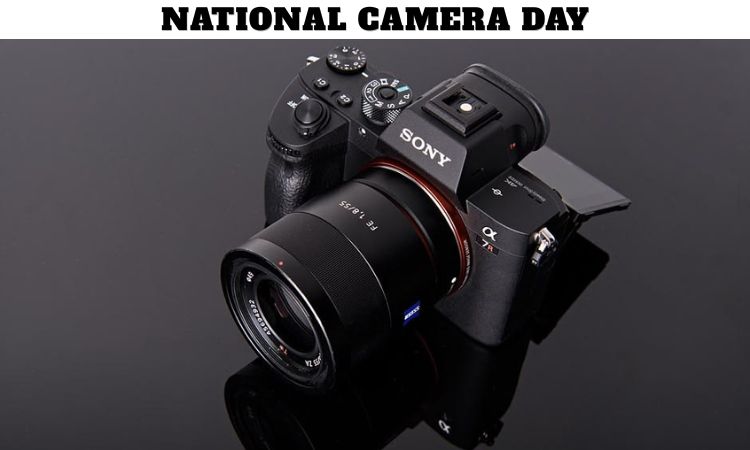
What Is National Camera Day and Why Is It Celebrated on June 29?
National Camera Day is observed every year on June 29 to celebrate the invention, evolution, and cultural significance of cameras and photography. This special day honors the devices that have enabled people to capture life’s most meaningful moments, preserve history, document events, and express creativity through images.
From early camera obscuras to modern digital cameras and smartphone photography, cameras have transformed the way humanity records and shares experiences. Whether capturing family milestones, breathtaking landscapes, historical events, or artistic compositions, cameras have become an indispensable part of everyday life.
National Camera Day encourages photography enthusiasts, professionals, and casual photographers alike to appreciate the remarkable technological advancements that have shaped photography while inspiring people to create and preserve memories for future generations.
How Did Cameras Originate?
The origins of cameras date back centuries and are rooted in the scientific principle known as the camera obscura, which means “dark chamber” in Latin.
Ancient philosophers and scholars observed that when light passes through a small opening into a dark space, it projects an inverted image of the outside scene onto a surface. Early civilizations, including those in ancient China and Greece, documented this optical phenomenon.
During the Renaissance, artists used camera obscura devices to assist with drawing and perspective. However, these early systems could not permanently record images.
The development of photographic technology accelerated during the nineteenth century when inventors sought methods to preserve projected images permanently. These efforts eventually led to the creation of the first practical cameras.
The invention of photography marked a revolutionary milestone in human history, fundamentally changing communication, art, journalism, and documentation.
Who Invented the First Camera?
Determining the inventor of the first camera depends on how the term “camera” is defined.
The concept of the camera obscura evolved over centuries through contributions from numerous scholars and scientists. However, the first successful permanent photograph is generally credited to Joseph Nicéphore Niépce, a French inventor.
In the early 1820s, Niépce developed a photographic process called heliography. Around 1826 or 1827, he produced what is widely considered the world’s oldest surviving photograph.
Subsequent innovations by inventors such as:
- Louis Daguerre
- William Henry Fox Talbot
- George Eastman
- Thomas Sutton
further advanced photographic technology and expanded public access to cameras.
The history of cameras reflects centuries of experimentation, scientific discovery, and technological innovation.
How Did Photography Change Society?
Photography profoundly transformed society in numerous ways.
Before photography, visual documentation depended largely on paintings, sketches, and written descriptions. Cameras introduced a more accurate and immediate method of recording reality.
Photography revolutionized:
- Journalism
- Scientific research
- Historical documentation
- Art
- Advertising
- Communication
- Education
- Entertainment
Photographs have documented wars, social movements, scientific discoveries, and cultural changes throughout history.
Family photography also altered personal memory preservation by allowing individuals to record milestones such as weddings, birthdays, graduations, and vacations.
Today, billions of photographs are captured annually, illustrating the enduring significance of cameras in modern life.
How Have Cameras Evolved Over Time?
Camera technology has undergone extraordinary transformation since its earliest beginnings.
The evolution of cameras includes several important stages:
Early Film Cameras
Nineteenth-century cameras relied on photographic plates and lengthy exposure times. These early devices were often large and cumbersome.
Roll Film Cameras
The introduction of roll film made photography more practical and accessible to the public. Portable cameras became increasingly popular.
Single-Lens Reflex Cameras
SLR cameras offered photographers improved control over focus, exposure, and composition.
Digital Cameras
Digital photography eliminated the need for film, allowing immediate image review, editing, and storage.
Smartphone Cameras
Modern smartphones have democratized photography by placing powerful cameras in billions of hands worldwide.
Advancements continue to improve image quality, automation, portability, and creative possibilities.
Why Are Cameras Important in Everyday Life?
Cameras play an essential role in contemporary society because they enable people to preserve memories, communicate visually, and document experiences.
Common everyday uses include:
- Family photography
- Travel documentation
- Social media sharing
- Educational projects
- Professional work
- Personal creativity
- Security and surveillance
- Business marketing
Photographs often become treasured keepsakes that connect generations and preserve personal histories.
In professional contexts, cameras support numerous industries, including journalism, healthcare, science, real estate, tourism, and entertainment.
The widespread availability of cameras has fundamentally changed how people interact with the world and share their experiences.
What Types of Cameras Are Commonly Used Today?
Modern consumers can choose from a wide variety of cameras designed for different purposes and skill levels.
Popular camera categories include:
Digital Single-Lens Reflex Cameras
DSLR cameras provide extensive manual controls and interchangeable lenses, making them popular among professionals and enthusiasts.
Mirrorless Cameras
Mirrorless systems offer high image quality in compact designs and have become increasingly popular in recent years.
Point-and-Shoot Cameras
These compact cameras emphasize convenience and ease of use.
Action Cameras
Action cameras are designed for adventure activities and extreme environments.
Instant Cameras
Instant cameras produce physical prints immediately after capturing images.
Smartphone Cameras
Smartphones now dominate global photography due to their accessibility, convenience, and advanced imaging capabilities.
Each type serves unique photographic needs and creative goals.
How Has Digital Technology Revolutionized Photography?
Digital technology has dramatically transformed photography.
Traditional film photography required purchasing film, developing negatives, and printing photographs. Digital cameras eliminated many of these limitations.
Benefits of digital photography include:
- Instant image review
- Large storage capacity
- Easy editing
- Convenient sharing
- Lower long-term costs
- Enhanced creative flexibility
Digital technology has also expanded access to photography by reducing technical barriers.
Photo editing software, cloud storage, and social media platforms have further reshaped how images are created, managed, and distributed.
Artificial intelligence and computational photography continue driving innovation, enhancing image quality and simplifying complex photographic tasks.
National Camera Day celebrates these technological achievements while recognizing photography’s enduring artistic value.
Why Is Photography Considered an Art Form?
Photography is widely recognized as a powerful art form because it allows individuals to express ideas, emotions, perspectives, and stories visually.
Artistic photography involves creative decisions regarding:
- Composition
- Lighting
- Color
- Subject selection
- Perspective
- Timing
- Focus
Photographers often use images to explore social issues, document human experiences, interpret landscapes, and communicate personal visions.
Throughout history, photographers have produced iconic works that continue influencing culture and inspiring audiences worldwide.
The artistic potential of photography ensures that cameras remain important creative tools.
How Can People Celebrate National Camera Day?
There are numerous ways to celebrate National Camera Day.
Popular activities include:
- Taking photographs outdoors
- Learning new photography techniques
- Revisiting old family photo albums
- Printing favorite photographs
- Experimenting with creative compositions
- Participating in photo challenges
- Exploring nature photography
- Photographing local landmarks
- Enrolling in photography classes
- Sharing meaningful photographs with loved ones
Many people use National Camera Day as an opportunity to document everyday moments that might otherwise go unnoticed.
The observance also encourages individuals to preserve memories and appreciate the stories behind their photographs.
What Role Do Cameras Play in Preserving History?
Cameras have become indispensable tools for historical preservation.
Photographs provide visual evidence of significant events, social conditions, cultural practices, and everyday life across different eras.
Historical photographs document:
- Wars and conflicts
- Political movements
- Scientific achievements
- Architectural heritage
- Cultural traditions
- Social change
Without photography, much of humanity’s visual history would be lost.
Archives, museums, libraries, and historical institutions rely extensively on photographic collections to preserve and interpret the past.
National Camera Day highlights the importance of safeguarding these visual records for future generations.
How Has Smartphone Photography Changed Modern Culture?
Smartphone cameras have profoundly altered modern culture.
The integration of advanced cameras into mobile devices has made photography more accessible than ever before.
Today, people routinely use smartphones to:
- Capture daily experiences
- Communicate visually
- Share social media content
- Create digital memories
- Conduct business
- Produce creative projects
Social media platforms have amplified the influence of smartphone photography by enabling instantaneous global sharing.
The rise of smartphone photography has also encouraged visual storytelling, citizen journalism, and broader participation in creative expression.
As technology continues evolving, smartphone cameras are expected to play an increasingly prominent role in everyday life.
Why Does National Camera Day Remain Relevant Today?
National Camera Day remains highly relevant because photography continues to shape communication, creativity, and memory preservation in the digital age.
Despite rapid technological change, the fundamental purpose of cameras remains unchanged: capturing moments and preserving stories.
The observance encourages people to appreciate both historical innovations and modern photographic possibilities.
As billions of photographs are created annually, National Camera Day reminds us to value meaningful images and the memories they represent.
What Can We Learn from National Camera Day?
National Camera Day teaches us that photographs possess extraordinary power to document, inspire, educate, and connect people across generations.
The holiday encourages creativity, appreciation for technological innovation, and recognition of photography’s role in preserving human experiences.
Whether using professional equipment or smartphone cameras, people around the world continue capturing images that tell stories, evoke emotions, and preserve history.
National Camera Day, celebrated annually on June 29, honors the remarkable inventions that have transformed how humanity records and shares experiences. From the earliest camera obscura devices to today’s sophisticated digital systems, cameras have revolutionized art, communication, journalism, and personal memory preservation.
The observance provides an opportunity to celebrate photography’s rich history, embrace creativity, and capture meaningful moments that will be cherished for years to come.
Frequently Asked Questions (FAQs)
1. When is National Camera Day celebrated?
National Camera Day is celebrated every year on June 29.
2. What is National Camera Day?
It is a day dedicated to celebrating cameras, photography, and the preservation of memories.
3. What was the earliest form of a camera?
The earliest camera concept was the camera obscura.
4. Who created the first permanent photograph?
Joseph Nicéphore Niépce created the first successful permanent photograph.
5. Why are cameras important?
Cameras help preserve memories, document history, and enable creative expression.
6. What types of cameras are commonly used today?
Popular types include DSLR, mirrorless, compact, action, instant, and smartphone cameras.
7. How has digital photography changed photography?
Digital photography allows instant image review, editing, storage, and sharing.
8. How can people celebrate National Camera Day?
People can take photographs, learn new techniques, print images, or revisit old photo albums.
9. Why is photography considered art?
Photography allows creative expression through composition, lighting, perspective, and storytelling.
10. What role do photographs play in history?
Photographs preserve important historical events, cultural traditions, and social changes.