

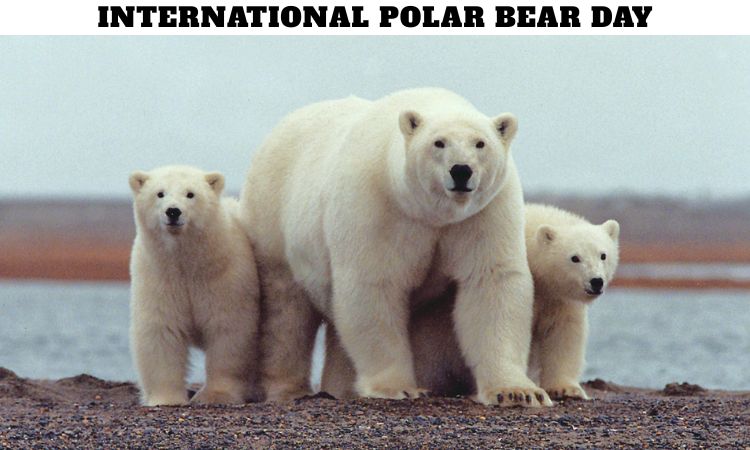
International Polar Bear Day is a global conservation observance dedicated to raising awareness about the survival challenges facing the world’s largest land carnivore—the polar bear. Celebrated annually on February 27, this important day draws attention to climate change, Arctic habitat loss, and the urgent need for environmental action. It serves as a powerful reminder that the future of polar bears is directly tied to the health of our planet.
Why Is International Polar Bear Day Important?
International Polar Bear Day exists to highlight the growing threats to polar bears and to inspire global action. Polar bears are classified as vulnerable due to rapid environmental changes in the Arctic. As sea ice continues to shrink, their ability to hunt, reproduce, and survive is increasingly compromised.
This observance emphasizes:
The impact of climate change on Arctic ecosystems
The importance of sea ice for polar bear survival
Sustainable solutions to reduce carbon emissions
Global cooperation for wildlife conservation
The day brings together conservationists, scientists, educators, and communities to amplify awareness and promote responsible environmental stewardship.
What Makes Polar Bears Unique Among Wildlife Species?
Polar bears are extraordinary animals uniquely adapted to survive in one of the harshest environments on Earth. Scientifically known as Ursus maritimus, they inhabit the circumpolar Arctic region and rely heavily on sea ice for hunting seals—their primary source of food.
Key characteristics include:
Thick insulating fur and a dense layer of body fat
Large paws designed for swimming and walking on ice
Exceptional sense of smell capable of detecting prey miles away
Strong swimming abilities covering long Arctic distances
Their dependence on sea ice makes them particularly vulnerable to warming temperatures, distinguishing them as one of the most visible symbols of climate change.
Where Do Polar Bears Live?
Polar bears are found across five Arctic nations: Canada, the United States (Alaska), Russia, Greenland, and Norway. The majority of the global population resides in Arctic Canada.
They inhabit areas where sea ice forms over Arctic waters, providing platforms for hunting seals. During warmer months, when ice melts, polar bears are often forced onto land, where food resources are limited.
The Arctic ecosystem is delicate and interconnected. Changes in temperature, ocean currents, and ice formation directly affect polar bear habitats and survival patterns.
How Does Climate Change Threaten Polar Bears?
Climate change is the single greatest threat to polar bears. Rising global temperatures accelerate the melting of Arctic sea ice, shortening hunting seasons and reducing access to prey.
Sea ice serves as a crucial hunting ground. Polar bears depend on it to catch ringed and bearded seals. Without stable ice platforms, hunting becomes difficult, leading to malnutrition and declining reproductive success.
Additional impacts include:
Increased cub mortality
Reduced body weight among adult bears
Extended fasting periods
Habitat fragmentation
International Polar Bear Day underscores the connection between carbon emissions and wildlife survival, urging global efforts to slow climate change.
How Many Polar Bears Remain in the Wild?
Current scientific estimates suggest that approximately 22,000 to 31,000 polar bears remain in the wild. While some subpopulations are stable, others are declining due to shrinking sea ice.
Monitoring polar bear populations involves advanced research techniques, including satellite tracking, aerial surveys, and genetic studies. These efforts help scientists assess trends and predict future challenges.
Population projections indicate that continued warming could significantly reduce polar bear numbers by the end of the century if greenhouse gas emissions are not curtailed.
Why Is Sea Ice So Critical to Polar Bear Survival?
Sea ice functions as a living platform. It enables polar bears to:
Hunt seals effectively
Travel across vast Arctic territories
Mate and reproduce
Raise cubs safely
When ice melts earlier in spring and forms later in autumn, bears experience longer periods without access to food. This prolonged fasting weakens adults and reduces cub survival rates.
Sea ice decline is directly linked to rising global temperatures. International Polar Bear Day highlights the urgent need to stabilize climate systems to preserve Arctic habitats.
What Role Do Conservation Organizations Play?
Numerous wildlife organizations work to protect polar bears through research, advocacy, and community education. They collaborate with governments, indigenous communities, and scientists to implement conservation strategies.
Key conservation efforts include:
Tracking population health
Protecting critical habitats
Promoting renewable energy initiatives
Reducing human-bear conflicts
These organizations also advocate for policies that address climate change at local, national, and international levels.
How Do Indigenous Communities Contribute to Polar Bear Conservation?
Indigenous Arctic communities possess deep ecological knowledge passed down through generations. Their understanding of wildlife behavior, sea ice patterns, and environmental shifts is invaluable to conservation science.
Sustainable management practices, combined with traditional knowledge, contribute to responsible wildlife stewardship. International Polar Bear Day recognizes the importance of including indigenous perspectives in conservation planning.
What Can Individuals Do to Support Polar Bear Conservation?
Although polar bears live far from most urban populations, individual actions significantly influence their future. Climate change is a global issue requiring widespread participation.
Individuals can:
Reduce carbon footprints
Support renewable energy sources
Conserve energy at home
Advocate for climate policies
Support wildlife conservation organizations
Small lifestyle adjustments, when adopted collectively, create measurable environmental benefits.
How Does International Polar Bear Day Raise Awareness Globally?
Educational institutions, zoos, wildlife organizations, and environmental groups organize special programs on February 27. Activities may include:
Educational workshops
Virtual Arctic tours
Fundraising campaigns
Documentary screenings
Social media awareness initiatives
These initiatives aim to engage people of all ages in meaningful conservation conversations.
Zoos often host educational exhibits explaining how climate change impacts Arctic wildlife. Schools incorporate lessons about polar bear biology and environmental science, encouraging youth participation in sustainability efforts.
What Is the Long-Term Outlook for Polar Bears?
The future of polar bears depends largely on global climate action. If greenhouse gas emissions are significantly reduced, scientists project that substantial sea ice habitat could be preserved.
However, if current warming trends continue, many polar bear populations could face severe declines. International cooperation and strong environmental policies are essential to protect the Arctic ecosystem.
The resilience of polar bears is remarkable, but adaptation has limits. Their survival depends on stable ice conditions that cannot persist under unchecked global warming.
Why Are Polar Bears a Symbol of Climate Change?
Polar bears have become one of the most recognized symbols of climate change because their habitat loss is visible and measurable. Images of bears stranded on shrinking ice floes powerfully illustrate environmental consequences.
Their plight connects abstract climate data to tangible wildlife impacts. As apex predators, polar bears also play a crucial role in maintaining ecological balance within the Arctic food web.
Protecting polar bears means safeguarding an entire ecosystem that influences global weather patterns and ocean systems.
How Does Arctic Warming Affect the Entire Planet?
The Arctic is warming at nearly four times the global average rate. This phenomenon, known as Arctic amplification, has worldwide implications.
Melting sea ice contributes to:
Rising sea levels
Altered ocean circulation
Extreme weather events
Disrupted marine ecosystems
By observing International Polar Bear Day, we acknowledge the interconnectedness of planetary systems. Arctic conservation is not a regional issue—it is a global responsibility.
What Message Does International Polar Bear Day Send to the World?
International Polar Bear Day sends a clear message: environmental protection requires immediate and sustained action. It reminds us that wildlife conservation and climate solutions are inseparable.
The observance encourages:
Global environmental awareness
Science-based policy decisions
Renewable energy development
International collaboration
It reinforces the understanding that protecting biodiversity strengthens planetary resilience.
Conclusion: A Call to Protect the Arctic’s Future
International Polar Bear Day on February 27 stands as a powerful global reminder of the urgent need to combat climate change and preserve Arctic ecosystems. Polar bears symbolize both the beauty and vulnerability of the natural world.