

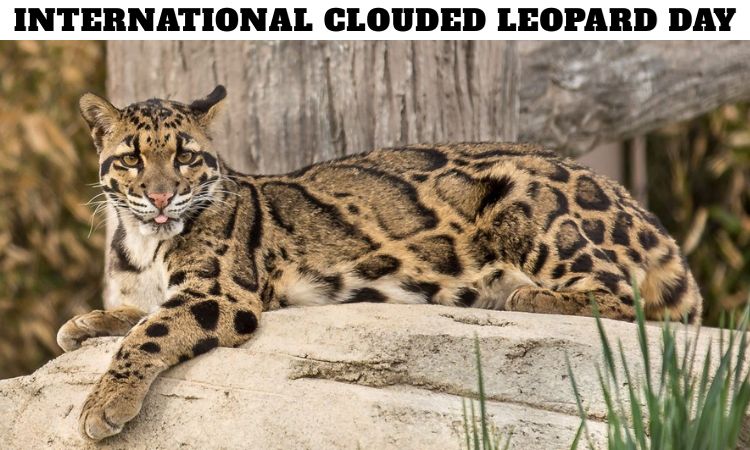
Why Is International Clouded Leopard Day Celebrated on August 4?
International Clouded Leopard Day is observed every year on August 4 to raise awareness about one of the world’s most mysterious and beautiful wild cats. The clouded leopard is often called the “modern-day sabertooth” because of its exceptionally long canine teeth relative to its body size. Although this fascinating feline has lived in the forests of Asia for thousands of years, many people know very little about it. The annual observance serves as an opportunity for wildlife organizations, conservationists, researchers, and animal lovers to educate the public about the threats facing clouded leopards and encourage actions that help protect their natural habitats.
Clouded leopards are elusive creatures that spend much of their lives hidden in dense tropical forests. Their secretive nature makes them difficult to study, which means scientists continue to discover new information about their behavior, diet, and reproduction. Unfortunately, habitat destruction, illegal wildlife trade, and poaching have caused their population to decline across many regions. International Clouded Leopard Day reminds the world that preserving biodiversity requires protecting even the animals we rarely see.
This special day inspires educational campaigns, zoo programs, wildlife documentaries, social media awareness, conservation fundraising, and school activities focused on protecting clouded leopards. By increasing public knowledge, conservation organizations hope more people will support efforts to save these remarkable animals for future generations.
What Is a Clouded Leopard and Why Is It So Unique?
The clouded leopard is a medium-sized wild cat native to the forests of South and Southeast Asia. Its name comes from the distinctive cloud-shaped markings covering its golden-brown coat. These markings provide excellent camouflage among trees and dense vegetation, helping the animal remain nearly invisible to predators and prey alike.
Unlike larger cats such as lions and tigers, clouded leopards spend much of their time in trees. They possess extraordinary climbing abilities that few other cats can match. Their powerful limbs, flexible ankles, and long tails allow them to climb down tree trunks headfirst, hang upside down from branches, and leap gracefully between trees.
Clouded leopards also have the longest canine teeth relative to skull size of any living wild cat. This remarkable adaptation has earned them comparisons with prehistoric saber-toothed cats. Despite their impressive appearance, they are shy animals that avoid human contact whenever possible.
Their diet includes monkeys, birds, deer, wild pigs, squirrels, and other small mammals. As apex predators in many forest ecosystems, they help maintain ecological balance by controlling prey populations and supporting healthy biodiversity.
How Did International Clouded Leopard Day Begin?
International Clouded Leopard Day was established by wildlife conservation organizations to shine a spotlight on the urgent need to protect clouded leopards and their habitats. As deforestation accelerated across Asia and illegal wildlife trafficking increased, conservationists recognized that many people had never even heard of this rare species.
The observance encourages collaboration among wildlife reserves, zoological parks, research institutions, governments, and nonprofit organizations. Educational programs introduce visitors to clouded leopard biology while explaining how human activities affect their survival.
Modern conservation efforts also involve advanced technologies such as camera traps, satellite tracking, DNA analysis, and habitat mapping. These tools help scientists monitor populations and develop effective protection strategies.
International Clouded Leopard Day has gradually gained worldwide recognition, inspiring people from different countries to participate in awareness campaigns and conservation projects dedicated to preserving this extraordinary wild cat.
Why Are Clouded Leopards Important to Forest Ecosystems?
Clouded leopards play an essential role in maintaining healthy forest ecosystems. As predators, they regulate populations of herbivores and smaller mammals, preventing overgrazing and promoting balanced food chains. Healthy predator populations often indicate healthy forests, making clouded leopards an important indicator species for ecosystem health.
Their presence reflects the quality of tropical forests because they require large, undisturbed habitats with abundant prey. When clouded leopard populations decline, it often signals broader environmental problems such as habitat fragmentation, illegal logging, or excessive hunting.
Protecting clouded leopards also safeguards countless other species that share the same forests. Conservation programs focused on preserving their habitat benefit birds, reptiles, insects, amphibians, plants, and other mammals. In this way, saving one species contributes to the protection of entire ecosystems.
Healthy forests also provide benefits for humans, including clean air, fresh water, climate regulation, and resources that support millions of people. Conserving clouded leopards therefore has environmental, economic, and social importance beyond protecting a single animal.
What Threats Do Clouded Leopards Face Today?
The greatest threat facing clouded leopards is habitat loss. Rapid urban expansion, commercial agriculture, logging, mining, and infrastructure development continue to destroy large areas of tropical forests throughout Asia. As forests disappear, clouded leopards lose hunting grounds, breeding territories, and safe travel corridors.
Habitat fragmentation isolates populations into smaller groups, reducing genetic diversity and making reproduction more difficult. Smaller populations become increasingly vulnerable to disease, natural disasters, and human conflict.
Illegal wildlife trade presents another serious danger. Clouded leopards are sometimes hunted for their beautiful fur, bones, teeth, and other body parts, which are sold in illegal markets. Although many countries have strengthened wildlife protection laws, illegal trafficking remains a significant conservation challenge.
Human-wildlife conflict also contributes to population declines. As forests shrink, clouded leopards occasionally enter areas near villages or farms in search of food, increasing the likelihood of retaliation from people attempting to protect livestock.
Climate change introduces additional uncertainty by altering forest ecosystems, affecting prey availability, and changing habitat conditions. Combined, these threats make conservation efforts increasingly urgent.
How Are Scientists and Conservationists Protecting Clouded Leopards?
Conservation organizations work through multiple strategies to ensure clouded leopards survive for generations to come. Protected national parks and wildlife reserves preserve critical habitats while limiting harmful human activities.
Researchers use camera traps placed throughout forests to photograph clouded leopards without disturbing them. These images help estimate population sizes, identify individual animals, and monitor movements over time.
Captive breeding programs in accredited zoos also contribute to conservation by maintaining genetically diverse populations and supporting scientific research. These facilities educate visitors about clouded leopards and inspire greater public interest in wildlife conservation.
Governments collaborate internationally to combat illegal wildlife trafficking through stronger law enforcement, border inspections, and public awareness campaigns. Community-based conservation initiatives encourage local residents to participate in protecting forests while developing sustainable livelihoods that reduce dependence on destructive land use.
Educational outreach remains one of the most effective conservation tools. Schools, museums, wildlife centers, documentaries, and online campaigns help people understand why protecting biodiversity benefits both wildlife and humanity.
How Can People Celebrate International Clouded Leopard Day?
Anyone can participate in International Clouded Leopard Day regardless of where they live. Learning about clouded leopards and sharing accurate information with family and friends is an excellent first step toward raising awareness.
Supporting reputable wildlife conservation organizations through donations or volunteer work helps fund habitat protection, scientific research, anti-poaching efforts, and educational programs. Visiting accredited zoos that actively participate in conservation initiatives provides opportunities to learn more about clouded leopards while supporting research and breeding efforts.
Teachers can organize classroom discussions, wildlife presentations, or educational projects focused on rainforest ecosystems and endangered species. Students can create artwork, research reports, or conservation campaigns highlighting the importance of protecting forest wildlife.
People can also make environmentally responsible choices by supporting sustainable products that reduce deforestation, conserving natural resources, and advocating for stronger environmental policies. Every action that contributes to healthier forests ultimately supports wildlife conservation.
Social media offers another platform for spreading awareness by sharing educational content about clouded leopards and encouraging others to learn about endangered species conservation.
What Does the Future Hold for Clouded Leopards?
The future of clouded leopards depends largely on continued conservation efforts and global cooperation. While significant challenges remain, many success stories demonstrate that wildlife populations can recover when habitats are protected and illegal hunting is reduced.
Advances in technology continue improving scientific understanding of clouded leopard behavior, genetics, and habitat needs. Better research enables conservationists to make more informed decisions and develop targeted protection strategies.
Increasing public awareness has also generated stronger support for wildlife conservation worldwide. Governments, nonprofit organizations, local communities, researchers, and responsible businesses are increasingly working together to preserve biodiversity.
International Clouded Leopard Day reminds everyone that protecting endangered wildlife requires long-term commitment. Every forest preserved, every educational program conducted, and every conservation project supported contributes to a safer future for clouded leopards.
These magnificent cats symbolize the beauty and mystery of Earth’s remaining tropical forests. Their survival depends on collective action that balances human development with environmental responsibility. By recognizing International Clouded Leopard Day each year on August 4, people around the world reaffirm their commitment to protecting one of nature’s most extraordinary wild cats and the ecosystems upon which countless species depend.
Frequently Asked Questions (FAQs)
1. When is International Clouded Leopard Day celebrated?
International Clouded Leopard Day is observed annually on August 4.
2. Why is International Clouded Leopard Day important?
It raises awareness about clouded leopard conservation, habitat protection, and biodiversity.
3. Where do clouded leopards live?
They inhabit forests across South and Southeast Asia, including countries like India, Nepal, Bhutan, Thailand, Malaysia, and Indonesia.
4. Why are they called clouded leopards?
Their coat features large cloud-like markings that provide excellent camouflage.
5. Are clouded leopards endangered?
They are classified as Vulnerable due to habitat loss, poaching, and illegal wildlife trade.
6. What do clouded leopards eat?
Their diet includes monkeys, birds, deer, wild pigs, squirrels, and other small mammals.
7. Can clouded leopards climb trees?
Yes. They are among the world’s best tree-climbing wild cats.
8. What are the biggest threats to clouded leopards?
Deforestation, habitat fragmentation, poaching, illegal wildlife trafficking, and climate change.
9. How can people help protect clouded leopards?
By supporting conservation organizations, spreading awareness, protecting forests, and promoting sustainable practices.
10. What is the purpose of International Clouded Leopard Day?
The day encourages global efforts to conserve clouded leopards and preserve their forest habitats.