

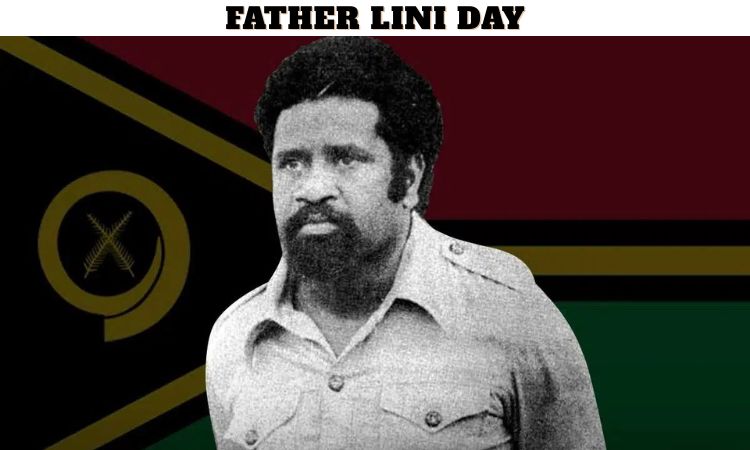
What Is Father Lini Day – February 21?
Father Lini Day is observed every year on February 21 to honor the life, leadership, and legacy of Walter Lini, the founding Prime Minister of Vanuatu. This day is a public holiday in Vanuatu and serves as a time of remembrance, gratitude, and national pride. It celebrates a man widely regarded as the “Father of the Nation” for his crucial role in leading the country to independence and shaping its early political and social direction.
The observance is not just about commemorating a historical figure; it is about recognizing values such as unity, faith, independence, and self-determination. February 21 marks the anniversary of Father Lini’s death in 1999, and it provides an opportunity for citizens to reflect on the nation’s journey and future aspirations.
Who Was Father Walter Lini?
Father Walter Hadye Lini was born on February 21, 1942, on Pentecost Island in what was then known as the New Hebrides, a territory jointly administered by Britain and France. He later became an Anglican priest, which is why he was commonly referred to as “Father Lini.” His religious background deeply influenced his leadership style and political philosophy.
Before entering politics, Lini served as a clergyman in the Anglican Church. His faith shaped his commitment to social justice, equality, and community development. As a leader, he believed that spiritual values and governance could go hand in hand. This blend of faith and politics became a defining feature of his career.
Father Lini eventually emerged as a prominent political figure during the struggle for independence. He led the Vanua’aku Pati political party and became the country’s first Prime Minister in 1980, serving until 1991.
Why Is Father Lini Considered the “Father of the Nation”?
Father Lini is often called the “Father of the Nation” because of his pivotal role in securing independence for Vanuatu. Before independence, Vanuatu was known as the New Hebrides and was governed under a unique and complex system called the Anglo-French Condominium. This dual colonial rule created administrative confusion and inequality.
Lini advocated strongly for self-rule and national unity. Under his leadership, political movements gained momentum, and after years of negotiation and internal challenges, Vanuatu achieved independence on July 30, 1980.
As the first Prime Minister, Father Lini laid the foundations of the new nation. He worked to establish governmental institutions, promote education, improve healthcare, and strengthen national identity. His leadership during the formative years of independence cemented his place in history.
How Did Father Lini Shape Vanuatu’s Political Direction?
Father Lini’s political philosophy was often described as “Melanesian socialism.” This approach emphasized communal ownership, social equality, and self-reliance, while also respecting traditional customs and Christian values.
He aimed to build a society that balanced modern governance with indigenous traditions. Lini encouraged local empowerment and sought to reduce dependence on foreign powers. He believed that development should benefit all citizens, not just a privileged few.
On the international stage, Father Lini positioned Vanuatu as a non-aligned nation during the Cold War era. He supported decolonization movements across the Pacific and advocated for nuclear-free zones in the region. His strong stance on independence and sovereignty earned Vanuatu respect among developing nations.
Why Is February 21 Chosen for Father Lini Day?
February 21 is observed as Father Lini Day because it marks the anniversary of his passing in 1999. While it is also close to his birth date, the day primarily commemorates his death and legacy.
This date serves as a solemn yet celebratory moment in Vanuatu’s calendar. It is a time for citizens to honor his contributions and reflect on the sacrifices made during the independence movement. Schools, government offices, and businesses often close, allowing people to participate in memorial services and community events.
How Is Father Lini Day Celebrated in Vanuatu?
Father Lini Day is celebrated with official ceremonies, church services, cultural performances, and public gatherings. Government leaders often deliver speeches highlighting his achievements and the nation’s progress.
Church services are particularly important, given Father Lini’s religious background. Many citizens attend prayer meetings to honor his spiritual and political contributions. Wreath-laying ceremonies are held at memorial sites, and educational institutions may organize discussions about his life and values.
In addition to formal events, families and communities come together to reflect on national identity and unity. The day fosters a sense of pride and shared history among the people of Vanuatu.
What Lessons Can Be Learned from Father Lini’s Leadership?
Father Lini’s life offers several important lessons:
1. The Power of Unity
He understood that independence could only be achieved through collective effort. His ability to bring diverse groups together was crucial in overcoming colonial rule.
2. Faith and Governance Can Coexist
As both a priest and a politician, Lini demonstrated that moral and spiritual values can guide public leadership.
3. The Importance of National Identity
He emphasized the preservation of Melanesian culture and traditions, ensuring that modernization did not erase indigenous heritage.
4. Commitment to Sovereignty
Father Lini’s strong stance on national sovereignty reminds countries of the importance of self-determination and independence.
How Did Father Lini Influence the Pacific Region?
Father Lini’s impact extended beyond Vanuatu. He was a vocal supporter of independence movements in neighboring territories and advocated for regional cooperation among Pacific island nations.
He played an active role in organizations such as the Pacific Islands Forum, promoting solidarity and shared development goals. His anti-nuclear stance aligned with broader Pacific efforts to maintain a nuclear-free region.
By championing decolonization and regional unity, Father Lini became a respected figure across the South Pacific.
What Challenges Did Father Lini Face During His Leadership?
Father Lini’s tenure was not without challenges. The transition from colonial rule to independence brought economic and political difficulties. Internal divisions, economic constraints, and external pressures tested his leadership.
There were also political tensions and attempted uprisings during the early years of independence. However, Lini’s steady approach helped stabilize the young nation. While critics debated aspects of his policies, his commitment to national development remained clear.
His ability to navigate these obstacles reinforced his reputation as a resilient and visionary leader.
Why Is Father Lini Day Important for Future Generations?
Father Lini Day serves as more than a historical remembrance—it is an educational opportunity. Younger generations who did not witness the independence struggle can learn about the sacrifices and determination that shaped their country.
The holiday reinforces values such as unity, resilience, cultural pride, and national sovereignty. It reminds citizens that freedom and independence require effort, leadership, and cooperation.
By remembering Father Lini, Vanuatu ensures that its foundational principles are not forgotten.
How Does Father Lini’s Legacy Continue Today?
Father Lini’s legacy lives on in Vanuatu’s political institutions, cultural pride, and commitment to independence. His vision of a self-reliant and united nation continues to guide policymakers and citizens alike.
Educational curricula often include lessons about his leadership. National discussions about governance and development frequently reference his philosophy. His influence remains embedded in the country’s identity.
Statues, memorials, and public tributes serve as physical reminders of his contributions. More importantly, his values endure in the collective memory of the nation.
What Makes Father Lini Day Unique Among National Holidays?
Unlike holidays focused on events or cultural traditions, Father Lini Day centers on a single individual whose leadership defined a nation’s beginning. It is both a memorial and a celebration of independence ideals.
The day blends political reflection with spiritual remembrance, reflecting the dual role Father Lini played as both priest and statesman. This combination gives the holiday a distinct character rooted in both faith and governance.
Can Father Lini’s Story Inspire Global Audiences?
Although Father Lini Day is specific to Vanuatu, his story carries universal themes. The pursuit of independence, the balance between tradition and modernization, and the integration of ethical leadership into politics are lessons relevant worldwide.
Nations emerging from colonial histories can draw inspiration from his determination and diplomatic skill. Leaders can learn from his emphasis on unity and moral responsibility.
His journey demonstrates that even small nations can make significant contributions to global conversations about sovereignty and justice.
Why Should the World Recognize Father Lini Day?
Recognizing Father Lini Day beyond Vanuatu highlights the importance of honoring leaders who champion self-determination and cultural identity. In a globalized world, stories of national resilience and principled leadership deserve attention.
Father Lini’s contributions remind the international community that independence movements are deeply rooted in local struggles and collective courage. By acknowledging this day, people worldwide can appreciate the diverse histories that shape our global society.
Conclusion: What Does Father Lini Day Truly Represent?
Father Lini Day on February 21 represents remembrance, gratitude, and national pride. It honors Walter Lini, whose leadership guided Vanuatu to independence and laid the foundation for its future.