

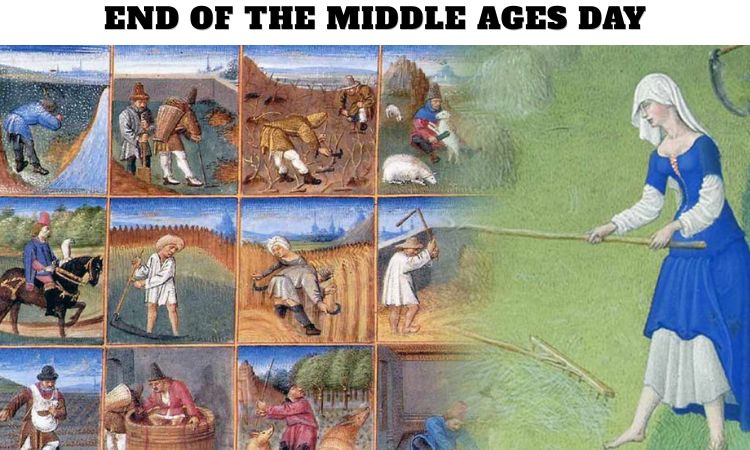
What Is End of the Middle Ages Day and Why Is It Celebrated on May 29?
End of the Middle Ages Day, observed on May 29, commemorates one of the most transformative periods in world history. This day recognizes the conclusion of the medieval era and the beginning of the Renaissance and early modern age. The transition from the Middle Ages reshaped politics, religion, education, science, economics, and culture across Europe and eventually the rest of the world.
The Middle Ages, often referred to as the medieval period, lasted roughly from the 5th century to the late 15th century. Historians generally mark the end of this era with several major historical developments, including the fall of Constantinople in 1453, the invention of the printing press, the rise of humanism, and the discovery of the Americas in 1492. End of the Middle Ages Day serves as a reminder of how humanity moved from feudal societies toward innovation, exploration, and intellectual awakening.
This observance highlights the importance of historical transformation and encourages people to explore how medieval civilization laid the foundation for the modern world.
How Did the Middle Ages Begin and Evolve Over Time?
The Middle Ages began after the collapse of the Western Roman Empire in 476 CE. Europe entered a period characterized by political fragmentation, feudal systems, religious dominance, and constant territorial conflicts. Society during the medieval period was deeply hierarchical, with kings, nobles, knights, clergy, and peasants occupying rigid social positions.
Historians commonly divide the Middle Ages into three major phases:
- Early Middle Ages from approximately 476 to 1000 CE
- High Middle Ages from around 1000 to 1300 CE
- Late Middle Ages from approximately 1300 to 1500 CE
During the Early Middle Ages, Europe experienced invasions, instability, and declining urban life. The High Middle Ages brought agricultural advancements, population growth, cathedral construction, and the rise of universities. The Late Middle Ages witnessed devastating crises such as the Black Death, wars, famine, and religious turmoil, but it also gave birth to intellectual and cultural rebirth.
These centuries shaped governance systems, architecture, legal traditions, and social structures that still influence contemporary society.
Why Is the End of the Middle Ages Considered Historically Important?
The end of the medieval era marked a dramatic shift in human civilization. Europe began moving away from rigid feudal systems and entered a period of scientific curiosity, artistic creativity, and economic expansion.
Several revolutionary changes occurred during this transition:
- The Renaissance emerged, reviving interest in classical Greek and Roman knowledge.
- Scientific inquiry expanded, encouraging observation and experimentation.
- The printing press spread literacy, making books accessible to wider populations.
- Global exploration increased, connecting continents through trade and discovery.
- Political power centralized, leading to the formation of stronger nation-states.
- Religious authority faced challenges, eventually contributing to the Protestant Reformation.
This period fundamentally changed how people viewed knowledge, religion, governance, and human potential. The transformation from medieval traditions to modern thinking paved the way for technological progress, democratic ideals, and global cultural exchange.
What Major Events Marked the End of the Middle Ages?
Several historical milestones contributed to the conclusion of the medieval period.
Fall of Constantinople in 1453
The Ottoman Empire captured Constantinople, ending the Byzantine Empire. This event disrupted traditional trade routes and encouraged European nations to seek new maritime paths to Asia.
Invention of the Printing Press
Johannes Gutenberg’s movable printing press revolutionized communication and education. Books became more affordable, literacy increased, and ideas spread rapidly throughout Europe.
The Renaissance Movement
Artists, scholars, and thinkers embraced humanism and classical learning. Renaissance figures transformed art, literature, architecture, and science.
Age of Exploration
European explorers traveled across oceans seeking trade routes and territories. This period expanded global interaction and transformed economies.
Decline of Feudalism
Economic growth and urbanization weakened feudal structures. Merchants and emerging middle classes gained greater influence in society.
These developments collectively signaled the transition from medieval traditions to the modern era.
How Did the Renaissance Influence the End of the Middle Ages?
The Renaissance played a central role in ending the medieval worldview. Originating in Italy during the 14th century, the Renaissance emphasized human achievement, creativity, and intellectual freedom.
Renaissance thinkers challenged long-standing assumptions about religion, science, and authority. Artists such as Leonardo da Vinci and Michelangelo demonstrated realism and innovation in visual arts. Scholars studied classical texts and promoted education, philosophy, and civic engagement.
The movement encouraged curiosity and critical thinking. Scientific pioneers began questioning traditional beliefs, leading to discoveries that reshaped astronomy, medicine, and physics.
The Renaissance transformed Europe into a center of artistic brilliance and intellectual advancement. Its influence spread rapidly through literature, architecture, music, and education, laying the groundwork for the modern world.
What Was Daily Life Like During the Final Years of the Middle Ages?
Life in the Late Middle Ages varied significantly depending on social class and location. Most people still lived in rural communities and worked in agriculture. However, towns and cities were growing rapidly due to expanding trade and commerce.
Common aspects of medieval life included:
- Strong influence of the Church on education and morality
- Limited medical knowledge and frequent disease outbreaks
- Markets and fairs serving as important trade centers
- Castles and fortified towns providing protection
- Guilds regulating crafts and occupations
- Increasing opportunities for merchants and skilled workers
Despite hardships such as war and plague, medieval society became more connected and economically active during its final centuries.
The emergence of universities, banking systems, and artistic patronage demonstrated that Europe was entering a new phase of development.
How Did the Black Death Change Medieval Society?
The Black Death was one of the deadliest pandemics in human history. It swept through Europe in the 14th century and killed millions of people.
Its consequences dramatically altered medieval society:
- Labor shortages increased wages for workers
- Feudal obligations weakened
- Social mobility expanded
- Religious faith was questioned
- Economic structures shifted
- Population decline changed settlement patterns
The pandemic exposed weaknesses in medieval institutions and accelerated societal transformation. Many historians view the Black Death as a catalyst for the end of the Middle Ages because it disrupted traditional systems and encouraged change.
Why Does End of the Middle Ages Day Still Matter Today?
End of the Middle Ages Day remains relevant because it reminds us how societies evolve through innovation, resilience, and cultural transformation.
Modern civilization owes much to developments that emerged during the transition from the medieval era:
- Universities and educational systems expanded
- Scientific methods evolved
- Democratic principles gradually emerged
- Artistic expression flourished
- International trade networks developed
- Technological innovation accelerated
The observance also encourages historical reflection. Understanding the Middle Ages helps us appreciate how humanity overcame instability, disease, conflict, and social inequality to build more advanced societies.
By studying this historical turning point, we gain insight into the origins of modern politics, science, economics, and culture.
How Can We Celebrate End of the Middle Ages Day?
There are many educational and engaging ways to observe this historical day:
- Visit museums featuring medieval artifacts
- Read books about medieval Europe and the Renaissance
- Watch documentaries on medieval history
- Explore castles, cathedrals, and historic landmarks
- Attend Renaissance fairs and cultural events
- Learn about medieval inventions and discoveries
- Study famous historical figures from the era
Teachers and students often use this day to discuss historical transitions and the impact of innovation on civilization.
The observance promotes curiosity about history and encourages deeper appreciation for humanity’s cultural evolution.
What Lessons Can We Learn From the End of the Middle Ages?
The transition out of the medieval era teaches valuable lessons about adaptation and progress.
History demonstrates that periods of crisis can also create opportunities for transformation. The Middle Ages experienced wars, plagues, economic struggles, and political instability, yet these challenges eventually contributed to intellectual and cultural renewal.
Important lessons include:
- Knowledge and education drive societal advancement
- Innovation can transform civilizations
- Cultural exchange promotes growth and creativity
- Societies evolve through resilience and adaptation
- Historical understanding helps shape future progress
End of the Middle Ages Day reminds us that every era leaves a lasting impact on future generations
Frequently Asked Question (FAQs)
1. When is End of the Middle Ages Day celebrated?
End of the Middle Ages Day is observed annually on May 29.
2. What does End of the Middle Ages Day commemorate?
It commemorates the transition from the medieval period to the Renaissance and early modern era.
3. How long did the Middle Ages last?
The Middle Ages lasted from approximately the 5th century to the late 15th century.
4. What event officially ended the Middle Ages?
There is no single event, but major milestones include the fall of Constantinople in 1453 and the discovery of the Americas in 1492.
5. Why was the Renaissance important?
The Renaissance promoted art, science, education, and humanism, helping shape modern civilization.
6. What was feudalism?
Feudalism was a social and political system where landowners controlled territories through obligations and loyalty.
7. How did the Black Death affect Europe?
The Black Death caused massive population loss and weakened medieval social and economic systems.
8. What inventions changed the medieval world?
The printing press was one of the most influential inventions that transformed communication and education.
9. Why do historians study the Middle Ages?
Historians study the Middle Ages to understand the foundations of modern politics, culture, religion, and society.
10. How can students celebrate End of the Middle Ages Day?
Students can celebrate by reading history books, watching documentaries, visiting museums, and learning about medieval culture.