

What Is Argentina Revolution Day and Why Is It Celebrated on May 25?
Argentina Revolution Day, celebrated annually on May 25, commemorates the historic May Revolution of 1810, a defining moment that marked the beginning of Argentina’s journey toward independence from Spanish colonial rule. The day honors the formation of the Primera Junta, the first local government established in Buenos Aires after Spanish authority weakened during the Napoleonic Wars in Europe.
This national holiday is one of the most important patriotic observances in Argentina. It symbolizes freedom, political transformation, national identity, and the determination of the Argentine people to govern themselves. Across the country, citizens celebrate with official ceremonies, parades, concerts, cultural programs, and educational events that reflect pride in Argentina’s revolutionary history.
The May Revolution did not immediately grant independence, but it initiated a political process that eventually led to Argentina declaring full independence in 1816. Revolution Day remains a powerful reminder of the courage and unity shown by early revolutionaries who challenged colonial authority and inspired future generations.
How Did the May Revolution Begin in Argentina?
The origins of the May Revolution can be traced to political instability in Spain during the early 19th century. In 1808, Napoleon Bonaparte invaded Spain and forced King Ferdinand VII to abdicate the throne. This crisis weakened Spanish control over its colonies in the Americas and created uncertainty about legitimate authority.
At that time, Argentina was part of the Viceroyalty of the Río de la Plata, governed by Spanish officials in Buenos Aires. News of Spain’s collapse encouraged local leaders, merchants, intellectuals, and military figures to question colonial governance and seek greater autonomy.
Between May 18 and May 25, 1810, a series of meetings and public demonstrations took place in Buenos Aires. Citizens demanded the removal of Viceroy Baltasar Hidalgo de Cisneros and called for a government that represented local interests. After days of intense political pressure, the Spanish viceroy was removed, and the Primera Junta was established on May 25.
The formation of this new governing body marked the beginning of Argentina’s revolutionary process and laid the foundation for national independence.
Why Is the Primera Junta Important in Argentine History?
The Primera Junta holds a special place in Argentine history because it represented the first autonomous government formed by local leaders rather than Spanish colonial authorities. Although the Junta initially claimed loyalty to the Spanish king, it effectively shifted political power into local hands.
The members of the Primera Junta included influential figures such as Cornelio Saavedra, Mariano Moreno, Manuel Belgrano, and Juan José Castelli. These leaders played crucial roles in shaping the political future of the region and promoting revolutionary ideals.
The Junta introduced reforms, encouraged political participation, and supported military campaigns against royalist forces loyal to Spain. Its creation also inspired independence movements across South America.
For Argentines, the Primera Junta symbolizes the birth of national self-government and the first decisive step toward sovereignty and democracy.
What Role Did Buenos Aires Play During the Revolution?
Buenos Aires was the center of political activity during the May Revolution and served as the capital of the Viceroyalty of the Río de la Plata. As the region’s most important commercial and administrative city, Buenos Aires became the focal point for revolutionary discussions and protests.
Citizens gathered in the Plaza de Mayo, which remains one of Argentina’s most historically significant public spaces. Crowds demanded political change and pressured colonial authorities to recognize local demands. Public participation played a major role in influencing the outcome of events during May 1810.
The city’s intellectuals, military leaders, and merchants supported revolutionary ideas because they wanted greater economic freedom, political representation, and independence from Spanish restrictions.
Today, Plaza de Mayo continues to be a symbol of political expression and national identity in Argentina. Revolution Day celebrations often include ceremonies and gatherings in this historic location.
How Did the May Revolution Influence Argentina’s Independence?
The May Revolution was the first major step toward full independence from Spain. Although Argentina did not formally declare independence until July 9, 1816, the events of May 1810 initiated the political transformation that made independence possible.
After the Primera Junta was established, revolutionary leaders worked to consolidate power and resist attempts by Spain to regain control. Military campaigns were launched against royalist forces throughout the region, leading to years of conflict and political change.
The revolution also encouraged discussions about governance, citizenship, economic policy, and national identity. Revolutionary leaders promoted ideas influenced by the Enlightenment, including liberty, representation, and self-determination.
Argentina’s independence movement inspired neighboring regions and contributed to broader liberation efforts across South America. The May Revolution therefore holds continental significance as part of Latin America’s struggle against colonial rule.
Who Were the Most Important Leaders of the May Revolution?
Several prominent figures played critical roles in the success of the May Revolution and Argentina’s early independence movement.
- Cornelio Saavedra served as president of the Primera Junta and was one of the leading military figures supporting the revolution. His leadership helped stabilize the new government during a time of uncertainty.
- Mariano Moreno was a lawyer, journalist, and political thinker who advocated for radical reforms and greater political freedom. He became one of the revolution’s most influential intellectual leaders.
- Manuel Belgrano contributed both politically and militarily to Argentina’s independence efforts. He later designed the Argentine national flag and remains a revered national hero.
- Juan José Castelli promoted revolutionary ideals and supported campaigns against royalist forces in Upper Peru.
These leaders, along with many others, helped shape Argentina’s transition from a Spanish colony to an independent nation.
How Is Argentina Revolution Day Celebrated Today?
Argentina Revolution Day is observed with patriotic pride throughout the country. Government institutions, schools, cultural organizations, and local communities participate in celebrations that honor the nation’s revolutionary heritage.
Official ceremonies often include flag-raising events, military parades, speeches by political leaders, and performances of the national anthem. Historical reenactments and educational programs help younger generations understand the importance of the May Revolution.
Schools frequently organize special activities where students dress in traditional colonial-era clothing and present theatrical performances about the events of 1810.
Public squares and streets are decorated with Argentina’s national colors of light blue and white. Cultural festivals featuring folk music, traditional dances, and regional foods also form an important part of the celebrations.
Families and communities gather to share patriotic meals, including popular dishes such as empanadas, locro, and pastelitos, which are commonly associated with national holidays.
Why Does Argentina Revolution Day Remain Important Today?
Argentina Revolution Day remains deeply important because it represents the values of freedom, democracy, civic participation, and national identity. The holiday reminds citizens of the sacrifices made by earlier generations to establish self-government and political independence.
The observance also encourages reflection on the nation’s democratic institutions and the responsibilities of citizenship. By commemorating the May Revolution, Argentines celebrate their cultural heritage while recognizing the ongoing importance of unity and public participation.
For many people, the day serves as an opportunity to reconnect with national history and appreciate the achievements of the independence movement. It reinforces pride in Argentina’s traditions, resilience, and commitment to sovereignty.
The principles associated with the May Revolution continue to influence Argentina’s political and cultural life in the modern era.
What Traditions and Symbols Are Associated With Revolution Day?
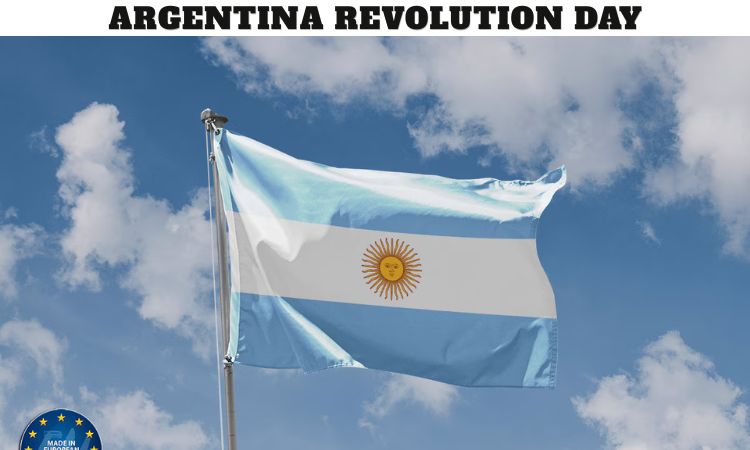
Several national symbols and traditions are closely linked to Argentina Revolution Day. The Argentine flag is prominently displayed throughout the country during celebrations, representing unity and independence.
Traditional clothing from the colonial era is often worn during school events and cultural festivals. Students may dress as historical figures, street vendors, soldiers, or members of colonial society to recreate scenes from 1810.
Folk music and dance performances celebrate Argentina’s regional traditions and cultural diversity. Patriotic songs are commonly performed during ceremonies and public events.
Traditional foods also play an important role. Dishes such as locro, a hearty stew made with corn, beans, and meat, are widely enjoyed during national celebrations. Sweet pastries known as pastelitos are another holiday favorite.
Historical reenactments, art exhibitions, and public lectures further contribute to preserving the memory of the revolution and educating future generations.
How Did the May Revolution Affect South America?
The May Revolution had a significant impact beyond Argentina. It became part of a larger wave of independence movements that spread throughout Latin America during the early 19th century.
The weakening of Spanish authority encouraged revolutionary leaders across the continent to seek autonomy and independence. Argentina’s revolutionary process inspired similar movements in Chile, Paraguay, Bolivia, and other regions.
The struggle for independence in South America involved cooperation among various leaders and military campaigns aimed at ending colonial rule. Figures such as José de San Martín later played essential roles in liberating multiple countries across the continent.
The May Revolution therefore contributed to the broader transformation of Latin America from colonial territories into independent nations.
What Lessons Can We Learn From Argentina Revolution Day?
Argentina Revolution Day teaches important lessons about courage, leadership, unity, and the pursuit of freedom. The events of May 1810 demonstrate how ordinary citizens and determined leaders can work together to create political and social change.
The holiday also highlights the importance of civic engagement and national identity. Revolutionary leaders understood that independence required collective action, public participation, and a shared vision for the future.
By studying the May Revolution, we gain a deeper appreciation for democratic values, human rights, and the sacrifices involved in building independent nations. The observance encourages future generations to preserve historical memory while continuing to strengthen democratic institutions and social progress.
Frequently Asked Questions (FAQs)
1. When is Argentina Revolution Day celebrated?
Argentina Revolution Day is celebrated every year on May 25.
2. What does Argentina Revolution Day commemorate?
The holiday commemorates the May Revolution of 1810 and the formation of the Primera Junta.
3. What was the May Revolution?
The May Revolution was a political movement that began Argentina’s path toward independence from Spain.
4. What was the Primera Junta?
The Primera Junta was the first local government established in Buenos Aires after the removal of Spanish colonial authority.
5. Why is Plaza de Mayo important?
Plaza de Mayo was the central gathering place where citizens demanded political change during the revolution.
6. Who were the leaders of the May Revolution?
Important leaders included Cornelio Saavedra, Mariano Moreno, Manuel Belgrano, and Juan José Castelli.
7. Did the May Revolution immediately make Argentina independent?
No, Argentina officially declared independence on July 9, 1816.
8. How do people celebrate Argentina Revolution Day?
People celebrate with parades, ceremonies, music, cultural events, traditional foods, and educational activities.
9. What foods are associated with the holiday?
Popular foods include locro, empanadas, and pastelitos.
10. Why is Argentina Revolution Day significant today?
The holiday celebrates freedom, democracy, national identity, and the beginning of Argentina’s independence movement.