

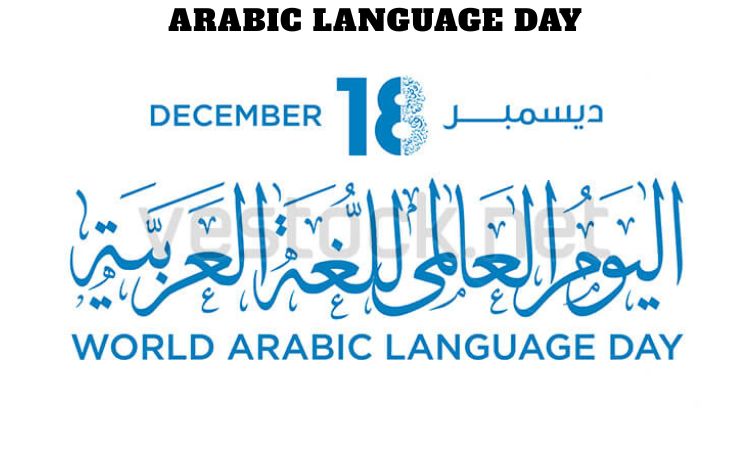
Arabic Language Day is celebrated every year on 18 December to honor one of the world’s oldest, richest, and most influential languages. Observed globally, this day recognizes the cultural, historical, and linguistic importance of Arabic, a language spoken by hundreds of millions of people and deeply connected to science, literature, religion, diplomacy, and global heritage.
The celebration of Arabic Language Day is not only about honoring a language but also about appreciating the civilizations, knowledge systems, and cultural diversity that have flourished through Arabic over centuries.
Why is Arabic Language Day celebrated on 18 December?
The significance of 18 December lies in a historic decision made in 1973, when Arabic was adopted as one of the official languages of the United Nations. This milestone recognized Arabic as a key language of international diplomacy and global communication.
By dedicating Arabic Language Day to this date, the world acknowledges:
The role of Arabic in international relations
Its contribution to global culture and knowledge
Its continuing relevance in modern times
The Global Importance of the Arabic Language
Arabic is one of the most widely spoken languages in the world, with over 400 million native speakers across the Middle East, North Africa, and beyond. It also serves as a liturgical language for over 1.8 billion Muslims, as it is the language of the Holy Quran.
Key Reasons Arabic Matters Globally
One of the six official UN languages
Spoken across 22 countries
Influential in education, religion, trade, and diplomacy
A major source of vocabulary for many other languages
Arabic Language Day highlights how this language continues to shape communication, culture, and identity worldwide.
Arabic Language Day and Cultural Identity
Language is a powerful marker of identity, and Arabic is deeply woven into the cultural fabric of Arab societies. From poetry and storytelling to music and calligraphy, Arabic has long been a medium of artistic expression.
On Arabic Language Day, cultural institutions, schools, universities, and communities organize:
Poetry recitals
Calligraphy exhibitions
Language workshops
Cultural performances
These activities reinforce pride in linguistic heritage and encourage younger generations to value and preserve their mother tongue.
Arabic Calligraphy: The Artistic Soul of the Language
One of the most celebrated aspects of Arabic is its calligraphy, often described as a visual art rather than just a writing system. Arabic calligraphy has been used for centuries to decorate manuscripts, mosques, monuments, and artworks.
Styles of Arabic Calligraphy
Kufic – angular and decorative
Naskh – clear and widely used in printing
Thuluth – elegant and ornamental
Diwani – flowing and expressive
Arabic Language Day frequently showcases calligraphy as a symbol of the language’s beauty, balance, and artistic depth.
Arabic Language Day in Education
Education plays a crucial role in preserving and promoting Arabic. Arabic Language Day emphasizes the need to:
Strengthen Arabic language education
Encourage reading and writing in Arabic
Adapt Arabic teaching to digital platforms
In many countries, educational institutions mark Arabic Language Day by organizing competitions, debates, essay writing events, and lectures focused on the language’s evolution and relevance.
The Historical Contribution of Arabic to Knowledge
Arabic was once the leading language of science, medicine, mathematics, astronomy, and philosophy. During the Golden Age of Islamic civilization, scholars writing in Arabic preserved and expanded upon Greek, Roman, Persian, and Indian knowledge.
Fields Influenced by Arabic Scholarship
Mathematics – algebra, algorithms
Medicine – early hospitals and medical texts
Astronomy – star names and celestial charts
Philosophy – translations of classical works
Arabic Language Day reminds the world that many modern scientific concepts owe their origins to Arabic scholarship.
Arabic Language Day and the Digital Age
In today’s digital world, languages must adapt to remain relevant. Arabic has made significant progress in digital transformation, with increasing representation across:
Social media platforms
Online education
Artificial intelligence and translation tools
Digital publishing
Arabic Language Day encourages further investment in technology to support Arabic content creation, digital literacy, and language innovation.
Challenges Facing the Arabic Language
Despite its importance, Arabic faces several challenges:
Declining use of formal Arabic among youth
Preference for foreign languages in education and business
Limited high-quality digital Arabic content
Arabic Language Day serves as a reminder that preserving linguistic heritage requires collective effort from governments, educators, media, and families.
Arabic Language Day Celebrations Around the World
On 18 December, Arabic Language Day is celebrated across different regions:
United Nations offices host exhibitions and discussions
Arab countries organize national cultural events
Universities worldwide conduct seminars on Arabic studies
Online platforms share Arabic quotes, poems, and lessons
These celebrations strengthen cross-cultural understanding and highlight Arabic as a global language.
Arabic as a Bridge Between Cultures
Arabic has historically acted as a bridge between East and West. Many Arabic words have entered other languages, including English, Spanish, and French.
Common English Words of Arabic Origin
Algebra
Sugar
Coffee
Cotton
Lemon
Arabic Language Day emphasizes how languages influence one another and how Arabic continues to enrich global communication.
The Role of Media on Arabic Language Day
The media plays a powerful role in shaping language use. On Arabic Language Day, television channels, radio stations, and digital media platforms often:
Broadcast special programs in Arabic
Highlight linguistic experts and authors
Promote correct and creative use of the language
Such initiatives help raise awareness about the importance of preserving Arabic in a rapidly globalizing world.
Arabic Language Day and Youth Engagement
Engaging young people is essential for the future of any language. Arabic Language Day initiatives often focus on:
Interactive language games
Storytelling competitions
Social media challenges in Arabic
Creative writing and blogging
By making Arabic appealing and relevant, these efforts ensure the language continues to thrive among future generations.
The Symbolism of Arabic Language Day
Arabic Language Day is more than a celebration—it is a statement of respect for linguistic diversity. It reinforces the idea that:
Every language carries unique knowledge
Linguistic diversity strengthens humanity
Preserving languages preserves cultures
On 18 December, Arabic Language Day reminds the world that languages are living treasures deserving protection and celebration.
How Individuals Can Celebrate Arabic Language Day?
You don’t need to be a native speaker to take part in Arabic Language Day. Here are simple ways to participate:
Learn basic Arabic phrases
Read Arabic poetry or literature in translation
Explore Arabic calligraphy
Share Arabic quotes on social media
Small actions contribute to greater appreciation and awareness.
Arabic Language Day and Global Unity
By celebrating Arabic Language Day, the international community sends a powerful message about inclusivity and respect. Recognizing Arabic alongside other global languages promotes dialogue, understanding, and peaceful coexistence.
Language has the power to connect people, and Arabic Language Day showcases how a single language can unite diverse cultures and histories.
Conclusion: The Lasting Significance of Arabic Language Day
Arabic Language Day, observed every year on 18 December, is a tribute to a language that has shaped civilizations, preserved knowledge, and connected cultures for centuries. From its poetic beauty and artistic calligraphy to its scientific contributions and modern digital presence, Arabic remains a vital part of the global linguistic landscape.