

What Is National American Paddlefish Day, and Why Is It Celebrated on March 9?
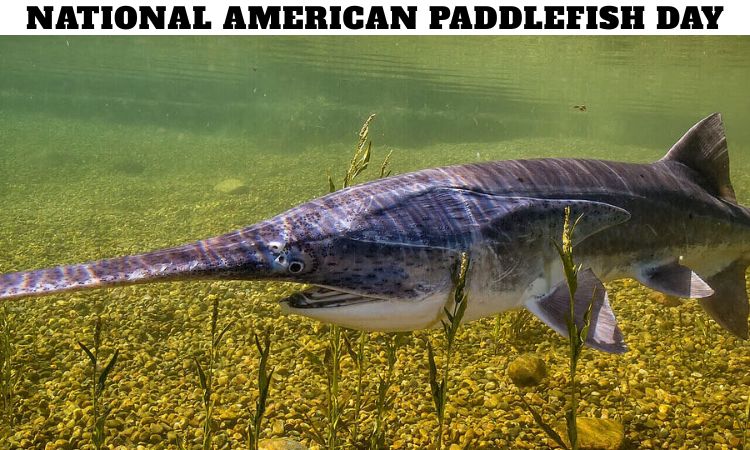
National American Paddlefish Day, observed annually on March 9, is dedicated to raising awareness about one of North America’s most fascinating freshwater species—the American paddlefish. This unique fish, known for its long paddle-shaped snout and prehistoric appearance, has existed for millions of years and is often referred to as a “living fossil.”
The day highlights the ecological importance of paddlefish, promotes conservation efforts, and encourages public education about freshwater biodiversity. Observances such as this are often supported by organizations like National Day Calendar, which recognizes educational and environmental awareness days.
By celebrating National American Paddlefish Day, we recognize the need to protect aquatic ecosystems and ensure the survival of species that have remained relatively unchanged since the age of dinosaurs.
What Is the American Paddlefish and Why Is It Unique?
The American paddlefish (scientific name Polyodon spathula) is a freshwater fish native primarily to river systems in the United States. Its most distinctive feature is its elongated, paddle-like rostrum (snout), which can measure up to one-third of its body length.
Unlike many fish species, paddlefish are filter feeders, meaning they consume plankton rather than hunting prey. Their mouths remain open while swimming, allowing them to filter microscopic organisms from the water using specialized gill structures.
Key characteristics include:
Length: Up to 7 feet (2.1 meters)
Weight: Often exceeding 100 pounds (45 kilograms)
Lifespan: 20–30 years or more
Habitat: Large rivers, reservoirs, and tributaries
Diet: Zooplankton and microscopic organisms
Their unusual feeding style and anatomy make paddlefish one of the most biologically distinctive freshwater species in the world.
Where Do American Paddlefish Live Naturally?
Historically, American paddlefish inhabited much of the Mississippi River basin and its tributaries. Today, their populations are concentrated in major waterways such as the Mississippi River, Missouri River, and Ohio River systems.
They prefer:
Slow-moving rivers
Large reservoirs
Areas with abundant plankton
Warm freshwater environments
However, habitat changes caused by dams, pollution, and river modifications have significantly reduced their natural range.
Why Are Paddlefish Considered Living Fossils?
The American paddlefish belongs to an ancient group of fish that has existed for over 125 million years. Fossil evidence shows that paddlefish ancestors lived during the time of dinosaurs, making them one of the oldest surviving fish lineages on Earth.
Their skeletal structure is primarily made of cartilage rather than bone, similar to sharks. This primitive anatomical feature contributes to their classification as a living fossil.
Because they have changed very little over millions of years, paddlefish provide valuable insight into evolutionary biology and ancient aquatic ecosystems.
What Role Do Paddlefish Play in Freshwater Ecosystems?
We recognize paddlefish as an important component of freshwater ecosystems. As filter feeders, they help maintain ecological balance by controlling plankton populations.
Their ecological roles include:
Maintaining water quality through plankton consumption
Supporting biodiversity within aquatic habitats
Serving as indicators of ecosystem health
Contributing to food webs
Healthy paddlefish populations often indicate stable aquatic environments.
Why Are American Paddlefish Threatened?
Despite their ancient lineage, paddlefish face modern threats that have led to population declines in several regions. Major threats include:
Habitat loss due to dam construction
Water pollution
Overfishing
Illegal harvesting for caviar
River channel modifications
Climate change impacts
Their slow reproductive cycle makes recovery difficult once populations decline. Female paddlefish may take 7–10 years to reach reproductive maturity, which limits rapid population growth.
How Are Conservation Organizations Protecting Paddlefish?
Government agencies and conservation groups play a crucial role in protecting paddlefish populations. Organizations such as the United States Fish and Wildlife Service and the Missouri Department of Conservation implement conservation programs that include:
Habitat restoration projects
Fishing regulations and licensing requirements
Stocking programs in rivers and reservoirs
Research on paddlefish migration and reproduction
Public education initiatives
These efforts aim to ensure long-term survival and ecological stability.
What Is the Economic Importance of Paddlefish?
American paddlefish also hold economic value, particularly in regions where regulated fishing is permitted. Their roe (eggs) is processed into caviar, sometimes marketed as an alternative to traditional sturgeon caviar.
Economic contributions include:
Recreational fishing tourism
Commercial aquaculture
Local business revenue
Conservation funding through licenses and permits
Responsible management ensures economic benefits while protecting populations.
How Can We Celebrate National American Paddlefish Day?
There are many meaningful ways to participate in National American Paddlefish Day:
1. Learn About Freshwater Conservation
Education is the first step toward environmental protection. Reading about paddlefish biology and ecosystems increases awareness.
2. Visit Aquariums or Nature Centers
Many aquariums feature paddlefish exhibits, offering opportunities to observe these unique creatures up close.
3. Support Conservation Organizations
Donations or volunteer activities contribute directly to wildlife protection efforts.
4. Participate in Fishing Activities Responsibly
Where permitted, regulated paddlefish fishing supports conservation funding through licensing.
5. Share Awareness on Social Media
Spreading information about paddlefish conservation encourages broader public involvement.
What Makes Paddlefish Different From Other Freshwater Fish?
Paddlefish differ significantly from most freshwater species due to several distinctive features:
Electroreceptors in their snout that detect plankton movement
Cartilaginous skeleton
Filter-feeding behavior
Ancient evolutionary lineage
Large body size
Unique appearance
These characteristics make them both scientifically valuable and visually fascinating.
How Do Paddlefish Reproduce?
Paddlefish reproduction depends heavily on environmental conditions. They spawn in spring, typically when water temperatures rise and river flow increases.
Spawning requirements include:
Gravel or rocky riverbeds
Strong water currents
Specific temperature ranges
Seasonal flooding conditions
Because dams disrupt natural river flow, spawning opportunities have decreased in many areas.
What Can Individuals Do to Help Protect Paddlefish?
Conservation is not limited to scientists and government agencies. Individuals can contribute by:
Supporting environmental policies
Reducing water pollution
Practicing responsible fishing
Educating others about freshwater ecosystems
Participating in local conservation programs
Small actions collectively create a meaningful impact.
What Is the Future of the American Paddlefish?
The future of paddlefish depends on continued conservation efforts, habitat restoration, and public awareness. Advances in research and aquaculture provide hope for sustainable population management.
If protective measures remain strong, paddlefish populations can recover in many regions, ensuring that this ancient species continues to thrive for generations.
Why Should We Recognize National American Paddlefish Day Every Year?
National American Paddlefish Day serves as a reminder that biodiversity is fragile, even for species that have survived millions of years. Celebrating this day encourages environmental responsibility, scientific curiosity, and appreciation for the natural world.