

What Is National Arabian Horse Day, and Why Is It Celebrated on February 19?
National Arabian Horse Day is a dedicated celebration honoring one of the most ancient, elegant, and influential horse breeds in the world—the Arabian horse. Observed annually on February 19, this day recognizes the breed’s historical importance, unmatched endurance, distinctive beauty, and profound influence on modern equine bloodlines.
Across the globe, breeders, equestrians, historians, and horse lovers come together to appreciate the legacy of the Arabian horse. From competitive arenas to desert landscapes, Arabian horses symbolize strength, loyalty, and grace. National Arabian Horse Day is not merely about admiration—it is about preserving heritage, promoting responsible breeding, and celebrating the enduring bond between humans and horses.
What Makes the Arabian Horse Unique Among All Horse Breeds?
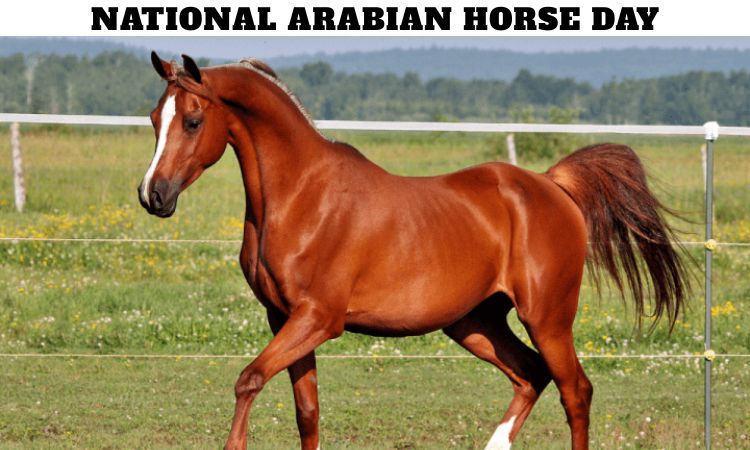
The Arabian horse stands apart due to its unmistakable physical and behavioral traits. Recognized instantly by its refined head shape, arched neck, and high tail carriage, the Arabian exudes elegance even at rest.
Key distinguishing features include:
Dished facial profile
Large, expressive eyes
High-set tail
Compact yet muscular body
Exceptional stamina and endurance
Unlike many heavier breeds, Arabians are built for sustained performance rather than brute strength. Their lighter skeletal structure contributes to agility, speed, and resilience.
Beyond physical beauty, Arabian horses are celebrated for their intelligence and sensitivity. They form strong bonds with handlers, making them ideal for both competitive and recreational riding.
Where Did the Arabian Horse Originate?
The origins of the Arabian horse trace back thousands of years to the Arabian Peninsula, particularly modern-day Saudi Arabia and neighboring regions. Bedouin tribes meticulously bred these horses for survival in harsh desert climates.
The Arabian horse was:
A companion in tribal migrations
A trusted mount in warfare
A symbol of wealth and prestige
A treasured family member
Selective breeding ensured only the strongest, fastest, and most loyal horses survived. This rigorous process established the genetic foundation that makes the Arabian one of the purest and oldest horse breeds today.
National Arabian Horse Day honors this deep historical connection between culture and equine excellence.
How Did Arabian Horses Influence Modern Horse Breeds?
The Arabian horse is considered one of the foundational bloodlines of nearly every light horse breed in existence. Throughout history, Arabian stallions were exported to Europe and beyond, influencing breeds such as:
Thoroughbreds
Andalusians
Lipizzaners
Quarter Horses
In the United Kingdom, Arabian blood played a significant role in shaping the Thoroughbred racing industry. Similarly, breeders in the United States integrated Arabian genetics to enhance endurance and refinement in multiple disciplines.
Due to its widespread influence, the Arabian horse is often referred to as the “improver breed.” National Arabian Horse Day celebrates this unparalleled global contribution.
Why Is the Arabian Horse Known for Exceptional Endurance?
Arabian horses excel in long-distance endurance competitions due to their remarkable cardiovascular efficiency and muscular endurance. Their desert origins conditioned them to travel great distances under extreme conditions.
Characteristics contributing to endurance include:
Large lung capacity
Dense bone structure
Efficient metabolism
Strong hooves
In international endurance events, Arabian horses consistently outperform many other breeds. Their resilience makes them ideal for competitive endurance riding, trail riding, and cross-country events.
National Arabian Horse Day highlights these athletic achievements and promotes awareness of responsible training practices.
How Are Arabian Horses Celebrated Around the World?
On February 19, enthusiasts organize various events to commemorate National Arabian Horse Day, including:
Breed showcases and parades
Educational seminars
Equestrian competitions
Stable tours and open houses
Social media campaigns honoring Arabian heritage
Major breeding organizations host informational programs about lineage, health care, and training methods. In countries with strong Arabian horse traditions such as Saudi Arabia, cultural exhibitions may include traditional equestrian performances.
In the United States, Arabian horse associations often promote youth involvement programs to inspire the next generation of riders and caretakers.
What Role Do Arabian Horses Play in Competitive Equestrian Sports?
Arabian horses excel in numerous disciplines, including:
Endurance riding
Dressage
Show jumping
Western pleasure
Halter competitions
Their natural elegance and animated movement make them stand out in show rings worldwide. Arabian horse shows attract thousands of participants and spectators annually.
In addition to sport, Arabian horses also perform in ceremonial roles and cultural festivals, reflecting their historic prestige.
National Arabian Horse Day shines a spotlight on these achievements, encouraging appreciation for both competitive excellence and cultural significance.
What Are the Bloodlines and Registration Standards of Arabian Horses?
The purity of Arabian bloodlines is carefully maintained through strict registry systems. Organizations worldwide require documented lineage tracing directly back to desert-bred ancestors.
Notable registries include:
The Arabian Horse Association in the United States
The World Arabian Horse Organization
National registries in the United Kingdom and Saudi Arabia
Breeding standards emphasize:
Structural correctness
Temperament
Genetic health
Authentic Arabian characteristics
This careful preservation ensures the breed retains its historic integrity.
How Should Arabian Horses Be Cared For?
Proper care is essential to maintain the health and vitality of Arabian horses. Key aspects include:
Balanced nutrition tailored to activity level
Regular veterinary check-ups
Hoof trimming and dental care
Mental stimulation and exercise
Clean and safe, stable environments
Arabians thrive on interaction and benefit from consistent training routines. Their intelligence requires patient handling and positive reinforcement techniques.
National Arabian Horse Day encourages education on responsible ownership and ethical breeding practices.
Why Does the Arabian Horse Hold Cultural and Symbolic Importance?
Throughout history, the Arabian horse symbolized:
Nobility
Courage
Loyalty
Prestige
In Middle Eastern culture, Arabian horses were regarded as sacred gifts. Poetry, art, and folklore often depict them as heroic companions.
Even today, Arabian horses appear in logos, national celebrations, and cultural exhibitions. Their image represents grace and endurance across continents.
National Arabian Horse Day preserves this symbolic legacy while promoting global appreciation.
What Is the Economic Impact of Arabian Horse Breeding?
The Arabian horse industry contributes significantly to the global equine economy through:
Breeding programs
International trade
Equestrian events
Tourism
Equipment and feed industries
Stud farms and training facilities create employment opportunities and stimulate rural economies. High-quality Arabian horses command substantial value in international markets.
On National Arabian Horse Day, breeders often highlight the importance of sustainable business practices within the industry.
How Can We Participate in National Arabian Horse Day?
Participation in National Arabian Horse Day can be both simple and meaningful:
Visit a local Arabian horse stable
Attend a horse show or demonstration
Share educational resources online
Support equine welfare organizations
Learn about Arabian horse history
Educational institutions may incorporate equine studies into curriculum activities. Families can introduce children to the breed through guided farm visits.
By engaging actively, we help ensure that Arabian horses continue to thrive for future generations.
What Does the Future Hold for Arabian Horses?
The future of Arabian horses depends on:
Genetic preservation
Ethical breeding
Youth engagement
Veterinary innovation
Global collaboration
Advancements in equine medicine and breeding science continue to enhance the health and longevity of Arabian horses. Digital registries and international partnerships ensure bloodline accuracy and transparency.
As equestrian sports evolve, Arabian horses remain competitive and admired. National Arabian Horse Day serves as a reminder of our responsibility to protect and promote this extraordinary breed.
Conclusion
National Arabian Horse Day is a tribute to a breed that has shaped equestrian history for thousands of years. From the deserts of Saudi Arabia to show arenas in United States and United Kingdom, the Arabian horse stands as a global symbol of beauty, endurance, and heritage.