

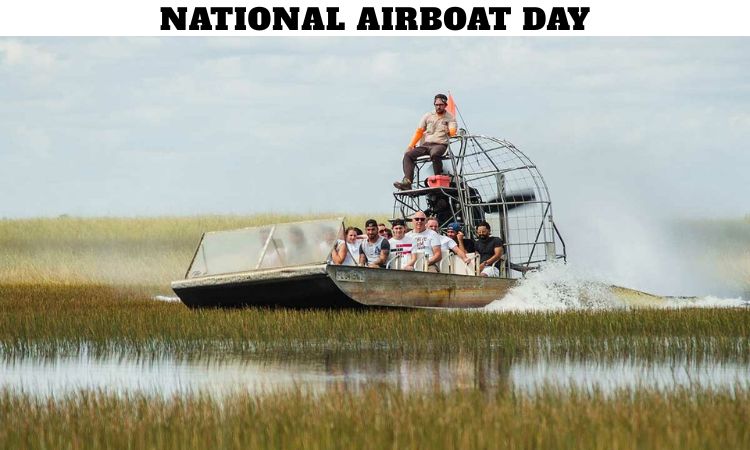
What Is National Airboat Day, and Why Is It Celebrated on February 19?
National Airboat Day – February 19 is a dedicated celebration of one of the most unique and powerful watercraft ever designed—the airboat. On this day, we honor the engineering innovation, cultural significance, and adventurous spirit associated with airboats across wetlands, marshes, and shallow waterways. Observed annually on February 19, the day highlights the craftsmanship behind these vessels and the communities that rely on them for recreation, tourism, rescue missions, and environmental exploration.
Airboats are most commonly associated with the wetlands of Florida and the iconic ecosystem of the Everglades. However, their use extends far beyond, spanning swamps in Louisiana and even frozen landscapes where conventional boats cannot operate efficiently. National Airboat Day recognizes both the heritage and the modern-day importance of these vessels.
What Is an Airboat and How Does It Work?
An airboat is a flat-bottomed watercraft powered by an aircraft-style propeller and driven by either an automotive or aircraft engine. Unlike traditional boats that rely on submerged propellers, airboats operate using thrust generated above water. This design allows them to skim across shallow water, marshlands, mudflats, and even ice.
The main components of an airboat include:
A flat hull for stability and shallow navigation
A large propeller enclosed in a protective cage
A powerful engine mounted above the hull
Rudder controls are positioned behind the propeller
This design eliminates underwater obstructions, making airboats ideal for areas dense with vegetation or debris. The high thrust-to-weight ratio ensures remarkable speed and agility.
How Did Airboats Originate and Evolve?
The concept of air-propelled boats dates back to the early 20th century. Early versions were experimental and primarily used in remote areas where shallow waters limited traditional boat travel. Over time, technological improvements in engines and lightweight materials enhanced both performance and reliability.
By the mid-1900s, airboats became essential tools in wetland states such as Florida and Louisiana. They were widely adopted by fishermen, hunters, and rescue teams.
In the Everglades region, airboats became iconic. Tour operators began offering high-speed wildlife excursions through the Everglades, turning airboat rides into a globally recognized attraction.
Modern airboats now feature:
Aircraft-grade aluminum hulls
Advanced muffler systems
Fuel-efficient engines
GPS and navigation systems
Enhanced safety cages
National Airboat Day commemorates this technological journey.
Why Are Airboats Important in Wetland Ecosystems?
Airboats serve a critical role in fragile wetland environments. They are uniquely suited for:
Wildlife management and conservation patrols
Search and rescue operations
Environmental monitoring
Scientific research
In ecosystems like the Everglades, traditional motorboats can damage vegetation and disturb aquatic life. Airboats minimize underwater impact due to their elevated propulsion system.
Authorities and environmental agencies depend on airboats to access remote sections of marshland. Their ability to glide across grass, mud, and shallow water without harming submerged habitats makes them indispensable.
How Is National Airboat Day Celebrated Across the United States?
Communities celebrate National Airboat Day with a variety of activities:
Airboat parades and exhibitions
Guided tours in swamp regions
Educational workshops on airboat engineering
Safety demonstrations
Wildlife conservation awareness campaigns
In Florida, airboat tour operators often offer discounted rides. Visitors explore marshes while spotting alligators, wading birds, and native plant species.
In Louisiana, local festivals showcase airboat craftsmanship, celebrating the cultural heritage of swamp communities.
The day is not just about recreation—it also promotes safe operation practices and environmental respect.
What Makes the Everglades the Heart of Airboat Culture?
The Everglades represent one of the largest subtropical wetlands in the world. Spanning millions of acres, this ecosystem demands specialized transportation.
Airboats became synonymous with Everglades exploration due to:
Extremely shallow water levels
Thick sawgrass marshes
Dense mangrove forests
Wildlife diversity
Tourism in the Everglades thrives because of airboat rides. Visitors experience high-speed glides across reflective waters while witnessing untouched wilderness.
National Airboat Day often highlights the Everglades as the epicenter of airboat tradition and innovation.
What Are the Different Types of Airboats Used Today?
Airboats vary in design based on function:
Recreational Airboats
Designed for tours and private use, featuring comfortable seating and noise-reduction systems.
Rescue and Law Enforcement Airboats
Equipped with medical kits, communication devices, and reinforced hulls.
Commercial Airboats
Used in fishing, hunting, and transportation in remote wetlands.
Racing Airboats
Built for speed competitions with high-performance engines.
Each type demonstrates the versatility that National Airboat Day celebrates.
How Do Airboats Support Tourism and Local Economies?
Airboat tourism significantly contributes to regional economies, particularly in Florida and Louisiana.
Economic benefits include:
Job creation for captains and guides
Equipment manufacturing and maintenance
Hospitality partnerships
Wildlife conservation funding
Thousands of visitors each year seek authentic swamp adventures. Airboat operators provide guided experiences that combine thrill with education.
National Airboat Day boosts visibility for these local businesses.
What Safety Measures Are Essential When Operating an Airboat?
Safety remains a central theme of National Airboat Day. Responsible operation includes:
Wearing protective ear gear
Using life jackets
Following speed regulations
Maintaining engine and propeller guards
Receiving certified training
Because airboats rely on thrust-based steering, operators must master directional control techniques. Public demonstrations on February 19 often include safety workshops to educate enthusiasts.
How Can We Participate in National Airboat Day?
Participation can take many forms:
Booking an airboat tour
Sharing historical facts online
Visiting wetland parks
Supporting conservation organizations
Learning about airboat engineering
Schools and educational institutions may organize field trips to explore wetland ecosystems.
By engaging actively, we help preserve the legacy and responsible use of airboats.
What Is the Future of Airboat Innovation?
The future of airboats includes sustainable advancements:
Electric propulsion prototypes
Noise reduction technologies
Lightweight composite materials
Eco-friendly fuel alternatives
Engineers aim to balance performance with environmental preservation. As wetland ecosystems face climate challenges, airboats will remain essential tools for adaptation and resilience.
National Airboat Day encourages innovation while honoring tradition.
Why Does National Airboat Day Matter Today More Than Ever?
In an era of environmental awareness, recognizing the importance of specialized watercraft is crucial. Airboats enable access to delicate habitats without significant disruption. They connect communities to nature and support essential conservation efforts.
By celebrating National Airboat Day – February 19, we acknowledge:
Engineering brilliance
Cultural heritage
Economic impact
Environmental responsibility
This day reminds us that innovation and preservation can coexist.
Conclusion
National Airboat Day is more than a celebration of a watercraft; it is a tribute to resilience, exploration, and environmental stewardship. From the marshlands of Florida to the swamps of Louisiana, airboats symbolize adaptability and adventure. Their presence in the vast expanse of the Everglades showcases their unmatched capability.