

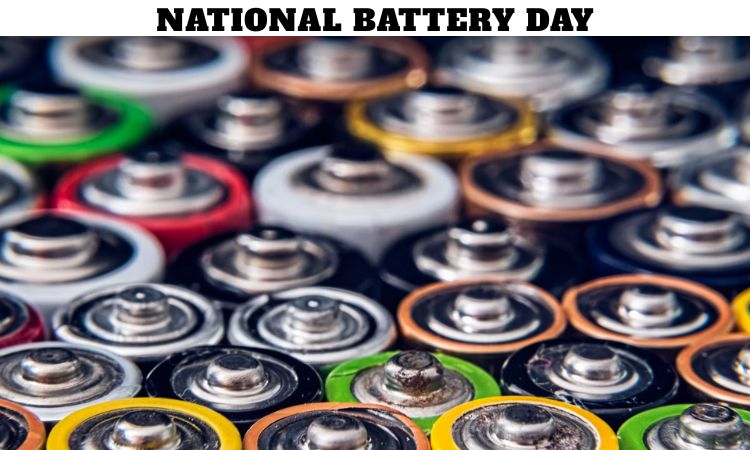
Every year on February 18, we celebrate National Battery Day, a day dedicated to recognizing the revolutionary invention that powers our modern lives. From smartphones and laptops to electric vehicles and renewable energy storage systems, batteries are at the core of technological advancement. On this important day, we honor the legacy of Alessandro Volta, whose groundbreaking work laid the foundation for portable electricity.
As we observe National Battery Day – February 18, we reflect on how batteries have transformed industries, households, communication systems, healthcare devices, and sustainable energy initiatives. This day is not just a tribute to history—it is a recognition of innovation that continues to shape the future.
Why Is National Battery Day Celebrated on February 18?
National Battery Day falls on February 18 to commemorate the birthday of Alessandro Volta, born in 1745. Volta invented the first true battery, known as the voltaic pile, in 1800. His invention demonstrated that electricity could be generated chemically and continuously, revolutionizing science and engineering.
The unit of electrical potential, the volt, is named in his honor. Without Volta’s contribution, modern portable electronics, electric mobility, and renewable energy storage systems would not exist in their current form.
How Did the First Battery Change the Course of History?
Before Volta’s invention, electricity was primarily generated through static means and could not be sustained. The voltaic pile allowed for continuous electric current, which led to:
The development of electrical circuits
Advances in electrochemistry
The invention of telegraphs and early communication systems
The evolution of medical and scientific instruments
The impact of the battery rippled across centuries, paving the way for the digital age. From the earliest telecommunication devices to today’s quantum computing systems, batteries remain fundamental.
What Role Do Batteries Play in Our Daily Lives Today?
On National Battery Day, we recognize that nearly every aspect of daily life depends on batteries. Consider the following:
Consumer Electronics
Smartphones, laptops, tablets, cameras, smartwatches, and wireless headphones rely on rechargeable lithium-ion batteries. Without them, mobility and connectivity would collapse.
Healthcare Devices
Pacemakers, hearing aids, insulin pumps, and portable diagnostic tools depend on reliable battery power to save lives and ensure patient independence.
Transportation
Electric vehicles (EVs), hybrid cars, and electric scooters operate using high-capacity battery packs that reduce reliance on fossil fuels.
Renewable Energy Storage
Solar panels and wind turbines generate intermittent energy. Batteries store this energy for use during non-generating hours, making renewable energy practical and scalable.
What Are the Different Types of Batteries?
Understanding battery technology enhances our appreciation of National Battery Day. Batteries are broadly classified into two categories:
Primary Batteries (Non-Rechargeable)
Alkaline batteries
Zinc-carbon batteries
Lithium primary batteries
These are commonly used in remote controls, flashlights, and small electronic devices.
Secondary Batteries (Rechargeable)
Lithium-ion batteries
Nickel-metal hydride (NiMH) batteries
Lead-acid batteries
Rechargeable batteries dominate modern electronics and electric vehicles due to their efficiency and sustainability.
How Have Lithium-Ion Batteries Transformed Technology?
The emergence of lithium-ion batteries revolutionized portable energy storage. Compared to older battery types, they offer:
Higher energy density
Lightweight design
Longer lifespan
Faster charging capabilities
Their widespread use in smartphones, laptops, and EVs has accelerated global digitization and sustainable transportation efforts.
As we celebrate National Battery Day, we acknowledge that lithium-ion technology is the backbone of the modern digital ecosystem.
Why Are Batteries Critical for Renewable Energy Growth?
The global shift toward renewable energy depends heavily on advanced battery storage systems. Solar and wind energy production fluctuates based on weather and time of day. Batteries bridge this gap by storing surplus power and delivering it when needed.
Large-scale battery farms stabilize electrical grids, prevent blackouts, and reduce carbon emissions. Without energy storage, renewable adoption would stall.
National Battery Day highlights the importance of energy independence and sustainability, emphasizing that batteries are key to combating climate change.
How Can We Celebrate National Battery Day?
We can meaningfully observe National Battery Day in several impactful ways:
1. Learn About Battery Safety
Understanding proper usage prevents overheating, leakage, and hazards.
2. Recycle Old Batteries
Battery recycling reduces environmental damage caused by toxic chemicals such as lead and cadmium.
3. Switch to Rechargeable Options
Using rechargeable batteries lowers waste and saves money over time.
4. Explore Renewable Energy Solutions
Installing solar panels with battery storage promotes energy sustainability.
What Are the Environmental Impacts of Batteries?
While batteries enable green technology, improper disposal poses environmental risks. Toxic materials can contaminate soil and water if not handled responsibly.
Recycling programs extract valuable materials like lithium, cobalt, and nickel, reducing mining demands and environmental degradation.
On National Battery Day, we encourage responsible consumption and support for eco-friendly innovations.
What Is the Future of Battery Technology?
Battery innovation continues at a rapid pace. Emerging technologies include:
Solid-State Batteries
Safer, faster-charging, and longer-lasting than lithium-ion batteries.
Graphene Batteries
Offering improved conductivity and energy efficiency.
Sodium-Ion Batteries
A cost-effective alternative to lithium, utilizing abundant materials.
Wireless Charging and Fast-Charge Systems
Minimizing downtime and enhancing convenience.
The future promises batteries that are safer, more efficient, and environmentally sustainable.
How Do Batteries Empower Global Connectivity?
Batteries support global communication networks, emergency services, and satellite systems. Remote villages gain electricity through solar battery storage. Disaster response teams rely on portable power banks. Military and aerospace operations depend on advanced battery systems.
From rural electrification to space exploration, batteries empower connectivity beyond boundaries.
What Makes National Battery Day Relevant in 2026 and Beyond?
In today’s rapidly evolving technological landscape, battery innovation determines economic growth and environmental progress. Nations investing in battery research gain a competitive advantage in electric vehicles, renewable infrastructure, and smart cities.
National Battery Day reminds us that progress depends on energy solutions that are portable, reliable, and sustainable.
How Can Businesses Leverage Battery Innovation?
Companies across industries benefit from battery advancements:
Tech manufacturers improve product portability.
Automotive companies expand EV production.
Energy providers enhance grid stability.
Medical companies develop life-saving portable equipment.
Battery research drives profitability and competitive positioning.
Why Should We Educate the Next Generation About Batteries?
Encouraging STEM education around battery science fosters innovation. Students exploring electrochemistry today become engineers designing tomorrow’s sustainable power systems.
On National Battery Day, we inspire curiosity and promote scientific literacy that strengthens global progress.
Conclusion: Why National Battery Day – February 18 Deserves Global Recognition?
National Battery Day is more than a commemorative date. It is a celebration of scientific ingenuity, technological transformation, and sustainable advancement. From the invention of the voltaic pile by Alessandro Volta to the rise of lithium-ion technology powering electric vehicles and renewable energy systems, batteries remain central to modern civilization.