
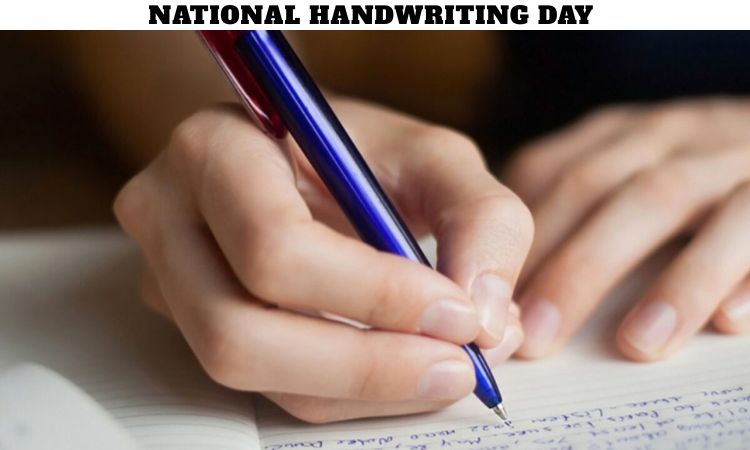
National Handwriting Day, observed every year on January 23, is a meaningful celebration dedicated to the timeless art of handwriting. In a world dominated by keyboards, touchscreens, and voice commands, this day reminds us of the enduring value of writing by hand. We recognize handwriting not only as a practical skill but also as a powerful form of personal expression, cognitive development, creativity, and cultural heritage.
Why is National Handwriting Day celebrated on January 23?
January 23 holds historical significance as it marks the birth anniversary of John Hancock, one of the most iconic figures in American history. His bold and unmistakable signature on the Declaration of Independence became a lasting symbol of individuality and confidence. Over time, his name itself became synonymous with the word “signature.”
By choosing this date, National Handwriting Day honors the personal mark each individual leaves behind through handwriting—something no digital font can truly replicate.
The Importance of Handwriting in the Digital Age
Despite the rise of digital communication, handwriting continues to play a vital role in our lives. We believe that handwriting is not obsolete; rather, it has become more valuable than ever.
Key reasons handwriting still matters:
It enhances memory retention and learning
It improves fine motor skills
It boosts creativity and critical thinking
It strengthens emotional and personal expression
It supports brain development in children
Research consistently shows that writing by hand activates areas of the brain associated with comprehension, idea generation, and long-term memory. When we write, we think differently—more deeply and more intentionally.
Handwriting and Brain Development
Handwriting is closely connected to neurological development. When we write by hand, multiple regions of the brain work together, including those responsible for language, movement, and cognition.
For children, handwriting:
Improves letter recognition
Enhances reading and spelling skills
Develops hand-eye coordination
Builds discipline and focus
For adults, handwriting helps maintain cognitive sharpness and supports mental clarity. Journaling, note-taking, and even writing letters can significantly reduce stress and improve emotional well-being.
Handwriting as a Form of Personal Identity
Every individual’s handwriting is unique. From the slant of the letters to the pressure of the pen, handwriting reflects personality, mood, and even cultural background. No two handwriting styles are exactly alike.
Handwriting represents:
Personal identity
Emotional state
Cultural influence
Individual creativity
In an era of standardized digital fonts, handwritten words feel more personal, more authentic, and more human.
The Role of Handwriting in Education
Education systems worldwide still emphasize handwriting for a reason. While digital tools are essential, handwritten learning remains irreplaceable.
We see handwriting in education as:
A foundation for early literacy
A tool for better note comprehension
A method to enhance exam performance
A way to improve concentration and discipline
Students who take handwritten notes often understand concepts better than those who type. Writing forces the brain to process information rather than transcribe it verbatim.
Handwriting vs Typing: A Meaningful Comparison
While typing is faster, handwriting is deeper. Each has its place, but handwriting offers distinct advantages:
| Handwriting | Typing |
|---|---|
| Improves memory | Faster input |
| Enhances creativity | Convenient editing |
| Builds motor skills | Requires less effort |
| Personal and expressive | Standardized format |
We believe that balancing both skills is essential, but handwriting deserves continued attention and respect.
How to Celebrate National Handwriting Day?
Celebrating National Handwriting Day can be simple, meaningful, and enjoyable. We encourage individuals, families, schools, and workplaces to participate in activities that revive the joy of writing by hand.
Popular ways to celebrate include:
Writing a handwritten letter or postcard
Starting a personal journal
Practicing calligraphy or cursive writing
Teaching children proper handwriting techniques
Creating handwritten quotes or affirmations
Revisiting old handwritten notes or letters
Even a few minutes of handwriting can make this day special.
Handwriting Styles Around the World
Handwriting varies across cultures and languages, making it a fascinating global art form. From elegant cursive scripts to structured block letters, handwriting reflects history and tradition.
Examples include:
Cursive writing in English-speaking countries
Calligraphy in Arabic, Chinese, and Japanese cultures
Devanagari script is used in Hindi and Sanskrit
Latin-based scripts across Europe
Each style carries centuries of evolution and cultural significance, reinforcing handwriting as a universal human practice.
The Emotional Value of Handwritten Communication
Handwritten messages carry emotional weight that digital text often lacks. A handwritten letter, note, or signature conveys effort, sincerity, and intention.
We associate handwritten communication with:
Trust and authenticity
Emotional warmth
Personal connection
Lasting memories
This emotional depth explains why handwritten cards, notes, and signatures still hold special value in personal and professional relationships.
Preserving Handwriting for Future Generations
As technology continues to evolve, preserving handwriting becomes a shared responsibility. We must ensure future generations do not lose this essential human skill.
Steps to preserve handwriting include:
Encouraging daily writing habits
Supporting handwriting education in schools
Limiting overdependence on digital devices
Promoting creative writing activities
Handwriting is not just a skill; it is a legacy worth protecting.
National Handwriting Day in the Workplace
Handwriting also has a place in modern professional environments. From brainstorming sessions to planning and goal-setting, writing by hand can improve clarity and productivity.
We see organizations using handwriting for:
Creative ideation
Strategic planning
Personal productivity systems
Mind-mapping and visualization
Incorporating handwriting into daily workflows can enhance focus and innovation.
Final Thoughts on National Handwriting Day
National Handwriting Day is more than a symbolic observance. It is a reminder of the power of the written word and the human connection behind every handwritten line. On January 23, we celebrate creativity, individuality, learning, and expression through handwriting.