

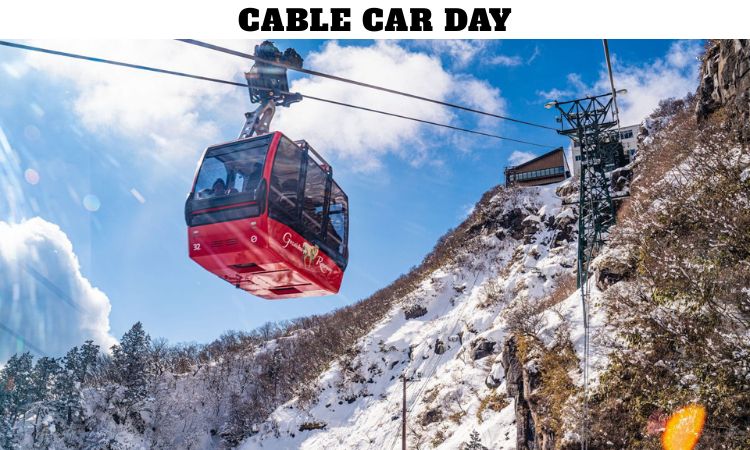
Cable Car Day, celebrated annually on January 17, honors one of the most transformative transportation innovations in human history. On this day, we recognize the invention, evolution, and global impact of cable cars—an engineering breakthrough that reshaped urban mobility, tourism, and mountain travel. From steep city streets to breathtaking alpine landscapes, cable cars have connected people to places once considered inaccessible. We commemorate not only the technology itself but also the ingenuity, perseverance, and vision that made cable-powered transport a global phenomenon.
Historical Significance of Cable Car Day
The origins of Cable Car Day trace back to January 17, 1871, when the first successful cable car system was tested in San Francisco. Developed by Andrew Smith Hallidie, the cable car was designed to solve a pressing problem: the difficulty and danger of navigating the city’s steep hills using horse-drawn carriages. Hallidie’s innovation replaced animal power with an underground cable system driven by stationary steam engines, revolutionizing public transportation.
This milestone marked the beginning of mechanized urban transit, setting the foundation for modern trams, metros, and ropeway systems worldwide. Cable Car Day serves as a tribute to this pivotal moment in transportation history.
The Evolution of Cable Car Technology
Early Cable Cars
The earliest cable cars operated using a continuously moving steel cable beneath the street surface. Cars gripped the cable to move forward and released it to stop. This system was groundbreaking for its time, offering reliability, safety, and efficiency in challenging terrains.
Transition to Aerial Cable Cars
As engineering advanced, cable car technology expanded beyond ground-based systems. Aerial cable cars, gondolas, and ropeways emerged, enabling transportation across rivers, valleys, and mountains. These systems became essential in regions where traditional road or rail infrastructure was impractical.
Modern Cable Car Systems
Today’s cable cars incorporate advanced materials, automated controls, energy-efficient motors, and enhanced safety mechanisms. Modern systems are quieter, faster, and capable of carrying thousands of passengers per hour, making them integral to both urban transit networks and tourist destinations.
Global Impact of Cable Cars
Urban Transportation
In densely populated cities, cable cars provide an innovative solution to traffic congestion and limited space. Urban cable car systems operate above ground, minimizing land use while offering reliable transit options. Cities across Latin America, Europe, and Asia have integrated cable cars into their public transportation frameworks.
Tourism and Scenic Travel
Cable cars have become synonymous with scenic travel. They offer panoramic views of mountains, coastlines, forests, and city skylines. Iconic destinations worldwide rely on cable cars to transport visitors while preserving natural landscapes.
Economic and Social Benefits
Cable cars contribute significantly to local economies by boosting tourism, creating jobs, and improving accessibility. In remote and mountainous regions, they connect communities to essential services, education, and markets, fostering social inclusion and economic growth.
Famous Cable Car Systems Around the World
San Francisco Cable Cars, USA
The San Francisco Cable Car system remains one of the most iconic and historic cable car networks. It is both a functional transit system and a cultural landmark, symbolizing innovation and heritage.
Table Mountain Aerial Cableway, South Africa
This world-renowned cable car offers rotating cabins that provide 360-degree views of Cape Town. It stands as a testament to modern engineering combined with natural beauty.
Ngong Ping 360, Hong Kong
Spanning mountains and sea, this cable car system connects urban Hong Kong to Lantau Island, showcasing the seamless integration of transportation and tourism.
La Paz Mi Teleférico, Bolivia
As the world’s largest urban cable car network, Mi Teleférico demonstrates how cable cars can transform public transportation in high-altitude cities.
Engineering Excellence Behind Cable Cars
Structural Design
Cable car systems rely on precise engineering calculations to ensure balance, tension, and stability. Towers, cables, and cabins are designed to withstand extreme weather conditions and heavy passenger loads.
Safety Innovations
Modern cable cars incorporate redundant braking systems, real-time monitoring, emergency evacuation protocols, and rigorous maintenance schedules. Safety remains the cornerstone of cable car engineering.
Sustainability and Energy Efficiency
Cable cars are recognized as eco-friendly transportation solutions. They consume less energy compared to conventional vehicles and produce minimal emissions, aligning with global sustainability goals.
Cable Cars and Environmental Responsibility
Cable car systems minimize environmental disruption by reducing the need for extensive road construction. They operate quietly, preserve natural habitats, and offer a low-carbon alternative to traditional transport. As cities and nations prioritize sustainable development, cable cars are increasingly viewed as a responsible mobility solution.
Cultural and Symbolic Importance of Cable Cars
Beyond transportation, cable cars hold cultural significance. They symbolize progress, innovation, and human determination to overcome geographical challenges. In many regions, cable cars are deeply embedded in local identity and heritage, celebrated through festivals, art, and storytelling.
How is Cable Car Day celebrated?
Educational Programs
Museums, schools, and engineering institutions organize exhibitions and lectures highlighting the history and mechanics of cable car systems.
Heritage Rides
Historic cable car routes offer special rides, allowing passengers to experience transportation history firsthand.
Travel and Exploration
Cable Car Day inspires travelers to explore destinations accessible by cable cars, fostering appreciation for engineering and natural beauty.
The Future of Cable Car Transportation
The future of cable cars is defined by innovation, automation, and smart integration. Emerging technologies include driverless cabins, AI-based monitoring systems, and renewable energy integration. As urban populations grow and environmental concerns intensify, cable cars are poised to play a crucial role in sustainable transportation networks.
Cities worldwide are investing in next-generation ropeway systems to address congestion, reduce emissions, and improve connectivity. Cable Car Day reminds us that this century-old invention continues to evolve, adapt, and inspire.
Why Cable Car Day Matters?
Cable Car Day is more than a celebration of machinery; it is a recognition of human ingenuity and problem-solving. It highlights how thoughtful engineering can transform societies, connect communities, and open new possibilities for travel and development. By honoring this innovation, we acknowledge the enduring relevance of cable cars in shaping the future of mobility.
Conclusion
Cable Car Day – January 17 stands as a tribute to one of the most impactful transportation innovations ever created. From its humble beginnings on the steep streets of San Francisco to its modern role in global urban planning and tourism, the cable car remains a symbol of progress, efficiency, and sustainable design. As we celebrate this day, we reaffirm the importance of engineering solutions that balance functionality, safety, and environmental responsibility. Cable cars continue to elevate the way we move, connect, and explore the world.