

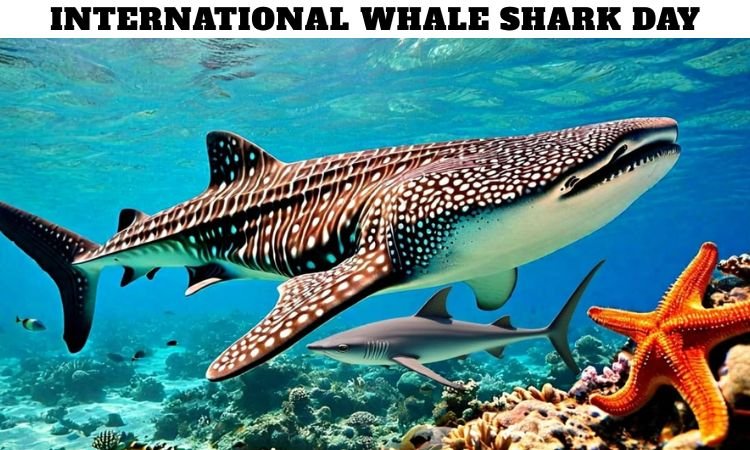
What Is International Whale Shark Day?
International Whale Shark Day is a global awareness event observed every year on August 30. It was created to celebrate the whale shark (Rhincodon typus), the largest fish species on the planet, and to draw attention to the conservation challenges this remarkable animal faces. On this day, marine conservation groups, aquariums, dive operators, schools, and ocean lovers around the world organize educational events, beach cleanups, social media campaigns, and citizen science initiatives, all aimed at building public appreciation for whale sharks and encouraging action to protect them and their ocean habitats.
Despite their enormous size, whale sharks remain poorly understood by the general public. Many people confuse them with whales because of their name and scale, when in fact they are sharks — cartilaginous fish, not marine mammals. International Whale Shark Day exists partly to clear up that confusion and partly to spotlight a species whose global population has been declining for decades.
Why Is Whale Shark Day Celebrated on August 30?
The date was chosen to mark a moment when public and scientific attention to whale sharks was growing, tied to efforts by marine biologists, conservationists, and organizations dedicated to shark research and protection. Late August also coincides with peak whale shark aggregation seasons in several parts of the world, including areas of the Philippines, Mexico, and the Arabian Gulf, making it a fitting time to highlight the species when sightings and research activity are naturally at their highest.
Over time, the day has grown from a niche marine biology observance into an internationally recognized event, supported by aquariums, universities, and nonprofit ocean conservation organizations that use the occasion to release new research findings, host public talks, and launch fundraising campaigns.
What Are Whale Sharks?
Whale sharks are the largest known fish species alive today, capable of reaching lengths of up to 40 feet (about 12 meters) or more, with some unconfirmed reports suggesting even larger individuals. Despite their intimidating size, they are filter feeders, meaning they consume some of the smallest organisms in the ocean rather than hunting large prey.
Their bodies are covered in a distinctive pattern of pale yellow spots and stripes set against a dark grey or bluish-grey background — a pattern so unique to each individual that researchers use it much like a human fingerprint to identify and track specific sharks over time through photo-identification databases.
Whale sharks are believed to live for 80 to 130 years, making them one of the longest-lived fish species known to science. However, because they reach sexual maturity slowly and reproduce infrequently, their populations recover very slowly from losses, which is part of why conservation attention is so important.
Why Are Whale Sharks Called “Gentle Giants”?
Whale sharks have earned the nickname “gentle giants” because, despite their massive size, they pose virtually no threat to humans. They have thousands of tiny teeth, but these are not used for biting or tearing prey. Instead, whale sharks feed by filter-feeding: they open their enormous mouths, which can be up to five feet wide, and filter water through specialized gill structures to trap plankton, small fish, fish eggs, and krill.
This docile, non-aggressive nature has made whale sharks a favorite among divers and snorkelers, and responsible wildlife tourism centered on whale shark encounters has become an important source of income for many coastal communities. At the same time, this popularity has raised concerns about tourism practices that stress or injure the animals, which is one of the issues conservationists highlight on Whale Shark Day.
Where Do Whale Sharks Live?
Whale sharks are found in warm, tropical, and subtropical waters across the globe. They are highly migratory and have been tracked traveling thousands of miles across ocean basins. Some of the most well-known whale shark aggregation sites include:
- The waters around Cebu and Donsol in the Philippines
- The Yucatán Peninsula near Isla Mujeres and Isla Holbox, Mexico
- The Arabian Gulf near Qatar
- Ningaloo Reef in Western Australia
- The Galápagos Islands
- Parts of the Red Sea and East African coast
These aggregation sites typically form around seasonal blooms of plankton or coordinated spawning events of fish, which provide the concentrated food sources whale sharks need to sustain their massive bodies.
What Do Whale Sharks Eat?
Whale sharks primarily eat plankton, including copepods and krill, along with small fish, fish eggs, and occasionally small squid. They feed near the surface as well as at depth, using a combination of passive filtering — swimming forward with their mouths open — and active suction feeding, where they gulp in water and prey and then push the water back out through their gills while trapping food particles on specialized filtering pads.
A single adult whale shark can filter thousands of cubic meters of water each day, making them an important part of maintaining the balance of plankton populations in the ocean ecosystems where they feed.
Why Are Whale Sharks Endangered?
Whale sharks are currently classified as an endangered species by the International Union for Conservation of Nature (IUCN), a designation reflecting population declines estimated at more than 50 percent over the last several decades in some regions. Several factors have contributed to this decline, and understanding them is central to what International Whale Shark Day tries to communicate.
Because whale sharks grow slowly, mature late, and have long gestation periods, their populations are especially vulnerable to any additional pressure, whether from fishing, habitat disruption, or accidental harm. Unlike species that reproduce quickly, whale shark populations cannot easily bounce back once numbers drop.
What Threats Do Whale Sharks Face?
Whale sharks face a combination of direct and indirect threats, including:
- Targeted and bycatch fishing: In some regions, whale sharks are still hunted for their fins, meat, and oil, while in others they are unintentionally caught in nets and fishing gear meant for other species.
- Vessel strikes: Because whale sharks often feed near the surface and migrate through busy shipping lanes, collisions with boats and ships are a significant and growing cause of injury and death.
- Habitat degradation: Coral reef decline, pollution, and changes in ocean temperature affect the availability of the plankton blooms whale sharks depend on.
- Climate change: Shifting ocean currents and warming waters can alter plankton distribution, forcing whale sharks to travel farther or into riskier waters to find food.
- Unregulated tourism: In some hotspots, poorly managed swim-with-whale-shark tourism can lead to physical harm, stress, and behavioral disruption for the animals.
How Can We Help Protect Whale Sharks?
International Whale Shark Day encourages individuals, businesses, and governments to take concrete steps toward protecting the species. Some of the most effective actions include:
- Supporting marine protected areas and no-take zones in known whale shark habitats
- Choosing responsible, certified eco-tourism operators that follow guidelines for safe and respectful whale shark encounters
- Reducing plastic use and supporting cleanup efforts, since plastic pollution affects the plankton-rich waters whale sharks rely on
- Supporting policies that regulate shipping lanes and speeds in known migration corridors
- Contributing to or following citizen science projects, such as photo-identification databases that help researchers track individual whale sharks
- Backing legislation that bans the hunting and trade of whale shark products
Even small actions, like spreading awareness on social media using the day’s hashtags or supporting organizations that fund whale shark research, contribute to the broader conservation effort.
How Is International Whale Shark Day Celebrated?
Around the world, August 30 is marked with a variety of events and activities:
- Aquariums and marine parks host educational talks, feeding demonstrations, and special exhibits
- Dive and snorkel operators in whale shark hotspots offer awareness-focused excursions
- Schools incorporate marine biology lessons and whale shark-themed activities into their curriculum
- Nonprofits and research institutions release annual population reports and fundraising appeals
- Social media campaigns encourage people to share whale shark photos, facts, and conservation messages using dedicated hashtags
These activities are designed not just to entertain but to translate public enthusiasm into tangible support for research funding, habitat protection, and policy change.
Why Does Whale Shark Day Matter?
Whale sharks play an important ecological role as one of the ocean’s largest filter feeders, helping regulate plankton populations and serving as an indicator species for the health of the tropical waters they inhabit. Their decline is often a warning sign of broader problems in ocean ecosystems, from overfishing to pollution to climate-driven changes in marine food webs.
International Whale Shark Day matters because it turns a single, symbolic date into a rallying point for research funding, policy advocacy, and public education. By raising awareness of a species that many people have heard of but know little about, the day helps build the public support needed for long-term, science-based conservation strategies — support that gentle giants like the whale shark cannot generate on their own.
Frequently Asked Questions (FAQs)
1. When is International Whale Shark Day?
International Whale Shark Day is observed every year on August 30.
2. What is the purpose of International Whale Shark Day?
The day raises awareness about whale sharks, the largest fish species in the world, and highlights the conservation challenges threatening their survival.
3. Are whale sharks actually whales?
No. Despite their name and enormous size, whale sharks are sharks, not whales. They are cartilaginous fish, while whales are marine mammals.
4. How big do whale sharks get?
Whale sharks can grow up to about 40 feet (12 meters) long, making them the largest known fish species on Earth.
5. Are whale sharks dangerous to humans?
No. Whale sharks are filter feeders with no interest in preying on humans, and they are generally docile, earning them the nickname “gentle giants.”
6. What do whale sharks eat?
Whale sharks primarily eat plankton, krill, small fish, and fish eggs, which they consume by filter feeding.
7. Why are whale sharks endangered?
Whale sharks are endangered due to targeted fishing, bycatch, vessel strikes, habitat degradation, climate change, and unregulated tourism, combined with their slow reproductive rate.
8. Where can you see whale sharks in the wild?
Popular whale shark viewing locations include the Philippines, Mexico’s Yucatán Peninsula, the Arabian Gulf near Qatar, Ningaloo Reef in Australia, and the Galápagos Islands.
9. How long do whale sharks live?
Whale sharks are believed to live between 80 and 130 years, making them one of the longest-lived fish species.
10. How can I help protect whale sharks?
You can help by supporting marine protected areas, choosing responsible eco-tourism operators, reducing plastic pollution, supporting whale shark research, and backing conservation policies and legislation.