

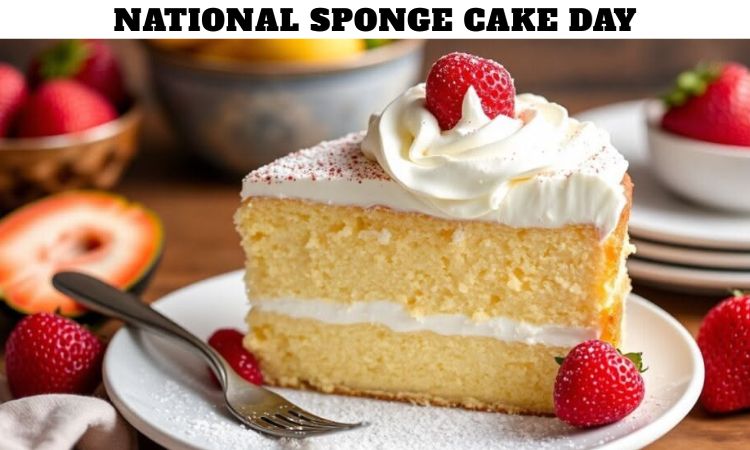
What Is National Sponge Cake Day?
National Sponge Cake Day is celebrated annually on August 23 as a day to appreciate one of the world’s most versatile and beloved cakes. Sponge cake is known for its light, airy texture and simple ingredients, making it a popular choice for birthdays, afternoon tea, celebrations, and everyday desserts.
Unlike heavier cakes that depend on large amounts of butter, oil, or cream for richness, many traditional sponge cakes get their characteristic texture from properly whipped eggs. The trapped air expands during baking, helping the cake rise and giving it a soft and delicate crumb.
August 23 provides a fun opportunity for bakers, dessert lovers, families, and food enthusiasts to enjoy this classic cake. The day can be celebrated by baking a homemade sponge cake, decorating one with fresh fruit and cream, trying an international variation, or simply enjoying a slice with tea or coffee.
Why Is National Sponge Cake Day Celebrated on August 23?
August 23 is observed as National Sponge Cake Day to recognize the long-standing popularity and culinary importance of sponge cake. Although the precise origin of the modern food holiday is not firmly established, the celebration gives people an opportunity to appreciate a dessert that has influenced cake-making traditions around the world.
Sponge cake has a particularly interesting place in baking because its basic preparation can be adapted in countless ways. A simple sponge can become a layered celebration cake, a Swiss roll, a trifle, a fruit-filled dessert, or a sophisticated pastry.
The day also celebrates the skill involved in making a good sponge cake. Because the recipe can be relatively simple, the quality of the final result often depends on technique. Mixing eggs carefully, folding flour without losing too much air, and controlling the oven temperature can make a significant difference.
What Is Sponge Cake Made Of?
Traditional sponge cake is made using a relatively small number of ingredients. Eggs, sugar, and flour form the foundation of many classic recipes. Depending on the recipe, ingredients such as vanilla, butter, milk, baking powder, or lemon zest may also be included.
Eggs are particularly important in many sponge cake recipes. When eggs are beaten with sugar, they can hold tiny air bubbles. During baking, those bubbles expand and help create the cake’s characteristic light structure.
Different sponge cake recipes use different techniques. Some rely primarily on whipped whole eggs, while others separate the eggs and whip the whites before folding them into the batter. Some modern versions use chemical leaveners such as baking powder to provide additional lift.
The simplicity of the basic ingredients is one reason sponge cake has remained so popular. Bakers can transform the basic cake with fillings, toppings, syrups, fruits, chocolate, nuts, spices, and creams.
How Did Sponge Cake Become Popular?
The history of sponge cake is connected to the development of European baking traditions and the increasing use of eggs in cakes and pastries. Early versions were quite different from many modern cakes because they generally contained less fat and relied heavily on eggs for structure.
As baking techniques developed, sponge cake became increasingly versatile. Bakers learned how to incorporate air into eggs and create cakes that were lighter than many traditional breads and cakes.
The development of improved ovens and baking equipment also helped sponge cakes become more consistent. Over time, different countries developed their own versions, adapting the basic idea to local ingredients and culinary traditions.
Today, sponge cake is found in numerous forms around the world. From British-style sponge cakes to Italian and French variations, the basic concept has inspired generations of bakers.
What Makes Sponge Cake Different From Other Cakes?
The biggest difference between sponge cake and many other cakes is its texture and method of preparation. Sponge cakes are generally light and airy, while cakes such as pound cake are denser and richer.
Traditional sponge cakes often depend on whipped eggs to provide volume. In contrast, butter cakes commonly depend on creamed butter and sugar combined with chemical leaveners to create a softer but richer structure.
Sponge cake can also absorb liquids exceptionally well. This makes it ideal for desserts that include syrups, fruit juices, cream, custards, or other fillings.
The cake’s neutral flavor is another advantage. A plain sponge can easily be transformed into a chocolate, fruit, citrus, coffee, or vanilla dessert without changing its fundamental structure.
What Are Some Popular Types of Sponge Cake?
There are many varieties of sponge cake, and each has its own characteristics. Victoria sponge is one of the most recognizable versions, traditionally featuring layers of sponge with cream and jam between them.
Genoise is another classic sponge associated with European pastry-making. It is generally light and flexible and can be used as a base for layered desserts and decorated cakes.
Chiffon cake is also known for its airy texture, although its ingredients and preparation differ from traditional sponge cake. Japanese-style sponge cakes are often particularly soft and delicate, while Swiss rolls use thin sponge sheets that are rolled around fillings.
Ladyfingers are another sponge-based creation. These light, elongated cakes are commonly used in desserts such as tiramisu and charlotte.
Because there are so many variations, National Sponge Cake Day is a great opportunity to experiment with different styles rather than limiting the celebration to one recipe.
How Can You Celebrate National Sponge Cake Day?
There are plenty of simple ways to celebrate National Sponge Cake Day. The most obvious choice is to bake a sponge cake at home. Even beginners can start with a basic vanilla sponge and gradually experiment with more advanced recipes.
Families can turn the day into a baking activity by preparing the batter together and decorating the finished cake. Children can help with measuring ingredients, whisking, arranging fruit, or adding decorations under adult supervision.
Another option is to visit a local bakery and choose a sponge-based dessert. You can also organize a small sponge cake tasting and compare different flavors and fillings.
For people who enjoy social media, August 23 can be an opportunity to share photographs of homemade cakes, baking experiments, decorating ideas, or favorite sponge cake recipes.
A simple afternoon tea featuring sponge cake, fresh fruit, and tea can also provide a relaxed way to celebrate.
What Are the Best Ways to Serve Sponge Cake?
Sponge cake can be served in many different ways. A plain slice with powdered sugar is a simple choice for those who enjoy the cake’s natural flavor.
Fresh whipped cream and berries can turn a basic sponge into an elegant dessert. Strawberries, raspberries, blueberries, peaches, and cherries can all complement the cake beautifully.
For a richer dessert, sponge cake can be layered with custard, chocolate cream, lemon curd, or fruit preserves. A drizzle of syrup can add moisture and flavor, particularly when the sponge is slightly dry.
Sponge cake also works well in trifles. Cubes of cake can be layered with fruit, custard, jelly, and whipped cream to create a colorful dessert suitable for gatherings.
Coffee and tea are natural companions for sponge cake, making it especially suitable for afternoon snacks and casual celebrations.
Can You Make Sponge Cake at Home?
Yes, sponge cake can be made at home with basic baking equipment and ingredients. However, achieving the right texture requires attention to technique.
One of the most important steps is incorporating air into the eggs properly when the recipe calls for whipped eggs. The mixture should generally become pale, thick, and sufficiently aerated before the flour is added.
Flour should be folded gently rather than mixed aggressively. Overmixing can remove the air that helps the cake rise.
The oven should also be properly preheated. Opening the oven door too frequently during baking can cause problems with the cake’s structure.
After baking, the cake should be handled carefully because a freshly baked sponge can be delicate. Once cooled, it can be filled, layered, decorated, or served according to preference.
What Are Some Interesting Facts About Sponge Cake?
Sponge cake has several fascinating characteristics that make it different from many other desserts. One interesting fact is that air can be one of its most important ingredients. Although air is not listed on a recipe card, the air incorporated into beaten eggs contributes significantly to the cake’s volume.
Another interesting feature is its adaptability. A simple sponge can be used as the foundation for numerous desserts, from layered cakes to rolls and trifles.
Sponge cake is also important in professional pastry-making. Bakers use different sponge techniques depending on the desired texture, moisture level, flexibility, and ability to support fillings.
Its relatively neutral flavor is another reason for its popularity. The cake can take on the flavor of vanilla, citrus, chocolate, coffee, fruit, spices, or other ingredients.
National Sponge Cake Day therefore celebrates more than just one dessert. It celebrates baking creativity and the ability to transform a simple combination of ingredients into something special.
How Can You Make National Sponge Cake Day More Fun?
National Sponge Cake Day can be turned into a creative food celebration. A family baking competition is one entertaining idea. Participants can start with a basic sponge and compete to create the most attractive decoration.
Another idea is to have a flavor challenge. Bakers can experiment with lemon, orange, chocolate, coffee, coconut, strawberry, or vanilla.
You can also create a sponge cake bar with different toppings and fillings. Guests can choose their favorite combination of cream, fruit, chocolate, nuts, and sauces.
For children, decorating mini sponge cakes can be an enjoyable activity. Instead of making one large cake, small individual cakes can be prepared and decorated differently.
The important part of the celebration is enjoying the process. Sponge cake may have a simple appearance, but its versatility makes it an excellent dessert for creativity.
Why Does Sponge Cake Remain Popular Today?
Sponge cake continues to be popular because it combines simplicity, versatility, and a pleasant texture. It can be served as an everyday snack or transformed into an elaborate celebration cake.
The basic recipe can also be adapted to different dietary preferences and flavor combinations. Bakers can experiment with ingredients and techniques while maintaining the essential lightness associated with sponge cake.
Its role in traditional desserts also keeps it relevant. Many classic recipes around the world use sponge as a foundation, while modern pastry chefs continue to reinterpret it.
National Sponge Cake Day gives dessert lovers a reason to rediscover this classic. Whether you prefer a simple homemade sponge or an elaborate layered creation, August 23 is a perfect day to enjoy one of baking’s most adaptable cakes.
How Can You Wish Someone a Happy National Sponge Cake Day?
A simple message such as “Happy National Sponge Cake Day!” is enough to celebrate the occasion. You can make the message more personal by adding a cake-related joke or inviting someone to share a slice.
For example, you could say, “Life is better with cake. Have a delicious National Sponge Cake Day!” Another option is, “Wishing you a light, fluffy, and wonderfully sweet National Sponge Cake Day!”
Sharing a homemade cake with friends, family, coworkers, or neighbors can make the celebration even more meaningful. After all, food holidays are often most enjoyable when they bring people together.
Frequently Asked Questions (FAQs)
1. When is National Sponge Cake Day celebrated?
National Sponge Cake Day is celebrated annually on August 23.
2. What is sponge cake?
Sponge cake is a light and airy cake commonly made with eggs, sugar, and flour. Many traditional recipes rely on whipped eggs to provide volume.
3. Why is it called sponge cake?
The name refers to its light, porous texture, which resembles a sponge and allows the cake to absorb liquids and flavors.
4. Is sponge cake the same as pound cake?
No. Sponge cake is generally lighter and airier, while pound cake is traditionally denser and richer.
5. Can sponge cake be made without butter?
Yes. Many traditional sponge cake recipes contain little or no butter because whipped eggs can provide much of the structure and volume.
6. What can you put inside a sponge cake?
Popular fillings include whipped cream, jam, fresh fruit, custard, lemon curd, chocolate cream, and buttercream.
7. Can children celebrate National Sponge Cake Day?
Yes. Children can participate in age-appropriate baking and decorating activities with adult supervision.
8. What is the best drink to serve with sponge cake?
Tea and coffee are popular choices, but milk, hot chocolate, and fruit-based drinks can also pair well with sponge cake.
9. How can I celebrate National Sponge Cake Day?
You can bake a sponge cake, visit a bakery, decorate mini cakes, organize a cake-tasting event, or share a slice with family and friends.
10. Is National Sponge Cake Day an official public holiday?
No. It is a food-themed observance rather than a federal or national public holiday that provides a day off from work.