

Why Is Russian Flag Day Celebrated on August 22?
Russian Flag Day is observed every year on August 22 to honor the national flag of the Russian Federation. The day celebrates the importance of the Russian tricolor as a national symbol and reflects on the history, identity, and traditions associated with the country.
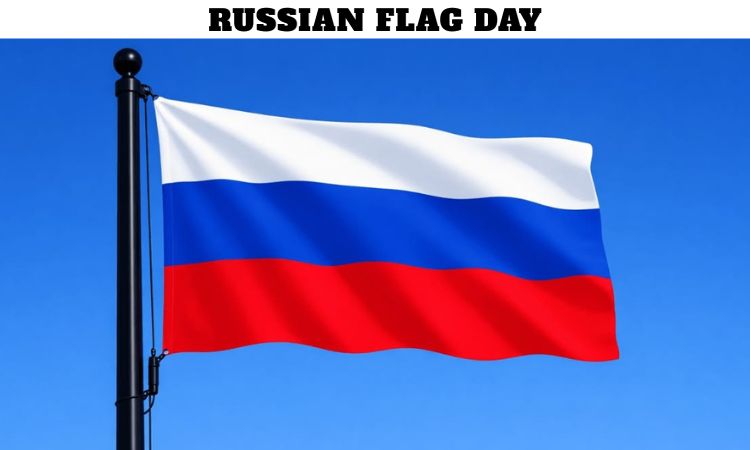
The Russian national flag consists of three horizontal stripes: white at the top, blue in the middle, and red at the bottom. The simple design has become one of the most recognizable symbols associated with Russia.
August 22 has particular historical importance because the tricolor became an important symbol during the political changes of 1991. On August 22, 1991, the Russian parliament recognized the white, blue, and red tricolor as the national flag of the Russian Soviet Federative Socialist Republic. A few years later, August 22 was officially established as Russian Flag Day.
Today, the occasion provides an opportunity to learn about the country’s history and the development of its national symbols. Public institutions, schools, cultural organizations, and communities may organize educational programs, exhibitions, concerts, patriotic events, and ceremonies involving the national flag.
What Is the History Behind the Russian Flag?
The history of the Russian tricolor goes back several centuries. Although the exact origins and symbolism of the three colors have been discussed by historians, the combination of white, blue, and red became closely associated with the Russian state over time.
One important chapter in the history of the flag is connected with Peter the Great. During his reign, Russia developed stronger maritime connections with European countries, and the tricolor became associated with Russian ships and state identity. The flag was used in different forms during the Russian Empire.
Following the Russian Revolution of 1917, the traditional tricolor was replaced by symbols associated with the Soviet state. The Soviet Union used a red flag featuring communist imagery, and the traditional white-blue-red design was no longer the principal state flag.
The tricolor returned to prominence during the political changes surrounding the end of the Soviet period. On August 22, 1991, it was formally recognized as the national flag of the Russian republic. The date later became the annual observance known as Russian Flag Day.
The Russian Federation subsequently established the modern legal framework governing the national flag and its official use.
Why Is August 22 Important in Russian History?
August 22 is important because it connects the modern Russian tricolor with the political transformation of 1991.
In August 1991, the Soviet Union experienced a major political crisis. During this period, the white-blue-red tricolor appeared prominently in public spaces and became associated with the emerging Russian state.
The date therefore represents more than the physical design of a flag. It is connected with a major turning point in Russia’s modern political history and the restoration of a historical national symbol.
Russian Flag Day was officially established in 1994. Since then, August 22 has been observed annually as a day dedicated to the country’s national flag.
For many people, the occasion provides a chance to think about national history, cultural heritage, and the role of symbols in creating a sense of shared identity.
What Does the Russian Flag Look Like?
The national flag of Russia is a rectangular tricolor made up of three equal horizontal stripes.
The upper stripe is white, the middle stripe is blue, and the lower stripe is red.
Unlike some national flags, the Russian flag does not feature a coat of arms, emblem, star, or other symbol in the center. Its design is deliberately simple, making it easily recognizable.
The proportions and official characteristics of the national flag are established under Russian law. The modern state flag has a length-to-width ratio of 2:3.
The three-color arrangement is also important because changing the order of the stripes would create a different flag. The correct arrangement is white on top, blue in the middle, and red at the bottom.
What Do the Colors of the Russian Flag Mean?
The colors of the Russian flag are often given traditional interpretations, although there is no single universally accepted historical explanation for their meaning.
White has sometimes been associated with peace, purity, honesty, and openness. Blue has traditionally been connected with loyalty, faith, and the sky. Red has frequently been associated with courage, strength, bravery, and sacrifice.
These interpretations are commonly used in cultural and educational discussions, but they should not necessarily be treated as the original official meaning of the colors.
The historical development of the tricolor is more complicated than a simple color-by-color explanation. Different interpretations appeared at different points in Russian history.
Nevertheless, the three colors together have become an important part of Russian national identity and are widely recognized both within Russia and internationally.
How Did the Russian Tricolor Become a National Symbol?
The tricolor became a national symbol through a long historical process involving Russia’s monarchy, maritime history, political changes, and the formation of the modern Russian Federation.
The flag was particularly associated with Russian naval activity during the era of Peter the Great. Over the years, variations of the tricolor appeared alongside other official symbols.
During the Soviet era, the red flag became the principal state symbol, while the traditional tricolor was largely absent from official state use.
Its return during the political changes of 1991 gave the flag a new significance. The tricolor came to represent the Russian Federation and its new political era.
The modern flag therefore carries layers of historical meaning. It can be viewed as a connection between different periods of Russian history and as a symbol of the contemporary Russian state.
How Is Russian Flag Day Celebrated?
Russian Flag Day can be marked through a variety of public and private activities.
Official ceremonies may involve the raising of the national flag, speeches, concerts, exhibitions, educational programs, and cultural performances. In some communities, large flags are displayed in public areas and participants may take part in organized celebrations.
Schools can use the occasion to teach students about Russian history, geography, national symbols, and the development of the country’s flag.
Cultural organizations may organize historical exhibitions, competitions, lectures, and creative activities. Music and dance performances can also form part of public celebrations.
Some people celebrate by displaying the Russian flag at homes, workplaces, or public events where permitted. Social media is another way people may acknowledge the occasion by sharing historical information, photographs, artwork, and messages related to the national symbol.
The exact celebrations can differ from one city or region to another.
Why Is the National Flag Important to a Country?
National flags play an important role in representing countries around the world. They can appear at government buildings, international sporting events, diplomatic ceremonies, schools, military institutions, and national celebrations.
A flag provides a visual representation of a country and can help create a shared sense of identity among its citizens.
For Russia, the tricolor is closely connected with the country’s state institutions, international representation, sporting occasions, cultural events, and historical memory.
Flags can also serve as reminders of important historical moments. Russian Flag Day demonstrates how a national symbol can become connected to political transformation and changes in national history.
For younger generations, learning about a national flag can be an accessible way to begin exploring a country’s history and cultural development.
What Are Some Interesting Facts About Russian Flag Day?
Russian Flag Day has several interesting facts associated with it.
First, the holiday is celebrated on August 22 every year. Second, its date is connected with the restoration of the white-blue-red tricolor as an official Russian national symbol in 1991.
The holiday itself was established in 1994, meaning that the annual observance began after the political changes that brought the tricolor back into official use.
Another interesting fact is that the modern Russian flag is made up entirely of three horizontal color bands and does not contain a central emblem.
The flag’s design is also historically connected with Russia’s maritime past. The tricolor became especially prominent during the development of Russia’s navy and its increasing interaction with European maritime powers.
The Russian flag is also frequently seen at international events where Russia is officially represented, making it an important symbol beyond the country’s borders.
How Can People Learn More About Russian Flag Day?
People can learn about Russian Flag Day by exploring the history of Russian national symbols and the political developments that shaped the modern Russian Federation.
Students can research the origins of the tricolor, examine historical versions of Russian flags, and learn about the changes that took place during the imperial, Soviet, and post-Soviet periods.
Museums and cultural institutions can provide historical displays and educational materials about national symbols. Books, documentaries, historical archives, and academic resources can also provide more detailed information.
Teachers can make the subject engaging by asking students to create timelines showing how Russian flags changed throughout history. Art projects involving flag designs can also help younger students understand the importance of national symbols.
The occasion can therefore serve as both a cultural celebration and an educational opportunity.
What Is the Significance of Russian Flag Day Today?
Russian Flag Day remains an important national observance because it highlights the history and official status of the Russian national flag.
The tricolor represents the Russian Federation at government ceremonies and other official occasions. For many citizens, it also represents their connection with their country’s history and cultural heritage.
At the same time, the history of the flag reflects the complex political changes Russia experienced during the twentieth and early twenty-first centuries.
August 22 provides an opportunity to discuss those historical developments and understand why national symbols can carry different meanings for different generations.
Whether observed through a public ceremony, an educational event, a cultural program, or simply by learning about the history of the tricolor, Russian Flag Day encourages greater awareness of the role national symbols play in society.
Russian Flag Day is ultimately about more than three colors arranged in horizontal stripes. It is a day connected with history, national symbolism, cultural memory, and the development of the modern Russian state. Every August 22, the Russian tricolor serves as a reminder of the country’s long and complicated history and its continuing place in the modern world.
Frequently Asked Questions (FAQs)
1. When is Russian Flag Day celebrated?
Russian Flag Day is celebrated every year on August 22.
2. What is Russian Flag Day?
Russian Flag Day is an annual observance dedicated to the national flag of the Russian Federation and its historical and cultural significance.
3. Why is Russian Flag Day celebrated on August 22?
August 22 is associated with the restoration and recognition of the white-blue-red tricolor as the national flag of the Russian republic in 1991.
4. When was Russian Flag Day officially established?
Russian Flag Day was officially established in 1994.
5. What are the colors of the Russian flag?
The Russian flag has three horizontal stripes: white at the top, blue in the middle, and red at the bottom.
6. What do the colors of the Russian flag represent?
The colors have been given various traditional interpretations. White, blue, and red have been associated with ideas such as peace, loyalty, courage, purity, and strength, although there is no single universally accepted historical explanation for their meanings.
7. What is the shape of the Russian national flag?
The Russian national flag is a rectangular tricolor with three equal horizontal stripes.
8. How do people celebrate Russian Flag Day?
Celebrations can include flag-raising ceremonies, concerts, cultural programs, educational activities, exhibitions, competitions, and public displays of the national flag.
9. What happened to the Russian tricolor during the Soviet period?
During the Soviet period, the traditional Russian tricolor was replaced by Soviet state symbols, most notably the red Soviet flag.
10. Why is the Russian flag important?
The Russian flag is an official national symbol of the Russian Federation and represents the country at government ceremonies, international events, cultural occasions, and other official functions.