

Why Is Indonesia Independence Day Celebrated on August 17?
Indonesia Independence Day is celebrated every year on August 17 to commemorate the country’s declaration of independence from Dutch colonial rule in 1945. Known locally as Hari Kemerdekaan Republik Indonesia or simply Hari Kemerdekaan, the day represents freedom, national unity, courage, and the determination of the Indonesian people.
August 17 is one of the most important dates in Indonesian history. Across the country, streets, homes, schools, offices, and public spaces are decorated with the national colors of red and white. Communities organize traditional competitions, cultural performances, ceremonies, parades, and neighborhood gatherings.
The celebration is not only about remembering an important historical event. It is also an opportunity for Indonesians to reflect on the sacrifices made by previous generations and to celebrate the country’s identity, diversity, and achievements.
What Happened on August 17, 1945?
Indonesia proclaimed its independence on August 17, 1945, following years of colonial rule and a period of Japanese occupation during World War II.
The independence proclamation was read in Jakarta by Sukarno, accompanied by Mohammad Hatta. The declaration marked a historic turning point because it publicly announced the establishment of an independent Indonesian state.
The proclamation was brief, but its significance was enormous. It expressed the Indonesian people’s determination to govern themselves and establish a nation free from colonial control.
The declaration came after a long period of nationalist movements, political organization, resistance, and growing demands for independence. Indonesian leaders and communities had spent decades developing a stronger sense of national identity despite the country’s enormous cultural, linguistic, and geographical diversity.
The events of August 17 therefore symbolize the culmination of a much longer struggle for self-determination.
Who Proclaimed Indonesia’s Independence?
Sukarno and Mohammad Hatta are the two central figures associated with Indonesia’s proclamation of independence.
Sukarno read the proclamation at his residence in Jakarta on August 17, 1945. Mohammad Hatta stood alongside him and later became Indonesia’s first vice president.
The proclamation represented the political expression of a broader independence movement involving countless Indonesians. While Sukarno and Hatta became internationally recognized as the leaders who announced independence, the struggle itself involved activists, intellectuals, workers, students, community leaders, soldiers, and ordinary citizens.
Their contribution is remembered every year during Independence Day ceremonies throughout the country.
Why Is Indonesia Independence Day Important to the Country?
Indonesia Independence Day carries deep political, historical, and cultural significance.
First, it commemorates the birth of the modern Indonesian nation. The country consists of thousands of islands and hundreds of ethnic groups and languages, making national unity a central theme of the celebration.
Second, the day honors the people who fought for independence. Many Indonesians experienced hardship, imprisonment, violence, displacement, and economic difficulties during the struggle for freedom.
Third, Independence Day reinforces national identity. The celebration brings people together regardless of their background, region, profession, or age.
Finally, August 17 encourages Indonesians to consider the responsibilities that accompany independence. Freedom is not viewed simply as an achievement of the past; it also involves building a peaceful, prosperous, educated, and united society for future generations.
How Do Indonesians Celebrate Independence Day?
Indonesia Independence Day is celebrated through a combination of official ceremonies, community activities, cultural events, decorations, and traditional games.
One of the most important events is the official flag ceremony. Government institutions, schools, organizations, and communities hold ceremonies in which the Indonesian flag is raised.
The national anthem, “Indonesia Raya,” is commonly performed during formal ceremonies. Participants stand respectfully as the red-and-white flag is raised.
Beyond formal events, neighborhood celebrations are a major part of August 17 traditions. Local communities often organize competitions that encourage participation from children, teenagers, adults, and older residents.
These activities create a festive atmosphere while strengthening relationships between neighbors.
What Is the Meaning of the Red and White Indonesian Flag?
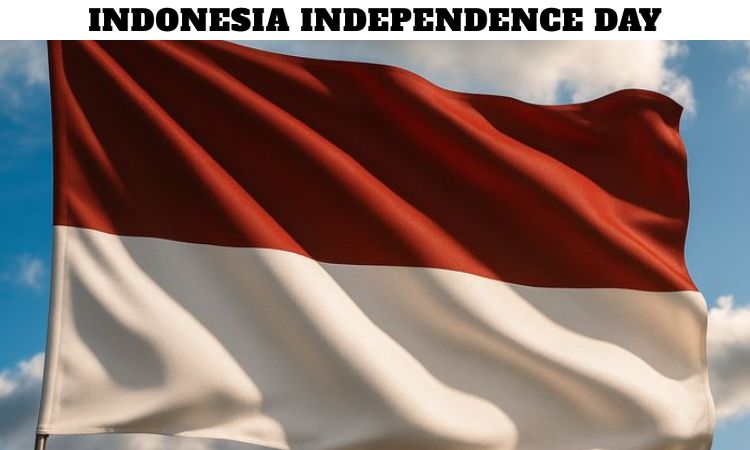
The Indonesian national flag is known as the Merah Putih, meaning “Red and White.”
The flag consists of two horizontal sections: red on top and white on the bottom. These colors have strong symbolic importance in Indonesian national identity.
Red is commonly associated with courage, while white is associated with purity. Together, the colors represent important ideals connected with the nation’s character and independence.
During August, the red-and-white flag can be seen almost everywhere in Indonesia. Homes, businesses, government buildings, schools, streets, and public spaces are often decorated with flags and banners.
Displaying the flag is one of the simplest and most visible ways Indonesians participate in Independence Day celebrations.
What Are the Most Popular Indonesian Independence Day Games?
One of the most recognizable features of Independence Day is the tradition of community games, known collectively as lomba 17 Agustus.
These games are usually lighthearted and designed to encourage participation and entertainment rather than serious competition.
The panjat pinang, or greased pole climbing competition, is particularly famous. Participants work together to climb a tall, slippery pole to reach prizes placed at the top. The activity requires teamwork, persistence, balance, and cooperation.
Another popular competition is the kerupuk eating contest, where participants attempt to eat hanging crackers without using their hands.
Other games can include sack races, marble-and-spoon races, tug-of-war, balloon competitions, and relay events. The exact games vary from one community to another.
What makes these activities special is their ability to bring people together. Children compete alongside friends, parents cheer for participants, and neighbors gather to enjoy the festivities.
Why Is Panjat Pinang Associated With Independence Day?
Panjat pinang has become one of Indonesia’s most recognizable Independence Day traditions.
In the competition, a tall pole is covered with a slippery substance and topped with prizes. Participants attempt to climb the pole, often forming human chains or supporting one another to reach the top.
The activity is entertaining, but it is also frequently interpreted as a symbol of teamwork, perseverance, and collective effort.
Participants rarely succeed by climbing individually. They must cooperate and develop a strategy. Someone may support another person’s feet while another participant climbs higher.
This makes the game particularly meaningful during a celebration centered on national independence. It provides a playful reminder that collective effort can help communities overcome difficult challenges.
How Do Schools Participate in Indonesia Independence Day?
Schools play an important role in Independence Day celebrations.
Students often participate in flag ceremonies, competitions, performances, speeches, and educational activities. Teachers use the occasion to introduce students to Indonesian history and explain the significance of independence.
Students may also decorate classrooms and school grounds with red-and-white decorations. Traditional games and cultural performances can form part of school celebrations.
These activities help younger generations understand that Independence Day is more than a public holiday. It is an opportunity to learn about the country’s history and appreciate the responsibilities associated with citizenship.
What Happens During the Official Independence Day Ceremony?
The most formal Independence Day ceremony takes place at the national level and involves the raising of the Indonesian flag.
The ceremony includes military and government representatives, officials, invited guests, and other participants. The flag-raising moment is one of the most significant parts of the event.
Similar ceremonies are conducted across Indonesia by schools, government offices, local authorities, and organizations.
Participants typically wear formal clothing or traditional attire depending on the nature of the ceremony. Speeches and patriotic activities may also be included.
The atmosphere is generally solemn and respectful because the ceremony connects modern Indonesia with the historical struggle that led to independence.
Why Is August 17 a Public Holiday in Indonesia?
August 17 is a national public holiday in Indonesia because it marks the country’s independence proclamation.
The holiday gives people an opportunity to participate in ceremonies and community events while spending time with family and friends.
Although official events may follow formal schedules, the celebration is also highly local. Each neighborhood can develop its own traditions, competitions, decorations, and performances.
This combination of national symbolism and community participation makes Independence Day one of the most widely celebrated occasions in Indonesia.
How Do Indonesian Communities Decorate for Independence Day?
Red and white decorations become especially prominent in the weeks leading up to August 17.
Indonesian flags are placed outside homes, along roads, on public buildings, and throughout residential neighborhoods. Red-and-white banners, streamers, ribbons, and other decorations are also common.
Communities may work together to clean and decorate their neighborhoods before the celebration. This tradition can create a strong sense of cooperation and shared responsibility.
For many Indonesians, seeing streets filled with red-and-white decorations is an important part of the Independence Day atmosphere.
What Does Indonesia Independence Day Mean to Younger Generations?
For younger Indonesians, August 17 provides an opportunity to connect with the country’s history while participating in modern celebrations.
Children may learn about the proclamation in school, watch ceremonies, participate in games, and take part in cultural performances.
The celebration also introduces young people to concepts such as unity, responsibility, cooperation, resilience, and national pride.
As Indonesia continues to develop, each generation interprets independence within its own circumstances. For today’s young people, independence can include opportunities for education, innovation, economic development, social participation, and building a stronger future.
How Does Indonesia Independence Day Promote National Unity?
Indonesia is extraordinarily diverse. Its people come from different ethnic, linguistic, cultural, and regional backgrounds.
Independence Day provides a shared national occasion that brings these different communities together.
The red-and-white flag, the proclamation of independence, national ceremonies, traditional games, cultural performances, and public celebrations all contribute to a common sense of identity.
The principle of Bhinneka Tunggal Ika, commonly translated as “Unity in Diversity,” is particularly relevant to Indonesia’s national identity. Independence Day offers an annual reminder that cultural differences can exist alongside a shared commitment to the nation.
How Can People Celebrate Indonesia Independence Day?
People can celebrate Indonesia Independence Day by participating respectfully in local activities and learning more about the country’s history.
Some common ways to celebrate include:
- Displaying the Indonesian red-and-white flag.
- Participating in a local flag ceremony.
- Joining community competitions.
- Learning about the 1945 proclamation.
- Watching cultural performances.
- Wearing traditional Indonesian clothing.
- Supporting neighborhood activities.
- Spending time with family and community members.
- Teaching children about Indonesia’s independence history.
- Reflecting on the meaning of freedom and national responsibility.
The most meaningful celebrations combine enjoyment with appreciation for the historical significance of the day.
What Can We Learn From Indonesia Independence Day?
Indonesia Independence Day offers lessons that extend beyond Indonesian history.
The country’s independence movement demonstrates the importance of perseverance, unity, courage, and collective action. It also illustrates how people with different cultural backgrounds can develop a shared national identity.
The celebration reminds us that independence is both a historical achievement and an ongoing responsibility. Building a successful nation requires cooperation, education, respect for diversity, and commitment to future generations.
Every August 17, Indonesia celebrates not only the declaration made in 1945 but also the continuing journey of a diverse nation.
Conclusion: Why Does Indonesia Independence Day Matter?
Indonesia Independence Day on August 17 commemorates one of the most important moments in the nation’s history: the proclamation of independence in 1945.
From formal flag ceremonies to lively neighborhood competitions, the day combines remembrance with celebration. The red-and-white flag, national anthem, traditional games, cultural performances, and community gatherings all contribute to the distinctive character of the occasion.
Most importantly, August 17 represents freedom, unity, resilience, and national pride. It provides Indonesians with an opportunity to honor earlier generations while thinking about the country’s future.
For millions of people across the archipelago and Indonesian communities around the world, Independence Day remains a powerful annual reminder of the journey that shaped modern Indonesia.
Frequently Asked Questions (FAQs)
1. When is Indonesia Independence Day celebrated?
Indonesia Independence Day is celebrated every year on August 17.
2. What does Indonesia Independence Day commemorate?
It commemorates Indonesia’s proclamation of independence on August 17, 1945.
3. Who proclaimed Indonesia’s independence?
Sukarno read the proclamation of independence, with Mohammad Hatta beside him, in Jakarta on August 17, 1945.
4. What is Indonesia Independence Day called in Indonesian?
It is commonly called Hari Kemerdekaan Republik Indonesia or Hari Kemerdekaan.
5. What are the colors of the Indonesian flag?
The Indonesian flag has two colors: red and white, with red on top and white underneath.
6. What is panjat pinang?
Panjat pinang is a traditional Independence Day competition in which participants work together to climb a slippery pole and collect prizes at the top.
7. Is August 17 a public holiday in Indonesia?
Yes. August 17 is a national public holiday commemorating Indonesia’s independence.
8. What games are played during Indonesian Independence Day?
Popular games include panjat pinang, sack races, cracker-eating contests, tug-of-war, marble-and-spoon races, and various neighborhood competitions.
9. Why are red and white decorations used during Independence Day?
Red and white are the colors of the Indonesian national flag and have traditionally been associated with courage and purity.
10. Why is Indonesia Independence Day important?
It is important because it commemorates the nation’s independence, honors the struggle of previous generations, and celebrates Indonesian unity, identity, and national pride.