

What Is National Couscous Day?
National Couscous Day is celebrated every year on August 5 to recognize one of the world’s oldest and most beloved staple foods. Couscous is a traditional North African dish made from tiny granules of steamed semolina wheat. Although many people mistake it for a grain, couscous is actually a type of pasta. Over centuries, it has become a favorite ingredient in kitchens around the globe because of its versatility, quick preparation, and ability to complement a wide variety of vegetables, meats, seafood, and spices.
National Couscous Day encourages food lovers to appreciate this nutritious dish while exploring the rich culinary traditions of countries where it originated. Whether served warm with roasted vegetables, paired with grilled chicken, mixed into fresh salads, or prepared as a sweet dessert, couscous offers endless possibilities. The celebration is also an opportunity to learn about North African culture and the important role that food plays in bringing families and communities together.
Why Is National Couscous Day Celebrated?
National Couscous Day exists to highlight the cultural heritage, nutritional value, and global popularity of couscous. While many food holidays focus on desserts or snacks, this observance celebrates a healthy staple that has nourished generations for centuries. Couscous represents more than just a meal; it symbolizes hospitality, tradition, and togetherness.
In countries such as Morocco, Algeria, Tunisia, Libya, and Mauritania, couscous is often prepared for family gatherings, celebrations, and religious occasions. It is traditionally served in a large communal bowl where everyone shares the meal. This custom reflects unity, generosity, and respect among family members and guests.
As couscous gained international recognition, chefs around the world introduced new recipes and creative variations, making it popular in Europe, North America, Asia, and beyond. National Couscous Day celebrates both its traditional roots and its modern culinary appeal.
How Did Couscous Become One of the World’s Most Popular Foods?
The history of couscous dates back hundreds, and possibly even thousands, of years. Historians believe it originated in North Africa among the Berber communities, who developed the technique of rolling semolina into tiny pellets before steaming them. This cooking method created a lightweight, filling, and long-lasting food that was ideal for families and travelers.
Trade routes throughout the Mediterranean helped spread couscous to neighboring countries. Merchants, explorers, and travelers introduced it to Europe and the Middle East, where local cultures adapted it to their own cuisines. Over time, couscous became an essential ingredient in French, Italian, Spanish, and Middle Eastern cooking.
Today, instant couscous has made preparation even easier. What once required careful steaming can now be ready in just a few minutes, making it a convenient option for busy households while preserving much of its traditional flavor and texture.
What Makes Couscous Different from Other Grains?
Many people assume couscous is a grain because of its appearance, but it is actually made from semolina flour derived from durum wheat. Tiny droplets of water are mixed with semolina and rolled into small pellets before being dried. This process gives couscous its distinctive texture and quick cooking time.
Unlike rice or quinoa, couscous cooks by absorbing hot water or broth rather than requiring extended boiling. Its mild flavor allows it to pair well with savory dishes, herbs, spices, vegetables, legumes, seafood, poultry, lamb, and even fruits.
Several varieties of couscous are available today. Moroccan couscous is the smallest and cooks the fastest. Israeli couscous, also called pearl couscous, has larger, round pearls with a chewy texture. Lebanese couscous is even larger and works well in hearty soups and stews.
Why Is Couscous Considered a Healthy Food?
Couscous is valued for both its convenience and nutritional profile. It provides carbohydrates that supply energy while also offering protein and small amounts of fiber. Whole wheat couscous contains additional fiber, making it a better option for digestive health and long-lasting fullness.
Couscous is naturally low in fat and contains important nutrients such as selenium, which supports immune function and helps protect cells from oxidative damage. It can easily become part of a balanced diet when combined with vegetables, lean proteins, beans, nuts, and healthy fats.
Another advantage is portion flexibility. Couscous can be served as a light side dish or transformed into a satisfying main course by adding seasonal vegetables, chickpeas, grilled fish, or roasted chicken. Because it absorbs flavors so well, it requires only modest amounts of seasoning to create delicious meals.
How Is National Couscous Day Celebrated Around the World?
People celebrate National Couscous Day in many different ways depending on their culinary interests and cultural traditions. Families often prepare homemade couscous recipes featuring fresh vegetables, slow-cooked meats, aromatic spices, and flavorful broths. Others enjoy lighter dishes such as Mediterranean couscous salads with tomatoes, cucumbers, olives, herbs, and lemon dressing.
Restaurants may feature special couscous dishes, allowing customers to experience authentic North African flavors or modern fusion recipes. Cooking schools and food bloggers frequently share tutorials, recipe ideas, and preparation tips that introduce newcomers to the versatility of couscous.
Many people also celebrate by learning about North African history and cuisine, exploring how couscous became a symbol of hospitality across different cultures. Sharing recipes with friends or hosting a themed dinner is another meaningful way to honor the day.
What Are the Most Popular Couscous Dishes You Can Try?
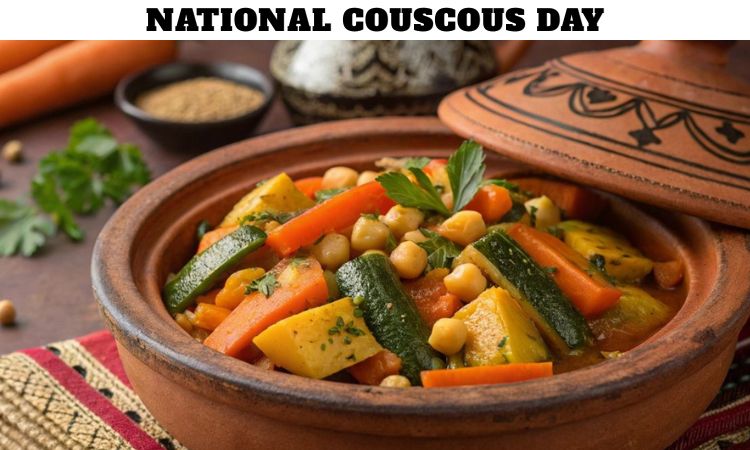
One of the most traditional recipes combines steamed couscous with slow-cooked lamb, carrots, zucchini, pumpkin, chickpeas, and aromatic spices. Moroccan versions often include cinnamon, turmeric, ginger, and saffron, creating layers of rich flavor.
Vegetarian couscous bowls featuring roasted vegetables, herbs, and chickpeas have become increasingly popular among health-conscious eaters. Seafood lovers enjoy couscous paired with grilled shrimp, salmon, or white fish seasoned with Mediterranean herbs.
Cold couscous salads are perfect during summer, combining cucumbers, cherry tomatoes, parsley, mint, feta cheese, olives, and a simple lemon vinaigrette. Sweet versions include dried fruits, almonds, honey, cinnamon, and raisins, making couscous suitable even for breakfast or dessert.
Because of its neutral taste, couscous adapts easily to international cuisines. It works equally well with Indian curries, Middle Eastern stews, Mediterranean vegetables, and European roasted meats.
What Are Some Interesting Facts About National Couscous Day?
One fascinating fact is that couscous is technically pasta rather than grain, despite its rice-like appearance. Another interesting detail is that traditional couscous is steamed multiple times, creating its signature light and fluffy texture.
The dish has been enjoyed for centuries and remains a staple food across North Africa. Modern supermarkets now carry several varieties, including whole wheat, pearl, and flavored couscous, making it widely accessible.
Couscous is among the quickest pasta dishes to prepare, often requiring only five minutes. Its adaptability has helped it become a favorite ingredient for chefs seeking healthy, flavorful meals that can be customized with local ingredients.
The international recognition of couscous continues to grow as more people embrace global cuisines and healthier eating habits.
How Can You Celebrate National Couscous Day at Home?
Celebrating National Couscous Day at home is simple and enjoyable. Begin by preparing a homemade couscous dish using fresh vegetables and your favorite protein. Experiment with traditional North African spices like cumin, coriander, turmeric, paprika, cinnamon, and ginger to create authentic flavors.
Invite family or friends to share a meal inspired by Moroccan or Tunisian cuisine. You can also try preparing a colorful couscous salad for lunch or serve pearl couscous alongside grilled vegetables for dinner.
Watching cooking demonstrations, reading about North African culinary traditions, or introducing children to international foods are additional ways to observe the day. Food has always been an important way of connecting cultures, and National Couscous Day provides an excellent opportunity to appreciate global traditions through cooking and shared meals.
Why Does National Couscous Day Continue to Grow in Popularity?
National Couscous Day continues to gain attention because modern consumers increasingly value foods that are nutritious, versatile, and easy to prepare. Couscous fits perfectly into busy lifestyles while supporting a wide variety of dietary preferences. Whether someone enjoys vegetarian, vegan, Mediterranean, or high-protein meals, couscous can easily become part of their weekly menu.
The celebration also reflects growing appreciation for international cuisines. People are more interested than ever in exploring foods from different cultures, learning traditional cooking techniques, and expanding their culinary experiences. Couscous serves as a wonderful introduction to North African cuisine while remaining accessible to cooks of all skill levels.
As awareness grows through food festivals, cooking shows, restaurants, and social media, National Couscous Day continues to inspire people to prepare healthier meals, discover new recipes, and celebrate one of the world’s most enduring culinary traditions.
Frequently Asked Questions (FAQs)
1. When is National Couscous Day celebrated?
National Couscous Day is celebrated annually on August 5.
2. What is couscous made from?
Couscous is made from steamed granules of semolina flour derived from durum wheat.
3. Is couscous a grain or pasta?
Although it resembles a grain, couscous is actually a type of pasta.
4. Where did couscous originate?
Couscous originated in North Africa and has long been associated with Berber culinary traditions.
5. Is couscous healthy?
Yes. Couscous is low in fat, provides carbohydrates for energy, contains protein, and offers important nutrients such as selenium.
6. What are the different types of couscous?
The main varieties are Moroccan couscous, Israeli (pearl) couscous, and Lebanese couscous.
7. How long does couscous take to cook?
Instant couscous usually cooks in about 5 minutes after absorbing hot water or broth.
8. Can vegetarians eat couscous?
Yes. Couscous is suitable for vegetarians and pairs well with vegetables, legumes, and plant-based proteins.
9. How can I celebrate National Couscous Day?
You can prepare a couscous recipe, visit a Mediterranean or North African restaurant, share recipes, or learn about the dish’s cultural history.
10. Why is National Couscous Day important?
The day celebrates the history, cultural significance, versatility, and nutritional value of one of the world’s oldest staple foods.