

What Is Algeria Independence Day?
Algeria Independence Day, observed every year on July 5, is one of the most important national holidays in Algeria. It commemorates the country’s independence from French colonial rule in 1962 after a long and difficult struggle that lasted nearly eight years. The day symbolizes freedom, national unity, sacrifice, resilience, and pride for the Algerian people.
Across the country, citizens celebrate with patriotic ceremonies, cultural performances, military parades, concerts, fireworks, and remembrance events honoring the thousands of people who sacrificed their lives during the Algerian War of Independence.
For Algerians, July 5 is much more than a historical anniversary. It is a reminder of the nation’s determination to secure sovereignty and build a future based on independence and self-governance.
Why Is Algeria Independence Day Celebrated on July 5?
The date July 5, 1962, marks the official declaration of Algeria’s independence following the referendum held on July 1, 1962, in which an overwhelming majority of Algerians voted for independence.
France officially recognized Algeria’s independence after the Evian Accords, signed on March 18, 1962, which brought an end to the Algerian War of Independence. The formal proclamation of independence took place on July 5, making it the nation’s official Independence Day.
Interestingly, July 5 also holds historical significance because France invaded Algeria on July 5, 1830, beginning 132 years of colonial rule. The choice of July 5 for independence therefore carries deep symbolic meaning, representing the closing of one chapter and the beginning of another.
How Did Algeria Become Independent?
Algeria’s journey toward independence was long and challenging. France invaded Algeria in 1830 and gradually established colonial control over the territory. During this period, many Algerians experienced political discrimination, economic inequality, and restrictions on their rights.
Growing dissatisfaction eventually led to organized resistance movements. The most influential organization was the National Liberation Front (FLN), which launched the Algerian War of Independence on November 1, 1954.
The conflict lasted until 1962 and became one of the most significant anti-colonial struggles of the twentieth century. The war involved guerrilla warfare, military campaigns, political negotiations, and widespread civilian suffering.
After years of conflict, negotiations resulted in the Evian Accords, ending the war and paving the way for Algeria’s independence.
What Was the Algerian War of Independence?
The Algerian War of Independence was fought between 1954 and 1962 and remains one of Africa’s most significant liberation movements.
The war involved:
- Armed resistance by the National Liberation Front
- Military operations by French forces
- Political negotiations
- International diplomatic pressure
- Civilian participation and sacrifice
The conflict resulted in substantial casualties and left lasting political, social, and economic impacts on both Algeria and France.
Despite enormous challenges, the determination of the Algerian people ultimately led to independence and international recognition of Algeria as a sovereign nation.
Who Played an Important Role in Algeria’s Independence?
Several leaders and countless ordinary citizens contributed to Algeria’s independence movement.
Among the most notable figures were:
- Ahmed Ben Bella, who became Algeria’s first Prime Minister and later its first President.
- Houari Boumédiène, an influential military leader who later became President.
- Larbi Ben M’hidi, a respected revolutionary leader remembered for his courage.
- Didouche Mourad, one of the founding members of the National Liberation Front.
- Krim Belkacem, who played a key role in negotiations leading to independence.
Thousands of unnamed freedom fighters, civilians, women, students, workers, and community leaders also contributed significantly to Algeria’s liberation.
Why Is Algeria Independence Day Important?
Algeria Independence Day represents several important national values.
These include:
- National sovereignty
- Freedom from colonial rule
- Unity among citizens
- Recognition of historical sacrifices
- Respect for national identity
- Preservation of cultural heritage
- Patriotism for future generations
The holiday also provides an opportunity to educate young people about Algeria’s history and the importance of protecting independence and democracy.
How Is Algeria Independence Day Celebrated?
Celebrations are held throughout Algeria and often begin several days before July 5.
Common celebrations include:
- National flag displays
- Military parades
- Presidential speeches
- Public concerts
- Traditional music performances
- Cultural exhibitions
- Fireworks displays
- Historical documentaries
- School activities
- Community festivals
- Religious prayers
- Memorial ceremonies at monuments
- Family gatherings
Cities are decorated with national colors, and many public buildings display Algerian flags and patriotic banners.
What Traditions Are Associated with Algeria Independence Day?
Several traditions have become closely associated with the national holiday.
Families often gather to watch official ceremonies on television before attending local celebrations.
Schools organize educational programs highlighting Algeria’s struggle for independence, while museums and cultural institutions host exhibitions featuring historical photographs, artifacts, and personal stories from the liberation movement.
Many people visit memorials dedicated to those who lost their lives during the war, laying flowers and observing moments of silence.
Traditional Algerian music, dance, poetry, and folk performances are also important parts of Independence Day festivities.
What Is the National Flag of Algeria?
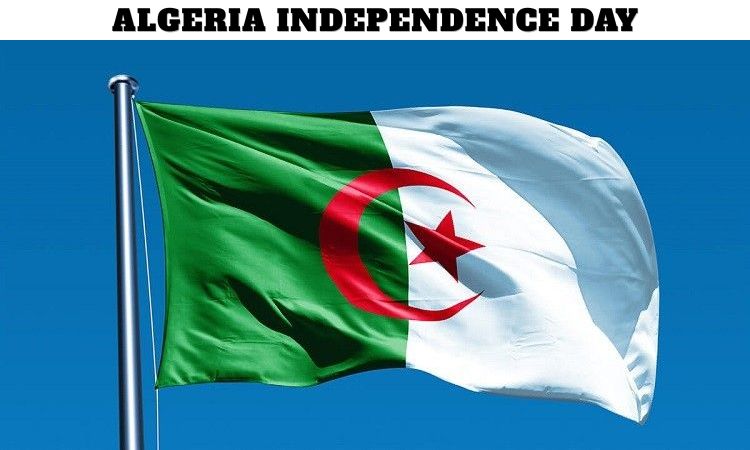
The Algerian national flag consists of two vertical halves.
- Green represents Islam and hope.
- White symbolizes peace and purity.
- The red crescent and star reflect the country’s Islamic heritage.
During Independence Day celebrations, the national flag is displayed throughout cities, villages, schools, government offices, and private homes as a symbol of national pride.
What Foods Are Enjoyed During Algeria Independence Day?
Food plays an important role in family gatherings during the holiday.
Popular dishes include:
- Couscous
- Chakhchoukha
- Mechoui
- Rechta
- Harira
- Brik
- Dolma
- Traditional pastries
- Fresh dates
- Mint tea
Families often prepare elaborate meals while sharing stories about Algeria’s history and honoring previous generations.
How Does Algeria Educate Young Generations About Independence?
Schools across Algeria organize educational activities before Independence Day.
Students participate in:
- Essay competitions
- History presentations
- Art exhibitions
- Poetry recitals
- Cultural performances
- Documentary screenings
- Flag ceremonies
Teachers discuss the historical importance of the independence movement while encouraging students to appreciate the sacrifices made by earlier generations.
What Are Some Interesting Facts About Algeria Independence Day?
Several fascinating facts make this national holiday especially significant.
- Algeria gained independence on July 5, 1962.
- French colonial rule lasted approximately 132 years.
- The Algerian War of Independence lasted from 1954 to 1962.
- The National Liberation Front played the leading role in the independence movement.
- The Evian Accords ended the conflict.
- Algeria is the largest country in Africa by land area.
- July 5 marks both the beginning of French colonization in 1830 and Algeria’s independence in 1962.
- Independence Day is one of Algeria’s most important public holidays.
- Millions of Algerians participate in annual celebrations.
- Memorial events are held nationwide to honor those who sacrificed their lives.
How Does Algeria Independence Day Promote National Unity?
Independence Day serves as a powerful reminder that unity was essential in achieving freedom.
Citizens from different regions, languages, and cultural backgrounds come together to celebrate their shared national identity. Public events encourage participation from all generations, strengthening community bonds and fostering pride in Algeria’s achievements.
The holiday also inspires reflection on the importance of preserving peace, supporting national development, and working together for a prosperous future.
What Lessons Can We Learn from Algeria Independence Day?
Algeria Independence Day teaches valuable lessons that remain relevant today.
These lessons include:
- Freedom requires determination and sacrifice.
- National unity strengthens societies during difficult times.
- History should be remembered to guide future generations.
- Peace and independence must be protected.
- Cultural identity deserves preservation and respect.
- Dialogue and resilience can shape a nation’s future.
The celebration encourages citizens to honor the past while focusing on continued progress and national development.
Why Does Algeria Independence Day Continue to Matter Today?
More than six decades after independence, July 5 remains a defining moment in Algeria’s national identity. It commemorates the courage of those who fought for freedom while celebrating the country’s achievements as an independent nation.
Each year, Independence Day reinforces the importance of sovereignty, democratic participation, cultural pride, and national solidarity. It serves as both a celebration of past victories and an inspiration for future generations to contribute positively to Algeria’s continued growth and success.
Frequently Asked Questions (FAQs)
1. When is Algeria Independence Day celebrated?
Algeria Independence Day is celebrated every year on July 5.
2. What happened on July 5, 1962?
Algeria officially became an independent nation after gaining freedom from French colonial rule.
3. Why is July 5 significant in Algerian history?
It marks both the end of French colonial rule and the beginning of Algeria’s independence.
4. How long did French rule last in Algeria?
French colonial rule lasted approximately 132 years, from 1830 to 1962.
5. What was the Algerian War of Independence?
It was the struggle between the National Liberation Front and French forces from 1954 to 1962 that resulted in Algeria’s independence.
6. Who led Algeria’s independence movement?
The National Liberation Front (FLN) led the movement for independence.
7. Is Algeria Independence Day a public holiday?
Yes, it is one of Algeria’s most important national public holidays.
8. How do Algerians celebrate Independence Day?
They celebrate with parades, concerts, fireworks, cultural events, memorial ceremonies, speeches, and family gatherings.
9. What are the colors of the Algerian flag?
The Algerian flag features green, white, and a red crescent with a red star.
10. Why is Algeria Independence Day important?
It honors the nation’s struggle for freedom, commemorates those who sacrificed their lives, and celebrates Algeria’s sovereignty and national unity.