

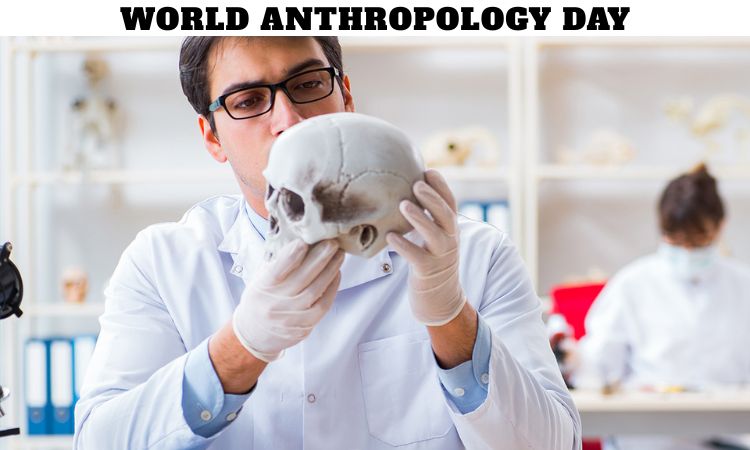
What Is World Anthropology Day, and Why Is It Celebrated on February 19?
World Anthropology Day – February 19 is a global celebration dedicated to the study of humanity in all its diversity. Observed annually in mid-February, this day highlights the importance of anthropology as a discipline that explores cultures, languages, biology, archaeology, and social systems across time and space. It recognises anthropologists’ contributions to understanding human behaviour, preserving cultural heritage, and addressing global challenges.
The celebration is strongly associated with the American Anthropological Association, which formally established Anthropology Day to promote public awareness of the field. Over time, the observance has expanded beyond the United States and gained recognition worldwide as World Anthropology Day.
What Is Anthropology and What Does It Study?
Anthropology is the scientific study of humanity, examining how people live, interact, evolve, and create meaning. It seeks to answer fundamental questions about who we are, where we come from, and how societies function.
The discipline is traditionally divided into four primary subfields:
Cultural Anthropology
Studies social practices, traditions, belief systems, and community structures.
Biological (Physical) Anthropology
Examines human evolution, genetics, and biological diversity.
Archaeology
Investigates past civilisations through material remains.
Linguistic Anthropology
Explores language development and its role in shaping identity and communication.
World Anthropology Day emphasises the interconnectedness of these branches in understanding the human story.
How Did World Anthropology Day Begin?
World Anthropology Day originated as an initiative to bring anthropology out of academic institutions and into public spaces. The American Anthropological Association introduced Anthropology Day in 2015 to encourage universities, museums, and community groups to organize events that showcase anthropological research.
Since its inception, the celebration has grown globally. Academic institutions in the United Kingdom, Canada, and Australia host lectures, exhibitions, and public forums each February.
World Anthropology Day now serves as a unifying moment for scholars, students, and communities to reflect on anthropology’s impact on society.
Why Is Anthropology Important in the Modern World?
Anthropology plays a critical role in addressing contemporary global issues. By analysing cultural patterns and human behaviour, anthropologists provide insight into:
Public health strategies
Climate change adaptation
Migration and displacement
Conflict resolution
Social justice movements
For example, anthropological research informs global health responses in collaboration with organisations like the World Health Organisation. Understanding cultural contexts improves communication and policy effectiveness.
World Anthropology Day highlights how anthropologists contribute to solutions that respect cultural diversity and human dignity.
How Does Archaeology Connect Us to the Past?
Archaeology, a core branch of anthropology, uncovers material evidence of past civilizations. Through excavations, artifact analysis, and advanced dating techniques, archaeologists reconstruct historical narratives.
Major archaeological discoveries—from ancient settlements to early human fossils—reshape our understanding of human evolution and societal development. Institutions such as the Smithsonian Institution frequently showcase archaeological research to educate the public.
On World Anthropology Day, museums often host special exhibits highlighting archaeological findings and preservation efforts.
What Role Does Cultural Anthropology Play in Society?
Cultural anthropologists immerse themselves in communities to study traditions, rituals, social structures, and economic systems. Their research fosters cross-cultural understanding and combats stereotypes.
By documenting indigenous knowledge systems and local customs, anthropologists help preserve intangible cultural heritage. In a globalized world, this preservation is essential to maintaining cultural diversity.
World Anthropology Day emphasises the value of cultural empathy and inclusive dialogue.
How Does Biological Anthropology Explore Human Evolution?
Biological anthropologists investigate the physical development of humans over millions of years. They study fossil records, skeletal remains, and genetic data to trace evolutionary pathways.
Research into early hominins provides insight into how environmental changes shaped human adaptation. Institutions such as the National Geographic Society often collaborate with anthropologists to share discoveries about ancient ancestors.
World Anthropology Day recognises the groundbreaking research that deepens our understanding of human origins.
How Does Linguistic Anthropology Influence Communication Studies?
Language shapes identity, power structures, and social interaction. Linguistic anthropologists analyse how communication patterns influence communities and cultural norms.
From endangered languages to digital communication trends, linguistic anthropology documents evolving modes of expression. This work supports language revitalisation initiatives and protects cultural identity.
World Anthropology Day underscores the importance of preserving linguistic diversity in an interconnected world.
How Is World Anthropology Day Celebrated Globally?
Celebrations of World Anthropology Day take many forms:
Public lectures and panel discussions
Interactive museum exhibits
Student research showcases
Film screenings
Cultural workshops
Universities across the United States and Canada often host open-house events where students present anthropological research to the public.
Social media campaigns also amplify awareness, sharing stories of fieldwork and community engagement from around the world.
What Career Opportunities Exist in Anthropology?
Anthropology graduates pursue diverse career paths in:
Academia and research
Museum curation
International development
Public health
Forensic science
Corporate consulting
Applied anthropologists work with governments and NGOs to design culturally sensitive policies. Their expertise enhances program effectiveness by integrating local perspectives.
World Anthropology Day encourages students to explore anthropology as a dynamic and impactful profession.
How Does Anthropology Promote Social Justice?
Anthropologists often advocate for marginalised communities by documenting inequalities and amplifying underrepresented voices. Their research informs policies addressing discrimination, displacement, and resource access.
By prioritising ethical engagement and participatory methods, anthropology fosters equitable collaboration between researchers and communities.
World Anthropology Day celebrates this commitment to fairness and human rights.
How Does Anthropology Address Climate Change?
Climate change affects societies differently based on geography, culture, and resources. Anthropologists examine how communities adapt to environmental shifts and develop sustainable practices.
Collaborations with environmental organisations and academic institutions help integrate traditional ecological knowledge into climate solutions.
World Anthropology Day highlights anthropology’s role in shaping climate resilience strategies grounded in cultural understanding.
Why Is Public Engagement Essential for Anthropology?
Anthropology thrives when knowledge is shared beyond academic circles. Public engagement bridges the gap between research and real-world application.
Museums, cultural centres, and educational platforms create accessible learning opportunities. Institutions like the Smithsonian Institution frequently host programs that bring anthropological insights to diverse audiences.
World Anthropology Day reinforces the importance of dialogue, education, and collaboration.
What Is the Future of Anthropology?
The future of anthropology lies in interdisciplinary collaboration and technological innovation. Emerging trends include:
Digital ethnography
Remote archaeological sensing
Genomic analysis
Artificial intelligence in cultural research
As societies become increasingly interconnected, anthropologists will continue exploring how globalisation reshapes identity and tradition.
World Anthropology Day symbolises the discipline’s adaptability and commitment to understanding humanity in all its complexity.
Conclusion
World Anthropology Day is a celebration of humanity’s shared story and diverse experiences. From the evolutionary studies of biological anthropology to the cultural insights of ethnographic research, anthropology provides a comprehensive framework for understanding our world.