

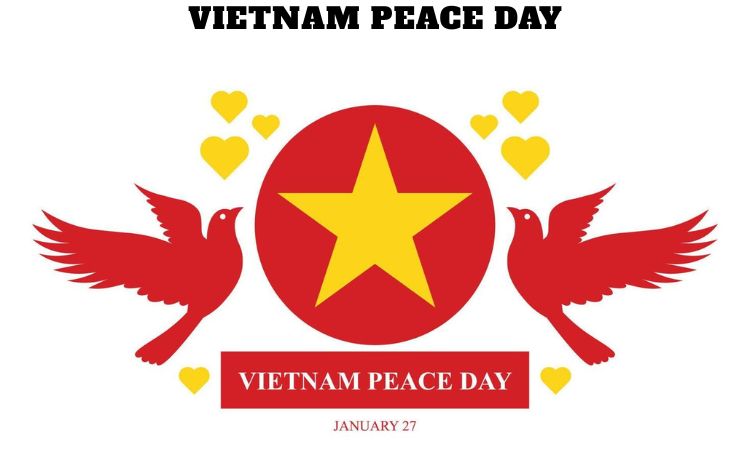
Vietnam Peace Day, observed every year on January 27, stands as one of the most significant commemorations in modern Vietnamese history. This day marks the signing of the Paris Peace Accords in 1973, an agreement that formally ended direct U.S. military involvement in the Vietnam War and laid the foundation for peace, reunification, and national reconstruction. We recognize Vietnam Peace Day as a powerful reminder of diplomacy, resilience, and the enduring human desire for peace after prolonged conflict.
This observance is not merely historical—it is deeply symbolic. It reflects Vietnam’s journey from devastation to development, from division to unity, and from war to peace. Vietnam Peace Day is a moment for reflection, education, and collective remembrance, honoring the sacrifices made while reaffirming a commitment to harmony and cooperation.
Historical Background of Vietnam Peace Day
The origins of Vietnam Peace Day trace back to decades of struggle and negotiation. The Vietnam War, one of the most impactful conflicts of the 20th century, left profound social, political, and economic consequences. After years of intense warfare, prolonged negotiations took place in Paris, involving North Vietnam, South Vietnam, the United States, and the Provisional Revolutionary Government.
On January 27, 1973, the Paris Peace Accords were officially signed. This agreement called for:
A ceasefire across Vietnam
The withdrawal of foreign troops
The exchange of prisoners of war
Respect for Vietnam’s sovereignty and territorial integrity
Vietnam Peace Day commemorates this milestone, recognizing diplomacy as a decisive force in ending armed conflict and opening the door to national reconciliation.
Significance of January 27 in Vietnam’s National Memory
January 27 holds profound importance in Vietnam’s collective consciousness. It symbolizes hope after hardship and resolution after years of suffering. While peace was not immediate or effortless, the accords marked a turning point that eventually led to the reunification of Vietnam in 1975.
We observe Vietnam Peace Day to:
Honor those who sacrificed their lives
Remember civilians affected by war
Acknowledge diplomatic efforts that shaped history
Promote peace as a guiding national and global value
This day reinforces the belief that peace is achieved not only through strength, but through dialogue, perseverance, and mutual understanding.
How Vietnam Peace Day Is Observed?
Vietnam Peace Day is observed through educational programs, memorial ceremonies, and cultural activities across the country. Government institutions, schools, and community organizations participate in events that emphasize remembrance and peace-building.
Common observances include:
Official speeches and wreath-laying ceremonies
Historical exhibitions and documentaries
Classroom discussions on peace and diplomacy
Media features highlighting the Paris Peace Accords
Rather than a celebratory holiday, Vietnam Peace Day is a solemn and reflective observance that encourages learning from the past while focusing on a peaceful future.
Global Relevance of Vietnam Peace Day
While rooted in Vietnamese history, Vietnam Peace Day carries global relevance. The Paris Peace Accords remain a landmark example of international diplomacy aimed at resolving large-scale conflict. Nations around the world view January 27 as a reminder that even the most complex wars can move toward resolution through negotiation.
We recognize Vietnam Peace Day as:
A case study in conflict resolution
A symbol of post-war recovery and resilience
An inspiration for peace movements worldwide
In an era still marked by geopolitical tensions, the lessons of Vietnam Peace Day remain timely and universally applicable.
Vietnam’s Journey from War to Peace
Since the events commemorated on January 27, Vietnam has undergone a remarkable transformation. From a war-torn nation, it has emerged as one of Southeast Asia’s fastest-growing economies, with a strong focus on education, international cooperation, and sustainable development.
Vietnam Peace Day highlights:
The strength of national unity
The importance of rebuilding after conflict
The role of peace in long-term prosperity
This journey underscores that peace is not the end of struggle, but the beginning of renewal.
Educational Importance of Vietnam Peace Day
Education plays a central role in the observance of Vietnam Peace Day. Schools and universities use this occasion to teach younger generations about the consequences of war and the value of peaceful solutions.
Through structured learning, we ensure:
Historical awareness remains strong
The cost of conflict is never forgotten
Future leaders value diplomacy over violence
Vietnam Peace Day serves as a living lesson, bridging past experiences with future responsibilities.
Peace, Reconciliation, and National Identity
Vietnam Peace Day also represents reconciliation—within the nation and with the international community. It acknowledges a painful past while emphasizing forgiveness, cooperation, and shared progress.
This observance strengthens:
National identity rooted in resilience
Respect for peace as a core value
Commitment to international harmony
By honoring peace, Vietnam reinforces its identity as a nation shaped not only by conflict, but by its ability to overcome it.
Why Vietnam Peace Day Matters Today?
In today’s world, where conflicts continue to arise, Vietnam Peace Day remains deeply relevant. It reminds us that peace is fragile, intentional, and worth protecting. January 27 encourages governments, communities, and individuals to prioritize dialogue and understanding.
We view Vietnam Peace Day as:
A call to peaceful coexistence
A reminder of diplomacy’s power
A tribute to those who endured war
Its message transcends borders and generations.
Conclusion: Remembering Peace, Shaping the Future
Vietnam Peace Day stands as a timeless reminder of the cost of war and the priceless value of peace. It honors history without glorifying conflict and looks forward without forgetting sacrifice. Through remembrance, education, and reflection, we continue to uphold the principles that led to peace and strive to apply them in the modern world.