
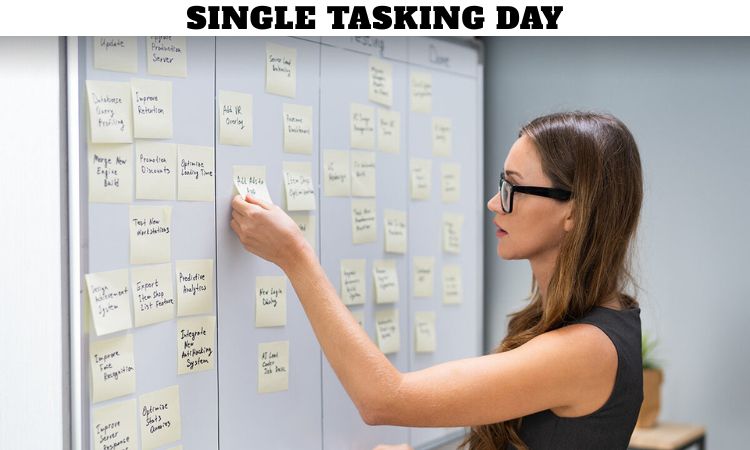
Every year on February 22, Single Tasking Day invites us to pause, refocus, and embrace a powerful yet often overlooked principle: doing one thing at a time. In a world that glorifies multitasking, constant notifications, and endless to-do lists, this day serves as a reminder that true productivity and clarity come from focused attention.
But what exactly is Single Tasking Day? Why does it matter in modern life? And how can we practice single-tasking effectively? Let us explore these questions and uncover how dedicating February 22 to focused work can transform the way we think, perform, and live.
What Is Single Tasking Day – February 22?
Single Tasking Day is an annual observance that encourages individuals to concentrate on one task at a time rather than juggling multiple responsibilities simultaneously. It challenges the popular belief that multitasking leads to higher productivity.
Instead of dividing attention among emails, messages, meetings, and projects, Single Tasking Day promotes deep focus and deliberate effort. The goal is to improve quality, efficiency, and mental well-being by eliminating unnecessary distractions.
Why Is Multitasking Often Ineffective?
Multitasking may feel productive, but research suggests otherwise. When we attempt to perform multiple tasks at once, our brains rapidly switch between them. This constant shifting, known as task switching, reduces efficiency and increases errors.
Common consequences of multitasking include:
Decreased concentration
Increased stress levels
Higher likelihood of mistakes
Reduced quality of work
Mental fatigue
On Single Tasking Day, we are encouraged to recognize these drawbacks and reconsider how we structure our daily routines.
How Does Single Tasking Improve Productivity?
Single tasking enhances productivity by allowing the brain to dedicate full cognitive resources to one activity. When attention is undivided, tasks are often completed more quickly and with greater accuracy.
Focused work enables:
Clearer thinking
Faster problem-solving
Improved creativity
Higher-quality outcomes
By concentrating on one responsibility at a time, we minimize interruptions and reduce the need to revisit incomplete work. Single Tasking Day highlights the power of sustained attention.
Can Single Tasking Reduce Stress and Anxiety?
Yes, single tasking significantly reduces mental strain. Multitasking often creates a sense of overwhelm because multiple demands compete for attention simultaneously.
Focusing on one task simplifies priorities and lowers cognitive load. When we commit to completing a single activity before moving to the next, we experience:
Greater mental clarity
Reduced anxiety
Increased sense of accomplishment
Improved emotional balance
Single Tasking Day offers an opportunity to reset our minds and embrace a calmer approach to productivity.
How Does Single Tasking Enhance Work Performance?
In professional environments, deep focus can lead to measurable improvements in performance. Employees who practice single tasking often produce more thorough and accurate results.
Single tasking encourages:
Better decision-making
Thoughtful communication
Stronger analytical skills
Improved project management
Rather than responding to emails while attending meetings or switching between tasks every few minutes, dedicating blocks of uninterrupted time increases efficiency and professionalism.
What Happens to the Brain When We Focus Deeply?
When we engage in focused work, the brain enters a state often referred to as “flow.” In this state, concentration is heightened, distractions fade, and performance improves.
Flow states are associated with:
Increased dopamine release
Enhanced motivation
Greater satisfaction
Improved learning retention
Single Tasking Day encourages us to create the conditions for flow by eliminating distractions and committing to deep concentration.
How Can We Practice Single Tasking in Daily Life?
Practicing single tasking requires intentional effort. On February 22, consider implementing these strategies:
1. Prioritize Tasks Clearly
Identify the most important task of the day and dedicate focused time to completing it.
2. Eliminate Distractions
Turn off unnecessary notifications, silence your phone, and close unrelated browser tabs.
3. Use Time Blocks
Allocate specific periods for focused work, such as 30- to 60-minute intervals.
4. Complete Before Switching
Avoid starting a new task until the current one is finished or reaches a natural stopping point.
These simple steps can dramatically improve concentration and efficiency.
Can Single Tasking Improve Personal Relationships?
Single tasking extends beyond work. In personal relationships, giving someone undivided attention strengthens connection and trust.
When we listen without checking phones or thinking about other responsibilities, conversations become more meaningful. Focused attention demonstrates respect and genuine interest.
On Single Tasking Day, consider practicing mindful presence during meals, conversations, and family time. Being fully engaged enhances emotional bonds.
Why Is Digital Distraction a Challenge?
Modern technology contributes significantly to divided attention. Smartphones, social media, emails, and instant messaging constantly demand our focus.
Frequent interruptions fragment concentration and prevent deep work. Single Tasking Day provides an opportunity to reassess digital habits and set healthier boundaries.
Strategies may include:
Scheduling specific times to check messages
Using website blockers during focused work
Keeping devices out of sight during conversations
Reducing digital distractions is essential for successful single tasking.
How Does Single Tasking Support Creativity?
Creativity thrives in focused environments. When attention is scattered, ideas struggle to develop fully. Concentrated effort allows thoughts to deepen and evolve.
Writers, designers, engineers, and artists often produce their best work during uninterrupted sessions of concentration. By dedicating time to one creative task, we foster innovation and originality.
Single Tasking Day reminds us that creative breakthroughs often emerge from sustained focus.
Can Students Benefit from Single Tasking?
Students frequently attempt to study while browsing social media or watching television. This divided attention reduces comprehension and retention.
Single tasking enhances academic performance by:
Improving memory consolidation
Strengthening comprehension
Reducing study time
Increasing exam confidence
Encouraging students to dedicate distraction-free study sessions can lead to measurable improvements in learning outcomes.
What Are the Long-Term Benefits of Single Tasking?
Adopting single tasking as a habit offers lasting advantages:
Greater productivity
Improved mental health
Stronger relationships
Enhanced creativity
Increased job satisfaction
Over time, consistent focus builds discipline and resilience. Rather than feeling overwhelmed by competing demands, individuals gain confidence in their ability to manage responsibilities effectively.
How Can Workplaces Celebrate Single Tasking Day?
Organizations can support Single Tasking Day by:
Encouraging “no meeting” focus hours
Promoting email-free periods
Offering productivity workshops
Recognizing deep work achievements
Creating a culture that values focus over constant responsiveness fosters higher-quality work and employee well-being.
Is Single Tasking Realistic in a Busy World?
While modern life demands flexibility, single tasking remains practical. It does not require eliminating responsibilities—it requires organizing them sequentially rather than simultaneously.
By structuring tasks in order of priority and committing focused time to each, individuals can manage busy schedules without sacrificing quality.
Single Tasking Day demonstrates that clarity and organization make focused work achievable.
How Can February 22 Become a Turning Point?
Single Tasking Day can serve as more than a symbolic observance. It can mark the beginning of a new approach to productivity and well-being.
Consider using this day to:
Reflect on current habits
Identify sources of distraction
Commit to daily focus sessions
Track improvements in efficiency and mood
Even small changes can produce significant results over time.
Why Should We Embrace Single Tasking This Year?
In a culture that often equates busyness with success, Single Tasking Day offers a powerful alternative. It encourages us to slow down, prioritize thoughtfully, and dedicate full attention to what truly matters.