

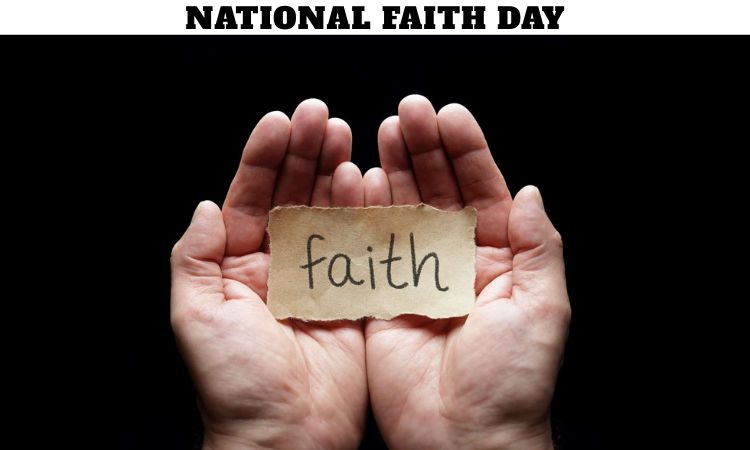
National Faith Day, observed annually on January 9, is a meaningful occasion dedicated to recognizing the importance of faith in human life. Faith—whether spiritual, religious, moral, or personal—has been a guiding force for individuals and communities throughout history. It offers hope during uncertainty, strength during adversity, and purpose in everyday living. National Faith Day invites people from all backgrounds to reflect on their beliefs, values, and sources of inner strength while encouraging unity, compassion, and understanding in a diverse world.
Understanding the Meaning of Faith
Faith is a deeply personal yet universally experienced concept. It can mean belief in a higher power, trust in humanity, confidence in oneself, or commitment to a moral code. For some, faith is rooted in organized religion, expressed through prayer, rituals, and sacred texts. For others, faith may be secular—confidence in human goodness, science, justice, or the power of love and kindness.
At its core, faith is about trust and conviction. It is the belief that even when outcomes are uncertain, there is meaning beyond immediate circumstances. Faith helps individuals navigate life’s complexities, offering reassurance that challenges can be overcome and that hope is never lost.
The Significance of National Faith Day
National Faith Day is significant because it acknowledges the role faith plays in shaping personal character and social harmony. In a fast-paced, often stressful modern world, people frequently search for stability and purpose. Faith provides an anchor—something constant to rely on when life feels overwhelming.
This day also promotes respect for diverse beliefs. In a multicultural society, people follow different religions, philosophies, and traditions. National Faith Day encourages dialogue, tolerance, and mutual understanding, reminding us that despite differences in belief systems, shared values such as compassion, honesty, and empathy unite humanity.
Faith Across Cultures and Religions
Faith has been central to civilizations across time and geography. Every culture has developed belief systems that explain existence, morality, and humanity’s place in the universe.
Hinduism emphasizes faith (shraddha) as trust in spiritual truth and righteous action.
Christianity views faith as belief in God and trust in divine grace.
Islam considers faith (iman) as belief in Allah, prophets, and moral responsibility.
Buddhism focuses on faith in the teachings of the Buddha and the path to enlightenment.
Judaism emphasizes faith through covenant, tradition, and ethical living.
Indigenous and spiritual traditions worldwide express faith through nature, ancestors, and communal rituals.
National Faith Day honors all these traditions without prioritizing one over another, highlighting faith as a shared human experience rather than a dividing line.
Faith as a Source of Strength and Hope
One of the most powerful aspects of faith is its ability to provide strength during difficult times. When individuals face illness, loss, failure, or uncertainty, faith often becomes a source of comfort and resilience. Believing that there is meaning beyond suffering can help people endure hardships with courage.
Faith also nurtures hope. It encourages individuals to believe in better outcomes, even when circumstances seem bleak. This hopeful outlook can positively influence mental health, reduce stress, and promote emotional well-being. Studies and personal experiences alike show that people who cultivate faith—religious or otherwise—often demonstrate greater perseverance and optimism.
Faith and Mental Well-Being
In today’s world, mental health challenges such as anxiety, depression, and loneliness are increasingly common. Faith can play a supportive role in mental well-being by providing:
A sense of purpose: Faith helps individuals understand their role in the world.
Community support: Religious and spiritual communities offer social connection.
Emotional comfort: Prayer, meditation, or reflection can reduce stress.
Moral guidance: Faith-based values can aid decision-making and personal growth.
National Faith Day serves as a reminder that nurturing inner beliefs—whether spiritual or philosophical—can contribute positively to overall mental and emotional health.
Faith in Everyday Life
Faith is not limited to religious practices; it influences daily actions and attitudes. Faith in oneself encourages confidence and perseverance. Faith in others fosters trust, cooperation, and meaningful relationships. Faith in values such as kindness, justice, and integrity guides ethical behavior.
On National Faith Day, people are encouraged to reflect on questions such as:
What gives me strength during difficult moments?
What values guide my decisions?
How do my beliefs influence my actions toward others?
Such reflection helps individuals live more intentionally and compassionately.
Faith and Community Building
Faith has historically played a crucial role in building strong communities. Places of worship often serve as centers for social support, charity, education, and service. Many humanitarian efforts—such as feeding the hungry, caring for the sick, and supporting the disadvantaged—are inspired by faith-based values.
National Faith Day highlights how faith can inspire service to others. Acts of kindness, volunteer work, and charitable giving are powerful expressions of faith in action. Even beyond religious institutions, shared beliefs in humanity and compassion bring people together to address social challenges.
Interfaith Harmony and Respect
In a world where differences sometimes lead to misunderstanding or conflict, National Faith Day promotes interfaith harmony. Respecting diverse beliefs does not require agreement; it requires empathy and openness. Learning about others’ traditions fosters mutual respect and reduces prejudice.
Interfaith dialogue encourages people to focus on common values—peace, love, forgiveness, and justice—rather than differences. National Faith Day reminds us that diversity in belief systems enriches society and strengthens collective wisdom.
How to Observe National Faith Day?
There is no single way to observe National Faith Day. People can celebrate it in ways that align with their personal beliefs and values. Some meaningful ways include:
Personal Reflection: Spend time in prayer, meditation, or quiet contemplation.
Community Service: Volunteer or help someone in need as an act of faith.
Learning and Dialogue: Read about different belief systems or engage in respectful conversations.
Express Gratitude: Reflect on blessings, lessons, and sources of strength in life.
Practice Kindness: Simple acts of compassion reflect faith in humanity.
These actions help transform faith from an abstract concept into a lived experience.
Faith in a Modern World
In an era driven by technology, science, and rapid change, some question the relevance of faith. However, faith and modernity are not opposites. Many people balance scientific understanding with spiritual belief, recognizing that faith addresses questions of meaning, purpose, and morality that go beyond facts and data.
National Faith Day emphasizes that faith evolves with time. It adapts to new realities while continuing to offer guidance and comfort. Whether through traditional practices or modern interpretations, faith remains a vital part of human identity.
Teaching Faith to Future Generations
Passing on faith does not necessarily mean imposing beliefs; it means sharing values such as empathy, honesty, resilience, and respect. Parents, educators, and mentors play an important role in guiding younger generations to explore beliefs thoughtfully and respectfully.
National Faith Day encourages adults to model positive values and open-mindedness, allowing children to develop their own sense of faith—whether spiritual or ethical—based on understanding rather than fear.
The Universal Message of National Faith Day
At its heart, National Faith Day is about unity and hope. It reminds us that despite differences in beliefs, cultures, and backgrounds, people everywhere seek meaning, comfort, and connection. Faith—whatever form it takes—helps fulfill these universal human needs.
This observance encourages individuals to look inward, strengthen their values, and look outward with compassion. It is a day to reaffirm trust in goodness, resilience in adversity, and belief in a better future.
Conclusion
National Faith Day on January 9 is a powerful reminder of the role faith plays in shaping lives and societies. Whether expressed through religion, spirituality, or belief in humanity, faith provides strength, hope, and direction. It fosters compassion, encourages service, and promotes understanding across differences.