

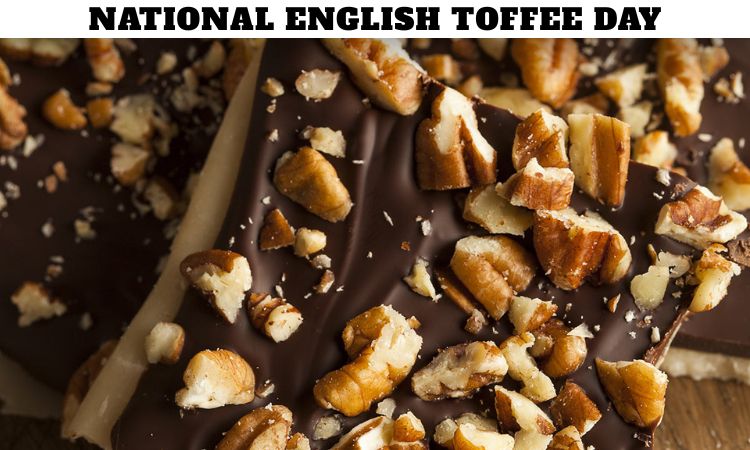
National English Toffee Day, observed every year on January 8, is a delightful celebration dedicated to one of the most beloved traditional sweets in the world—English toffee. Rich, buttery, crunchy, and irresistibly indulgent, English toffee has earned a special place in the hearts of dessert lovers across generations. This day honors not only the confection itself but also the craftsmanship, history, and cultural significance behind this classic treat.
We celebrate National English Toffee Day by indulging in its deep caramelized flavors, revisiting its fascinating origins, and appreciating how this simple combination of butter and sugar evolved into a globally cherished delicacy.
What Is English Toffee?
English toffee is a hard candy made primarily from butter and sugar, cooked together until they reach a rich golden-brown caramelization. Often enhanced with almonds, hazelnuts, or pecans, and frequently topped or coated with dark or milk chocolate, English toffee is known for its luxurious texture and deep, nutty flavor.
Unlike soft toffees or chewy caramels, English toffee is traditionally brittle and crunchy, breaking cleanly when snapped. Its flavor profile balances sweetness with a slightly bitter caramel note, making it both sophisticated and satisfying.
The History and Origins of English Toffee
The roots of English toffee can be traced back to 19th-century Britain, where sugar and butter-based confections became increasingly popular. While the exact origin remains debated, England is widely credited with refining the technique of cooking butter and sugar to higher temperatures, resulting in a harder, more brittle candy.
Toffee gained prominence during the Victorian era, when sugar became more accessible to the public. British confectioners experimented with caramelization techniques, leading to the creation of toffee as we know it today. Over time, English toffee became associated with luxury, gifting, and festive occasions, particularly during Christmas and winter celebrations.
Why is National English Toffee Day Celebrated on January 8?
January 8 is the perfect date to celebrate English toffee. Following the holiday season, when sweet treats are abundant, this day allows dessert enthusiasts to savor one last indulgence while embracing the colder winter months. The rich, warming flavors of butter and caramel pair beautifully with wintertime comfort.
National English Toffee Day also serves as a tribute to traditional confectionery methods, encouraging appreciation for handmade sweets in an era dominated by mass production.
The Art of Making Traditional English Toffee
Core Ingredients
Authentic English toffee relies on a short but precise list of ingredients:
Unsalted butter
Granulated sugar
Water (optional)
Nuts (commonly almonds)
Chocolate (optional topping)
The quality of these ingredients plays a crucial role in the final flavor and texture.
The Cooking Process
The process of making English toffee requires patience, precision, and attention to temperature. Butter and sugar are slowly heated together, allowing the mixture to caramelize evenly without burning. Reaching the correct temperature—often referred to as the hard crack stage—is essential for achieving the signature crunch.
Once cooked, the mixture is poured onto a flat surface, topped with nuts or chocolate, and left to cool and harden before being broken into pieces.
Popular Variations of English Toffee
While traditional English toffee remains timeless, modern variations have expanded its appeal.
Chocolate-Covered English Toffee
One of the most popular versions includes a layer of dark or milk chocolate, melted over the hot toffee and spread evenly. This adds richness and balances the sweetness.
Nut-Enhanced Toffee
Almonds are the classic choice, but many variations feature pecans, walnuts, pistachios, or hazelnuts, each adding a unique flavor and texture.
Sea Salt English Toffee
A contemporary favorite, sea salt toffee introduces a subtle savory contrast that enhances the caramel notes and elevates the overall taste.
Vegan and Dairy-Free Toffee
With growing dietary awareness, plant-based versions using vegan butter alternatives have become increasingly popular without compromising flavor.
Cultural Significance of English Toffee
English toffee holds a special place in British culinary heritage. It is often associated with holidays, special occasions, and gifting traditions. In many households, homemade toffee recipes are passed down through generations, reflecting family traditions and personal touches.
Beyond the United Kingdom, English toffee has gained global popularity, particularly in the United States, where it is commonly sold as a premium confection and holiday treat.
Health and Nutritional Perspective
While English toffee is undeniably indulgent, it is best enjoyed in moderation. Its high sugar and butter content make it an energy-dense treat, ideal for occasional enjoyment rather than daily consumption.
That said, when made with high-quality ingredients and natural nuts, English toffee can offer small amounts of healthy fats and antioxidants, especially when paired with dark chocolate.
How to Celebrate National English Toffee Day?
Enjoy a Classic Toffee Treat
The simplest way to celebrate is to enjoy a piece of authentic English toffee. Pair it with tea, coffee, or hot chocolate for a comforting experience.
Make Homemade English Toffee
Preparing English toffee at home is a rewarding culinary project. It allows for customization and a deeper appreciation of the craft behind this classic confection.
Gift English Toffee
English toffee makes an elegant and thoughtful gift. Beautifully packaged toffee is perfect for sharing with friends, family, or colleagues.
Support Artisan Confectioners
Purchasing English toffee from local or artisanal confectioners supports traditional candy-making techniques and small businesses.
English Toffee vs. Other Toffees and Caramels
English toffee differs significantly from other similar sweets:
Caramel is softer and chewier due to the addition of cream.
American toffee often includes corn syrup and may be slightly softer.
Butterscotch uses brown sugar instead of white sugar, giving it a different flavor profile.
What sets English toffee apart is its pure butter base, firm texture, and intense caramelization.
Why English Toffee Remains Timeless?
The enduring popularity of English toffee lies in its simplicity and elegance. With just a few ingredients and a meticulous process, it delivers a flavor experience that feels both nostalgic and luxurious.
In a world of constantly evolving food trends, English toffee remains unchanged, proving that classic recipes never lose their charm.
Conclusion: Honoring a Classic on January 8
National English Toffee Day on January 8 is a celebration of tradition, craftsmanship, and indulgence. It invites us to slow down, savor rich flavors, and reconnect with a confection that has stood the test of time.