

Every year, National Consumer Rights Day is observed in India on December 24 to highlight the importance of consumer protection, awareness, and empowerment. This day serves as a reminder that consumers are the backbone of the economy and that their rights must be safeguarded to ensure fair trade practices, transparency, and accountability in the marketplace. In a country as vast and diverse as India, where millions of transactions occur daily across physical and digital platforms, the relevance of National Consumer Rights Day continues to grow.
The observance of National Consumer Rights Day is not just symbolic; it reinforces the commitment of the government, businesses, and society to protect consumers from unfair practices, misleading advertisements, defective products, and unethical services. It also educates consumers about their rights and responsibilities, enabling them to make informed decisions.
History and Significance of National Consumer Rights Day
The significance of National Consumer Rights Day in India dates back to December 24, 1986, when the Consumer Protection Act, 1986, was enacted. This landmark legislation was introduced to provide a simple, speedy, and inexpensive mechanism for redressal of consumer grievances. December 24 was chosen to commemorate this historic step toward consumer welfare.
The Consumer Protection Act laid the foundation for a structured consumer dispute redressal system, which includes District Forums, State Commissions, and the National Consumer Disputes Redressal Commission (NCDRC). Over the years, the law has evolved to address emerging challenges, particularly with the growth of e-commerce and digital services.
National Consumer Rights Day serves as an annual opportunity to reflect on the progress made in consumer protection in India and what remains to be done to further strengthen consumer confidence.
Why National Consumer Rights Day Matters in India?
India is one of the world’s largest consumer markets, with rapid growth in retail, online shopping, financial services, healthcare, and telecommunications. While this growth has brought convenience and choice, it has also increased the risk of fraud, misleading claims, substandard products, and unfair trade practices.
National Consumer Rights Day matters because it:
Promotes awareness of consumer rights and legal remedies
Encourages ethical business practices
Strengthens trust between consumers and businesses
Empowers consumers to raise their voices against exploitation
Supports economic growth through fair competition
An informed consumer is less likely to be cheated and more likely to demand quality, fairness, and accountability.
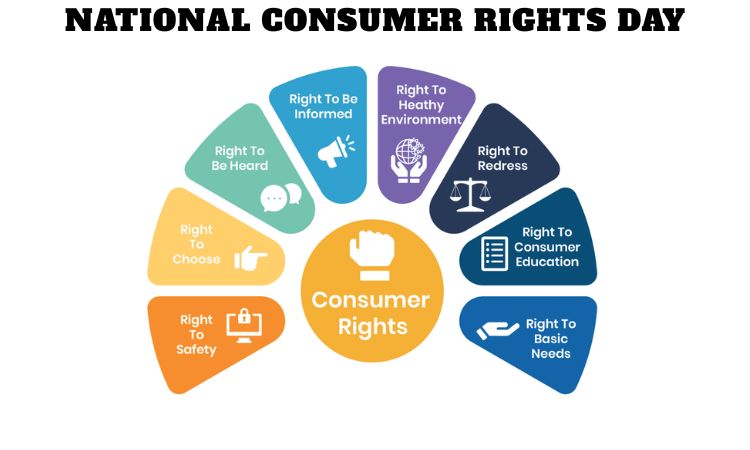
The Six Fundamental Consumer Rights in India
On National Consumer Rights Day, special emphasis is placed on educating citizens about their fundamental rights as consumers. These rights are aligned with international consumer protection principles and are recognized under Indian law.
1. Right to Safety
Consumers have the right to be protected against goods and services that are hazardous to life and property. This includes protection from unsafe food, defective electronics, and dangerous pharmaceuticals.
2. Right to Information
This right ensures that consumers receive accurate and complete information about products and services, including price, quality, quantity, ingredients, and risks. It helps consumers make informed choices.
3. Right to Choice
Consumers should have access to a variety of goods and services at competitive prices. This right protects against monopolistic practices and unfair restrictions.
4. Right to Be Heard
Consumers have the right to voice their complaints and concerns and to be assured that their grievances will receive due consideration by authorities and businesses.
5. Right to Seek Redressal
If a consumer is cheated or receives defective goods or poor services, they have the right to seek compensation or corrective action through legal forums.
6. Right to Consumer Education
This right emphasizes the importance of educating consumers about their rights, responsibilities, and available remedies.
National Consumer Rights Day plays a crucial role in spreading awareness about these rights across urban and rural India.
Consumer Protection Act, 2019: A Modern Framework
While the Consumer Protection Act, 1986, laid the groundwork, the Consumer Protection Act modernized India’s consumer protection framework. This updated law addresses challenges posed by online marketplaces, digital payments, and cross-border transactions.
Key features include:
Establishment of the Central Consumer Protection Authority (CCPA)
Strict action against misleading advertisements
Liability of e-commerce platforms
Introduction of product liability provisions
Faster and more efficient dispute resolution
On National Consumer Rights Day, discussions often focus on how this law empowers consumers in the digital age.
Role of National Consumer Rights Day in Consumer Awareness
One of the main objectives of National Consumer Rights Day is awareness generation. Government departments, consumer organizations, educational institutions, and NGOs organize events such as:
Awareness campaigns and seminars
Workshops on filing consumer complaints
Social media initiatives
Educational programs in schools and colleges
Media discussions and public outreach
These activities help bridge the knowledge gap and ensure that consumers from all sections of society understand their rights and remedies.
Consumer Responsibilities: The Other Side of the Coin
While National Consumer Rights Day emphasizes consumer rights, it also reminds citizens of their responsibilities. Responsible consumers contribute to a healthier and fairer marketplace.
Key consumer responsibilities include:
Being informed before making purchases
Reading labels, warranties, and terms carefully
Asking for bills and receipts
Using products responsibly
Reporting unfair practices instead of ignoring them
Consumer empowerment works best when rights and responsibilities go hand in hand.
Impact of National Consumer Rights Day on Businesses
National Consumer Rights Day is not only for consumers; it also sends a strong message to businesses. Ethical practices, transparency, and customer satisfaction are essential for long-term success.
Businesses are encouraged to:
Follow fair trade practices
Provide accurate product information
Address customer complaints promptly
Avoid misleading advertisements
Maintain quality standards
Companies that respect consumer rights build stronger brand loyalty and trust.
Consumer Rights in the Digital and E-Commerce Era
The rise of online shopping, digital payments, and app-based services has transformed consumer behavior. While convenience has increased, so have issues like fake reviews, delayed deliveries, data privacy concerns, and counterfeit products.
National Consumer Rights Day highlights the need for:
Awareness about online frauds
Understanding return and refund policies
Protecting personal data
Knowing grievance redressal mechanisms for e-commerce platforms
The government and regulators continue to update rules to ensure digital consumer safety.
How Consumers Can File Complaints in India?
National Consumer Rights Day also educates people on how to seek justice. Consumers can file complaints through:
Consumer Courts (District, State, National levels)
E-Daakhil Portal for online complaint filing
National Consumer Helpline (NCH)
Direct company grievance mechanisms
The process is designed to be simple and affordable, ensuring access to justice for all.
Themes and Observance of National Consumer Rights Day
Every year, National Consumer Rights Day is observed with a specific theme that reflects current consumer challenges. Themes often focus on digital safety, sustainable consumption, fair trade, or consumer empowerment.
December 24 is marked by speeches, campaigns, awards, and policy discussions that reaffirm India’s commitment to consumer welfare.
Importance of Consumer Education for Future Generations
Educating young consumers is essential for building a fair marketplace in the future. Schools and colleges play a vital role by introducing concepts of consumer rights, financial literacy, and ethical consumption.
National Consumer Rights Day encourages educational institutions to integrate consumer awareness into curricula and extracurricular activities.
Conclusion
National Consumer Rights Day, observed on December 24, is a powerful reminder that consumers are not passive participants in the economy but active stakeholders with rights and responsibilities. In a rapidly evolving marketplace, awareness and empowerment are the strongest tools consumers possess.