
What Is National Air Traffic Control Day and Why Is It Celebrated on July 6?
National Air Traffic Control Day, observed every year on July 6, recognizes the dedicated professionals who manage aircraft movements and ensure millions of passengers travel safely across the world. Air traffic controllers work around the clock, coordinating takeoffs, landings, and flight paths while maintaining strict safety standards in increasingly crowded skies.
The observance also commemorates the establishment of the first federal air traffic control center in the United States on July 6, 1936. Since then, air traffic control has evolved from simple radio communication into a sophisticated system powered by advanced radar, satellite navigation, automation, and real-time data sharing.
National Air Traffic Control Day serves as an opportunity to appreciate the individuals whose expertise, concentration, and quick decision-making make modern aviation possible.
How Did National Air Traffic Control Day Begin?
The roots of National Air Traffic Control Day date back to one of aviation’s most important milestones. During the early 1930s, commercial aviation expanded rapidly, creating the need for organized traffic management in the skies.
On July 6, 1936, the United States established its first federal airway traffic control centers. These facilities began coordinating aircraft flying between major cities, reducing congestion and improving flight safety.
Initially, controllers relied on maps, telephones, handwritten flight strips, and radio communications to track aircraft. Despite limited technology, these early professionals laid the groundwork for today’s highly sophisticated aviation systems.
As aviation continued to grow worldwide, the role of air traffic controllers became increasingly important. National Air Traffic Control Day honors both the pioneers who developed these systems and today’s professionals who continue safeguarding global air travel.
Why Are Air Traffic Controllers So Important?
Every commercial flight depends on air traffic controllers before departure, during flight, and upon arrival. Their responsibilities extend far beyond simply directing aircraft.
Air traffic controllers:
- Coordinate aircraft movements on the ground
- Manage takeoffs and landings
- Monitor aircraft positions using radar and satellite technology
- Maintain safe separation between aircraft
- Provide weather updates and routing adjustments
- Handle emergencies with calm and precision
- Coordinate with neighboring control facilities
- Guide aircraft through busy airspace safely
Without these highly trained professionals, modern aviation would face significant delays, increased risks, and operational inefficiencies.
Their work ensures passengers arrive safely while minimizing congestion across airports and airways.
What Does an Air Traffic Controller Do Every Day?
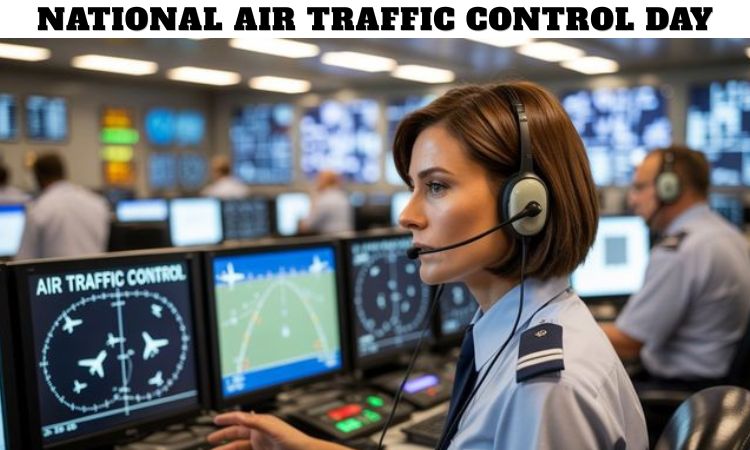
An air traffic controller’s day requires continuous attention, exceptional communication skills, and the ability to make split-second decisions.
Controllers typically work in one of several environments:
- Airport Control Towers
- Terminal Radar Approach Control Facilities
- Air Route Traffic Control Centers
- Oceanic Control Centers
Throughout each shift, controllers monitor multiple aircraft simultaneously while communicating with pilots and coordinating with adjacent facilities.
Their responsibilities include:
- Issuing taxi instructions
- Approving departures
- Sequencing arriving aircraft
- Adjusting flight routes
- Monitoring weather conditions
- Managing emergencies
- Preventing aircraft conflicts
- Maintaining efficient traffic flow
Even during quiet periods, controllers remain alert because aviation conditions can change within seconds.
Why Is Air Traffic Control One of the Most Demanding Careers?
Air traffic control consistently ranks among the world’s most demanding professions.
Controllers must maintain complete concentration for extended periods while managing dozens of aircraft simultaneously. Every instruction must be accurate, clear, and timely.
The profession requires:
- Exceptional multitasking skills
- Rapid problem-solving
- Outstanding communication abilities
- Excellent memory
- Strong spatial awareness
- Emotional composure under pressure
- Continuous situational awareness
Unlike many careers, even minor errors can have serious consequences. As a result, controllers undergo rigorous training, certification, and regular evaluations throughout their careers.
How Has Air Traffic Control Technology Changed Over Time?
The aviation industry has transformed dramatically since the first traffic control centers opened in 1936.
Early controllers depended on:
- Paper flight strips
- Telephone coordination
- Visual observations
- Basic radio communication
Today’s systems include:
- Digital radar displays
- Automatic Dependent Surveillance–Broadcast (ADS-B)
- Satellite navigation
- Computerized flight management
- Weather forecasting systems
- Conflict detection software
- Automated communication tools
- Real-time aircraft tracking
Despite technological advances, human judgment remains the most critical element in maintaining aviation safety.
Modern technology supports controllers but does not replace their expertise.
How Do Air Traffic Controllers Keep Flights Safe?
Safety remains the highest priority in aviation.
Controllers continuously monitor aircraft positions to ensure required separation standards are maintained. They adjust routes, assign altitudes, coordinate arrivals, and manage departures to avoid conflicts.
If unexpected situations arise—such as severe weather, equipment failures, medical emergencies, or runway closures—controllers rapidly develop alternative plans while maintaining safe aircraft spacing.
Their decisions are based on:
- Aircraft performance
- Weather conditions
- Airport capacity
- Airspace restrictions
- Pilot requests
- Traffic volume
- Emergency priorities
This constant coordination allows thousands of flights to operate safely every day.
What Challenges Do Air Traffic Controllers Face?
Modern aviation presents increasingly complex challenges.
Some of the biggest include:
- Growing passenger demand
- Increased aircraft movements
- Severe weather events
- Airspace congestion
- New aviation technologies
- Drone integration
- Military airspace coordination
- Cybersecurity concerns
Controllers must adapt quickly while maintaining flawless communication and safety standards.
Continuous professional training helps them stay prepared for evolving aviation environments.
How Is National Air Traffic Control Day Celebrated?
National Air Traffic Control Day offers numerous opportunities to recognize aviation professionals.
Many organizations celebrate by:
- Hosting educational aviation events
- Sharing controller appreciation messages
- Conducting airport tours
- Recognizing outstanding controllers
- Publishing aviation safety stories
- Organizing career awareness programs
- Highlighting technological innovations
- Thanking aviation personnel on social media
Schools, aviation museums, airlines, airports, and aviation organizations often use the day to educate the public about how air traffic control works.
Many travelers also take a moment to thank the professionals working behind the scenes whenever they fly.
What Are Some Interesting Facts About Air Traffic Control?
Air traffic control has a fascinating history filled with innovation.
Some interesting facts include:
- The first federal air traffic control centers opened on July 6, 1936.
- Controllers guide thousands of aircraft every hour worldwide.
- Commercial aviation operates 24 hours a day because controllers work around the clock.
- Controllers use standardized aviation phraseology to reduce misunderstandings.
- English serves as the international language of aviation communication.
- Modern radar can monitor aircraft hundreds of miles away.
- Satellite navigation continues improving flight efficiency and safety.
- Controllers regularly complete ongoing training throughout their careers.
- Many emergencies are resolved successfully because of controller expertise.
- Every safe landing reflects teamwork between pilots and air traffic controllers.
Why Should We Appreciate Air Traffic Controllers?
Passengers often remember pilots, flight attendants, or airlines after a journey, but air traffic controllers remain largely unseen despite their enormous responsibilities.
Every safe departure and landing represents countless decisions made by professionals working behind radar screens and communication systems.
Their dedication allows families to reunite, businesses to operate globally, emergency medical flights to reach patients, and cargo shipments to move efficiently across continents.
National Air Traffic Control Day reminds us that aviation safety depends on teamwork, professionalism, and constant vigilance.
Recognizing these individuals helps raise awareness about one of aviation’s most essential careers while encouraging future generations to consider joining this highly respected profession.
National Air Traffic Control Day on July 6 is a meaningful occasion to recognize the highly skilled professionals who keep the world’s airspace safe and efficient. From coordinating thousands of daily flights to responding calmly during emergencies, air traffic controllers perform one of the most demanding and essential roles in aviation. Their expertise, precision, and commitment allow millions of passengers to travel with confidence every day. By celebrating this observance, we honor the history of air traffic control, acknowledge its continued evolution through technology, and express gratitude to the dedicated individuals whose work makes modern air travel possible.
Frequently Asked Questions (FAQs)
1. When is National Air Traffic Control Day celebrated?
National Air Traffic Control Day is celebrated every year on July 6.
2. Why is National Air Traffic Control Day observed on July 6?
The date commemorates the opening of the first federal air traffic control centers in the United States on July 6, 1936.
3. What is the purpose of National Air Traffic Control Day?
The day honors air traffic controllers and recognizes their essential role in maintaining aviation safety and efficient flight operations.
4. What does an air traffic controller do?
Air traffic controllers manage aircraft on the ground and in the air, ensuring safe distances between flights while coordinating takeoffs, landings, and flight routes.
5. Are air traffic controllers responsible for passenger safety?
Yes. They play a vital role in ensuring aircraft operate safely by preventing collisions and managing air traffic efficiently.
6. Where do air traffic controllers work?
They work in airport control towers, terminal radar facilities, en-route control centers, and oceanic control centers.
7. Why is air traffic control considered a stressful profession?
Controllers make critical decisions under constant time pressure while managing multiple aircraft simultaneously, requiring intense focus and accuracy.
8. How has technology improved air traffic control?
Modern systems use radar, satellite navigation, digital communications, automation, and real-time tracking to improve safety and efficiency.
9. How can people celebrate National Air Traffic Control Day?
People can thank air traffic controllers, learn about aviation, visit aviation museums, attend educational events, or share appreciation messages online.
10. Why are air traffic controllers important to global aviation?
They ensure safe, organized, and efficient movement of aircraft, making commercial aviation possible worldwide.