

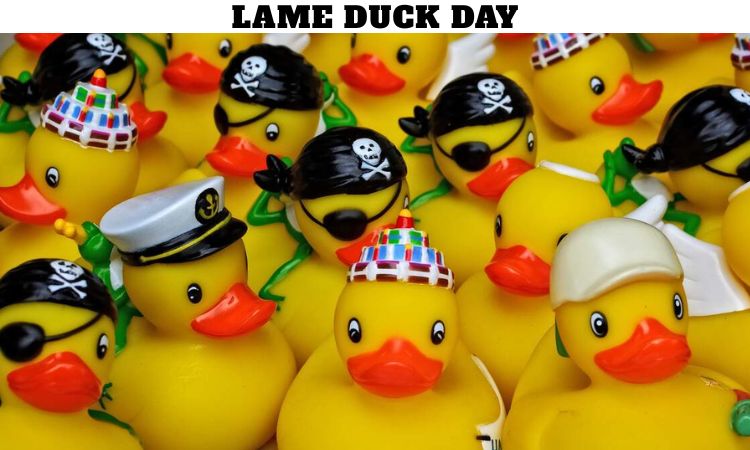
Lame Duck Day, observed every year on February 6, is a unique and somewhat humorous unofficial observance that highlights a serious political and social concept—the period of transition when an elected official’s term is coming to an end, but their successor has not yet taken office. This time frame is commonly known as the “lame duck period.”
The term “lame duck” is often used to describe leaders, politicians, or officials who have limited power or influence because their term is about to expire. While the phrase may sound amusing, the concept plays a crucial role in governance, democracy, and public accountability. Lame Duck Day encourages people to understand how political transitions work and why responsible leadership matters even at the end of a term.
What Does the Term “Lame Duck” Actually Mean?
The phrase “lame duck” originally referred to someone unable to meet financial obligations. Over time, it evolved into a political term describing elected officials whose successors have already been chosen, making them less influential.
In modern usage, a lame duck official:
Is nearing the end of their term
Will not be re-elected or is stepping down
Has reduced political leverage
May face limited cooperation from colleagues
Despite diminished authority, lame duck leaders still hold official power until their term officially ends, making this period both important and controversial.
How Did Lame Duck Day Come Into Existence?
Lame Duck Day does not have a single official founder, but it grew out of public interest in political systems and transitions of power. The day is closely associated with the 20th Amendment to the United States Constitution, which shortened the lame duck period for federal officials.
Before the amendment, elected leaders often remained in office for months after an election, even if they had lost. This delay sometimes led to poor decision-making or lack of accountability. Lame Duck Day serves as a reminder of why efficient transitions are essential in democratic systems.
Why Is February 6 Significant for Lame Duck Day?
February 6 is symbolically tied to the historical context of political transitions and constitutional reforms. While not a public holiday, the date is recognized to spark conversations around governance, leadership responsibility, and the consequences of delayed transitions.
The timing of Lame Duck Day also aligns well with post-election discussions in many countries, making it an ideal moment to reflect on political accountability and institutional integrity.
Why Is the Lame Duck Period Important in Politics?
The lame duck period can have a major impact on political decisions and public policy. Even though outgoing leaders may have limited influence, they still possess legal authority. This creates both opportunities and risks.
Key reasons the lame duck period matters include:
Decisions made during this time can have long-term consequences
Outgoing officials may act without electoral pressure
Important legislation may be rushed or stalled
Power transitions must remain stable and peaceful
Lame Duck Day highlights the importance of ethical leadership, even when political careers are coming to an end.
Can Lame Duck Leaders Still Make Important Decisions?
Yes, lame duck leaders often retain full legal authority until their term officially ends. This means they can:
Sign laws or executive orders
Make appointments
Approve budgets or policies
Influence international relations
However, their decisions may face scrutiny because they are no longer directly accountable to voters. Lame Duck Day encourages citizens to remain informed and vigilant during this phase of leadership.
How Does Lame Duck Day Promote Awareness Among Citizens?
Lame Duck Day is not just about politicians—it’s also about public awareness. The observance encourages citizens to:
Learn how political systems function
Understand election timelines
Recognize the importance of transparency
Stay engaged even after elections
By increasing awareness, Lame Duck Day strengthens democratic participation and reminds people that governance does not pause during transitions.
Is the Concept of Lame Duck Limited to Politics Only?
Interestingly, the term “lame duck” has expanded beyond politics. It is now used in:
Business: Executives nearing retirement or replacement
Sports: Coaches or managers finishing their final season
Organizations: Leaders whose terms are about to end
In all these cases, the concept reflects a decline in authority but not necessarily responsibility. Lame Duck Day can therefore be applied broadly to discussions about leadership transitions in many areas of life.
What Are Some Famous Examples of Lame Duck Periods in History?
History offers several notable examples of lame duck periods where decisions had lasting impacts. These moments often spark debate about whether outgoing leaders should make major changes.
Some common scenarios include:
Passing controversial laws after losing elections
Making last-minute appointments
Delaying critical decisions
Implementing long-term policies
Lame Duck Day encourages reflection on these historical lessons so future transitions can be handled more responsibly.
How Do Different Countries Handle Lame Duck Transitions?
Different nations manage lame duck periods in various ways. Some countries:
Have short transition timelines
Limit the powers of outgoing officials
Require caretaker governments
Mandate immediate transfers of authority
These systems aim to reduce uncertainty and maintain stability. Lame Duck Day provides an opportunity to compare global governance models and appreciate best practices.
What Are the Criticisms Associated With Lame Duck Leadership?
Lame duck leadership is often criticized for:
Reduced accountability
Potential misuse of power
Lack of public trust
Legislative gridlock
Critics argue that leaders with no future political stake may act irresponsibly. Supporters, however, believe experience and freedom from political pressure can lead to bold, necessary decisions.
Lame Duck Day invites balanced discussions around these opposing viewpoints.
How Can Citizens Stay Informed During a Lame Duck Period?
Active citizenship is essential during leadership transitions. People can stay informed by:
Following credible news sources
Understanding constitutional rules
Monitoring policy announcements
Participating in public discussions
Lame Duck Day reminds citizens that democracy is a continuous process, not just an election-day event.
What Lessons Does Lame Duck Day Teach About Leadership?
One of the key lessons of Lame Duck Day is that true leadership extends beyond ambition and elections. Ethical leaders:
Act responsibly until their final day
Prioritize public interest over personal legacy
Ensure smooth transitions
Respect democratic norms
The day emphasizes that leadership is measured not just by beginnings, but also by how responsibly one exits office.
How Can Lame Duck Day Be Observed or Celebrated?
While Lame Duck Day is not widely celebrated with events or ceremonies, people can observe it by:
Reading about political systems
Engaging in civic education
Hosting discussions or debates
Sharing informative content online
Educational institutions and political enthusiasts often use the day to analyze governance structures and leadership accountability.
Why Is Lame Duck Day Still Relevant in Modern Times?
In today’s fast-paced political environment, transitions of power happen under intense public scrutiny. Social media, 24-hour news cycles, and global connectivity make lame duck periods more visible than ever.
Lame Duck Day remains relevant because it:
Encourages transparency
Highlights democratic responsibility
Promotes informed citizenship
Reinforces the importance of smooth transitions
The challenges of modern governance make understanding these concepts more crucial than ever.
What Is the Overall Significance of Lame Duck Day on February 6?
Lame Duck Day is more than a quirky observance—it is a reminder of how democracy functions during times of change. It emphasizes that leadership responsibility does not disappear when influence fades.
By observing Lame Duck Day on February 6, individuals are encouraged to reflect on:
Political accountability
Ethical governance
Civic awareness
The importance of orderly transitions
Ultimately, the day serves as a powerful reminder that every phase of leadership matters, including the final one.
Conclusion
Lame Duck Day – February 6 highlights an often-overlooked yet critical phase of leadership and governance. Through question-based exploration, the observance helps citizens understand political transitions, accountability, and the enduring responsibilities of those in power. Whether viewed through a political, historical, or social lens, Lame Duck Day reinforces the idea that democracy thrives when leaders and citizens remain engaged until the very end.