
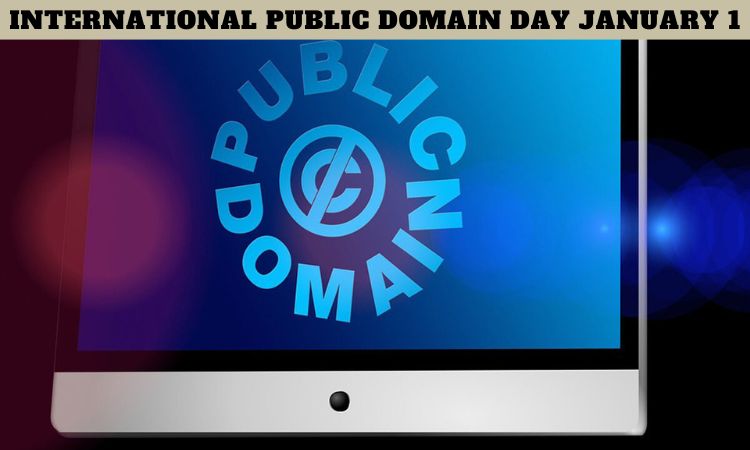
International Public Domain Day, observed every year on January 1, marks a significant moment in global cultural history. It is the day when creative works whose copyrights have expired officially enter the public domain, becoming freely available for anyone to use, share, adapt, and build upon. This day celebrates creativity, access to knowledge, and the idea that culture belongs to everyone.
As the new year begins, International Public Domain Day reminds us of the power of shared ideas, artistic freedom, and the importance of preserving humanity’s intellectual heritage for future generations.
What Is International Public Domain Day?
International Public Domain Day is celebrated annually on January 1, the day when copyright protections expire for many works created decades ago. Once these works enter the public domain, they can be freely accessed, reproduced, modified, and distributed without requiring permission or payment to copyright holders.
The concept of the public domain plays a vital role in encouraging creativity, education, innovation, and cultural growth. Literature, music, films, artworks, and scholarly writings that enter the public domain become part of a shared global library accessible to all.
Why January 1 Is Celebrated as International Public Domain Day?
Most copyright laws around the world calculate protection based on the creator’s life plus a set number of years—commonly 50, 70, or more. Since copyright expiration is typically measured at the end of a calendar year, January 1 becomes the official date when works legally enter the public domain.
This makes International Public Domain Day a symbolic celebration of creative freedom and open knowledge as the world welcomes newly liberated works into the public sphere.
The Importance of the Public Domain
The public domain is essential for cultural progress. It allows creators, educators, students, historians, and innovators to access and reuse materials without legal restrictions.
Key benefits include:
Preserving cultural heritage
Encouraging creativity and remix culture
Supporting education and research
Ensuring free access to knowledge
Without the public domain, creativity would stagnate, as artists and thinkers rely heavily on past works for inspiration.
Famous Works That Enter the Public Domain
Each year, new works by influential authors, artists, and composers become part of the public domain. These works often inspire modern adaptations, translations, reinterpretations, and educational projects.
Examples of public domain works include:
Classic novels
Historical documents
Silent films
Classical music compositions
Paintings and illustrations
The arrival of such works into the public domain often sparks renewed interest and creative reinterpretation across media.
International Public Domain Day and Creative Freedom
International Public Domain Day celebrates creative freedom by removing barriers that restrict access to knowledge. Artists, writers, filmmakers, and educators benefit greatly when they can freely use public domain works.
This openness allows:
Independent creators to innovate without legal fear
Students to access educational resources at no cost
Digital libraries to preserve historical materials
Cultural institutions to share global heritage
The public domain ensures that creativity remains a shared human right rather than a restricted privilege.
How Different Countries Celebrate International Public Domain Day?
Celebrations vary worldwide, but many organizations and institutions mark International Public Domain Day with educational events and digital initiatives.
Libraries and Archives
Libraries often release digitized collections of newly public domain works, making them freely available online.
Universities and Schools
Educational institutions host lectures, workshops, and discussions about copyright, creativity, and open access.
Museums and Cultural Organizations
Museums share high-resolution images of artworks and host exhibitions highlighting public domain collections.
Online Communities
Digital platforms celebrate by sharing newly public domain works, encouraging remixing and creative reuse.
The Role of Technology in Expanding the Public Domain
Technology has revolutionized access to public domain materials. Digital libraries, online archives, and open-source platforms make it easier than ever to explore cultural history.
Notable digital initiatives include:
Online libraries offering free books
Museums publishing open-access art collections
Educational websites sharing historical texts and images
Thanks to technology, International Public Domain Day now has a global reach, allowing people from all backgrounds to participate.
Public Domain and Education
Education thrives when knowledge is freely accessible. Teachers and students rely heavily on public domain materials for learning and creativity.
Benefits for education include:
Free textbooks and reading materials
Open educational resources (OER)
Enhanced research opportunities
Global access to academic knowledge
International Public Domain Day highlights the importance of knowledge equity and lifelong learning.
The Economic Value of the Public Domain
Beyond cultural benefits, the public domain also contributes to economic growth. Creative industries often use public domain content to develop new works, generating jobs and innovation.
Industries such as publishing, film, gaming, and design benefit from unrestricted access to cultural materials. This cycle of reuse and innovation fuels creativity while preserving history.
Public Domain vs Copyright: Understanding the Difference
Copyright protects original works for a limited time, granting creators exclusive rights. Once that period expires, the work enters the public domain.
Public domain works:
Require no permission to use
Can be shared freely
Can be modified or adapted
Belong to everyone
International Public Domain Day helps educate people about this transition and its importance for cultural sustainability.
Challenges Facing the Public Domain
Despite its importance, the public domain faces several challenges, including:
Extended copyright terms
Legal uncertainties
Digital restrictions
Limited public awareness
Advocates work to protect the public domain and ensure that knowledge remains accessible to future generations.
Why International Public Domain Day Matters Today?
In a digital world dominated by copyrighted content, International Public Domain Day reminds us of the value of shared culture. It promotes openness, creativity, and collaboration across borders.
As information becomes increasingly controlled, the public domain stands as a powerful symbol of intellectual freedom and equality.
How You Can Celebrate International Public Domain Day?
You don’t need to be a scholar or artist to celebrate. Here are some simple ways to participate:
Read a public domain book
Share public domain art online
Create something inspired by a classic work
Support open-access projects
Learn about copyright and intellectual freedom
Even small actions help preserve and promote cultural accessibility.
The Future of International Public Domain Day
As global awareness grows, International Public Domain Day continues to gain recognition. More organizations are embracing open access, and more creators are advocating for balanced copyright laws.
The future of the public domain depends on education, advocacy, and public participation. Protecting it ensures that creativity remains inclusive and accessible to all.
Conclusion
International Public Domain Day, observed on January 1, is a powerful celebration of shared human creativity, knowledge, and cultural heritage. It marks the moment when valuable works become freely available to inspire new generations of thinkers, artists, and learners.