
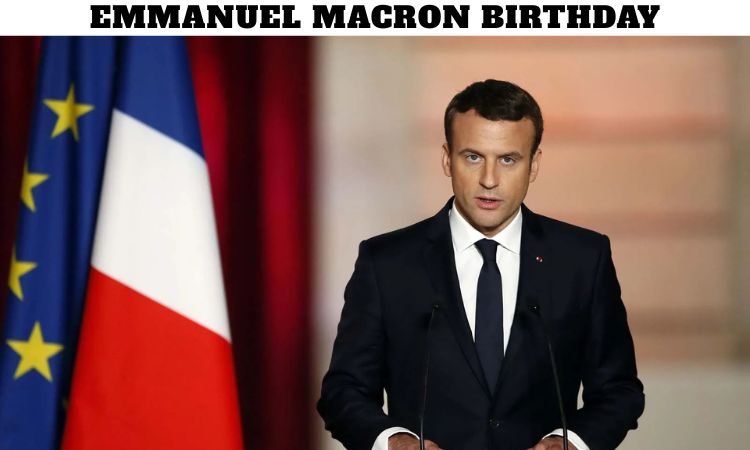
Emmanuel Macron’s birthday, celebrated every year on December 21, offers an opportunity to reflect on the life, achievements, and global influence of one of the most prominent political leaders of the 21st century. As the President of France and a central figure in European and international politics, Emmanuel Macron has shaped debates on democracy, economic reform, climate change, and global cooperation. His birthday is not merely a personal milestone but also a moment to examine his journey from a young intellectual to a world leader whose decisions resonate far beyond France’s borders.
Early Life and Background
Emmanuel Macron was born on December 21, 1977, in Amiens, a historic city in northern France. From an early age, he displayed remarkable intellectual curiosity and ambition. Raised in a family of medical professionals, Macron was encouraged to think critically and pursue academic excellence. His formative years were shaped by literature, philosophy, and music—interests that later contributed to his distinctive communication style and reflective approach to leadership.
Emmanuel Macron’s birthday coincides with the winter solstice, symbolically representing light amid darkness. Many commentators have drawn parallels between this date and his political persona—someone who often positions himself as a reformer during times of political uncertainty and social transition. His education at elite institutions such as Lycée Henri-IV and later the École nationale d’administration (ENA) prepared him for the upper echelons of French public service.
From Banker to Political Reformer
Before entering politics, Macron worked as an investment banker, gaining firsthand experience in the global financial system. This background gave him a unique perspective compared to traditional career politicians. When Emmanuel Macron’s birthday is discussed in political circles, it often sparks conversations about how quickly and decisively he rose through the ranks of French leadership.
His entry into government began as an economic advisor, followed by his role as Minister of the Economy. During this time, he became known for advocating market-friendly reforms while also emphasizing social responsibility. His ideas often challenged conventional political boundaries, blending elements of both progressive and liberal economic thought.
The Rise to the Presidency
Perhaps the most defining chapter associated with Emmanuel Macron’s birthday reflections is his unprecedented ascent to the French presidency. In 2017, at the age of 39, he became the youngest president in French history. His political movement, built rapidly and fueled by public desire for change, disrupted traditional party structures.
Macron’s presidency has been marked by ambition and controversy alike. From labor reforms and pension debates to education and innovation policies, his leadership style is often described as bold and decisive. Each year, Emmanuel Macron’s birthday serves as a marker of how much he has accomplished—and how much more he aims to achieve.
Leadership Style and Vision
One of the most discussed aspects when observing Emmanuel Macron’s birthday is his leadership philosophy. Macron positions himself as a centrist reformer, advocating for modernization while preserving core republican values. He emphasizes dialogue, European unity, and strategic autonomy.
His speeches often blend philosophical reflection with pragmatic policymaking. This intellectual tone sets him apart from many global leaders and reflects his academic background. Supporters praise his vision for a stronger Europe, while critics argue that his reforms can be too top-down. Nevertheless, Emmanuel Macron’s birthday becomes a moment for national and international observers to reassess his evolving leadership journey.
Emmanuel Macron and Europe
A significant part of Macron’s legacy is his commitment to the European Union. On Emmanuel Macron’s birthday, discussions frequently highlight his role as one of Europe’s most vocal advocates. He has consistently pushed for deeper integration, stronger defense cooperation, and a more unified economic strategy across EU member states.
At a time when populism and nationalism challenge European cohesion, Macron has positioned himself as a defender of multilateralism. His birthday is often marked by renewed debates about the future of Europe and France’s leadership role within it.
Global Influence and Diplomacy
Beyond Europe, Emmanuel Macron’s influence extends to the global stage. From climate summits to international security forums, he has actively engaged with world leaders to address shared challenges. Emmanuel Macron’s birthday is a reminder of his diplomatic efforts to balance national interests with global responsibilities.
He has played a key role in climate action initiatives, emphasizing the urgency of environmental protection. His advocacy for sustainable development and global cooperation has earned both praise and scrutiny. Still, his presence in global diplomacy remains significant and impactful.
Personal Life and Public Image
While Emmanuel Macron is primarily known for his political career, his personal life also attracts public interest. His marriage to Brigitte Macron has been widely discussed, symbolizing an unconventional yet steadfast partnership. On Emmanuel Macron’s birthday, social media and news outlets often highlight personal moments alongside political achievements, offering a more human perspective on the president.
Despite the pressures of office, Macron maintains interests in literature, music, and culture. These passions contribute to his image as a cultured and thoughtful leader, someone who values both intellect and action.
Challenges and Criticism
No discussion of Emmanuel Macron’s birthday would be complete without acknowledging the challenges he has faced. His presidency has seen protests, public dissent, and intense debates over economic and social reforms. Critics argue that some policies favor elites, while supporters contend that difficult reforms are necessary for long-term stability.
These contrasting views make Emmanuel Macron’s birthday a moment of reflection not only for admirers but also for critics. It underscores the complexities of leadership in a rapidly changing world.
Emmanuel Macron’s Birthday as a Symbolic Moment
Each year, Emmanuel Macron’s birthday on December 21 acts as a symbolic checkpoint. It invites reflection on France’s political direction, Europe’s future, and the evolving role of leadership in modern democracies. Birthdays often represent personal milestones, but for a head of state, they also become moments of public evaluation.
Supporters celebrate his resilience, intellect, and reformist agenda, while critics reassess the impact of his decisions. Either way, Emmanuel Macron’s birthday continues to capture attention both within France and internationally.
Legacy and the Road Ahead
As Emmanuel Macron continues his political journey, questions about his long-term legacy remain central. Will he be remembered as the leader who modernized France and strengthened Europe? Or will his tenure be defined by controversy and division? Emmanuel Macron’s birthday provides a natural pause to consider these questions.
Looking ahead, his leadership will likely continue to influence debates on democracy, technology, climate action, and global cooperation. The choices he makes in the coming years will shape how future generations remember his presidency.
Conclusion
In conclusion, Emmanuel Macron’s birthday on December 21 is far more than a date on the calendar. It is a moment to reflect on the life, leadership, and lasting influence of a figure who has reshaped French and European politics. From his early intellectual pursuits to his rise as a global leader, Emmanuel Macron’s journey is marked by ambition, resilience, and a willingness to challenge convention.