

What Is Beaufort Scale Day and Why Is It Celebrated on May 7?
Beaufort Scale Day, observed on May 7, is a significant occasion dedicated to recognizing the Beaufort Wind Scale. This system measures wind speed based on observable conditions at sea and on land. We celebrate this day to honor the scientific contributions that transformed how we interpret and respond to weather patterns, especially wind behavior. The day highlights the importance of accurate weather observation, maritime safety, and environmental awareness.
We observe Beaufort Scale Day as a tribute to the practical system that enables sailors, meteorologists, and environmental scientists to communicate wind intensity without relying solely on instruments. It also serves as a reminder of how traditional observation methods remain relevant in modern meteorology.
Who Invented the Beaufort Scale and What Was Its Purpose?
The Beaufort Scale was developed in 1805 by Sir Francis Beaufort, a British naval officer. We recognize his innovation as a turning point in maritime history because it introduced a standardized way to estimate wind speed using visible signs, such as wave patterns and the movement of objects.
The original purpose of the Beaufort Scale was to help naval officers assess wind conditions more accurately during voyages. Before its invention, wind descriptions were subjective and inconsistent. Beaufort’s system brought uniformity and clarity, which significantly improved navigation safety and communication among sailors.
How Does the Beaufort Scale Work in Measuring Wind Speed?
The Beaufort Scale works by categorizing wind into 13 levels, ranging from calm (0) to hurricane-force winds (12). Each level corresponds to specific wind speeds and observable effects on the environment.
For example:
- Level 0 (Calm): Smoke rises vertically; no wind movement.
- Level 3 (Gentle Breeze): Leaves rustle and small twigs move.
- Level 6 (Strong Breeze): Large branches sway, and umbrellas become difficult to use.
- Level 12 (Hurricane): Severe destruction occurs with widespread damage.
We rely on these observable cues to estimate wind strength even when instruments are unavailable, making the scale highly practical in real-world scenarios.
Why Is the Beaufort Scale Still Relevant in Modern Meteorology?
Despite technological advancements in weather forecasting, the Beaufort Scale remains relevant because it provides a visual and experiential understanding of wind conditions. We use advanced instruments such as anemometers to measure wind speed precisely, but the Beaufort Scale complements these tools by offering immediate, observable indicators.
Meteorologists often use Beaufort descriptions in weather reports to help the general public understand wind intensity more intuitively. Additionally, the scale is widely used in maritime operations, aviation, and outdoor safety planning.
How Has the Beaufort Scale Influenced Maritime Safety?
The Beaufort Scale has played a crucial role in enhancing maritime safety. We depend on its classifications to determine safe sailing conditions, plan routes, and avoid hazardous weather.
By providing a clear framework for understanding wind behavior, the scale helps sailors anticipate wave patterns, assess risks, and make informed decisions. It has also contributed to the development of international maritime standards, ensuring consistent communication across different regions and languages.
What Are the Different Levels of the Beaufort Scale?
The Beaufort Scale consists of 13 levels, each representing a range of wind speeds and associated environmental effects:
- 0 – Calm
- 1 – Light Air
- 2 – Light Breeze
- 3 – Gentle Breeze
- 4 – Moderate Breeze
- 5 – Fresh Breeze
- 6 – Strong Breeze
- 7 – Near Gale
- 8 – Gale
- 9 – Strong Gale
- 10 – Storm
- 11 – Violent Storm
- 12 – Hurricane
We use these levels to interpret wind conditions accurately, whether at sea or on land. Each level provides detailed descriptions that help identify the intensity of wind without requiring complex equipment.
How Do We Celebrate Beaufort Scale Day Around the World?
We celebrate Beaufort Scale Day through educational activities, awareness campaigns, and weather-related discussions. Schools and institutions organize workshops to teach students about wind measurement and meteorology.
Meteorological departments often share informative content explaining the Beaufort Scale and its applications. Maritime organizations highlight their importance in navigation and safety. Individuals interested in weather science use the day to deepen their understanding of atmospheric dynamics.
Why Is Wind Measurement Important in Daily Life?
Wind measurement plays a vital role in various aspects of daily life. We rely on accurate wind data for weather forecasting, aviation safety, marine navigation, agriculture, and renewable energy production.
For instance, wind speed affects flight operations, determines sailing conditions, and influences crop management. In renewable energy, wind turbines depend on precise wind measurements to generate electricity efficiently. The Beaufort Scale contributes to this understanding by offering a practical method to assess wind strength.
How Can Individuals Use the Beaufort Scale in Everyday Situations?
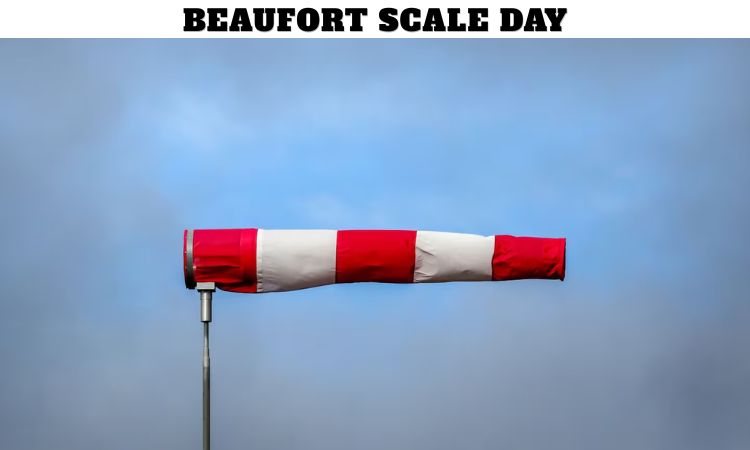
We can use the Beaufort Scale in everyday life by observing environmental cues. For example, we can estimate wind speed by looking at how trees move, how flags flutter, or how waves form on water bodies.
Outdoor enthusiasts, such as hikers and sailors, use the scale to assess safety conditions before engaging in activities. It also helps us prepare for changing weather, ensuring better planning and risk management.
What Is the Future of Wind Measurement and the Role of the Beaufort Scale?
The future of wind measurement lies in advanced technologies, including satellite data, AI-driven forecasting, and real-time monitoring systems. However, the Beaufort Scale will continue to play a foundational role due to its simplicity and reliability.
We see it as a bridge between traditional observation and modern science. Its educational value remains significant, helping new generations understand the basics of wind behavior before exploring more complex systems.
Why Beaufort Scale Day Matters More Than Ever
Beaufort Scale Day is more than a historical observance; it is a celebration of scientific innovation, practical knowledge, and global safety. We recognize the enduring relevance of the Beaufort Scale in a world increasingly dependent on accurate weather data.
By understanding wind patterns through this scale, we empower ourselves to make informed decisions, enhance safety, and appreciate the natural forces that shape our environment. Observing this day reminds us of the importance of combining tradition with technology for a better future.
Frequently Asked Questions (FAQs)
1. What is Beaufort Scale Day?
Beaufort Scale Day is observed on May 7 to honor the Beaufort Wind Scale and its contribution to weather measurement and maritime safety.
2. Who created the Beaufort Scale?
Sir Francis Beaufort, a British naval officer, developed the scale in 1805.
3. How many levels are in the Beaufort Scale?
The scale has 13 levels, ranging from calm to hurricane-force winds.
4. Why is the Beaufort Scale important?
It provides a standardized way to estimate wind speed based on observable conditions.
5. Is the Beaufort Scale still used today?
Yes, it is widely used in meteorology, maritime navigation, and education.
6. What is the highest level on the Beaufort Scale?
Level 12, which represents hurricane-force winds.
7. Can the Beaufort Scale be used without instruments?
Yes, it relies on visual observations, making it practical without equipment.
8. How does the Beaufort Scale help sailors?
It helps them assess wind conditions and make safe navigation decisions.
9. What industries use the Beaufort Scale?
Meteorology, aviation, maritime, agriculture, and renewable energy sectors use it.
10. How can I learn the Beaufort Scale easily?
By studying its levels and observing real-world wind effects on nature.