

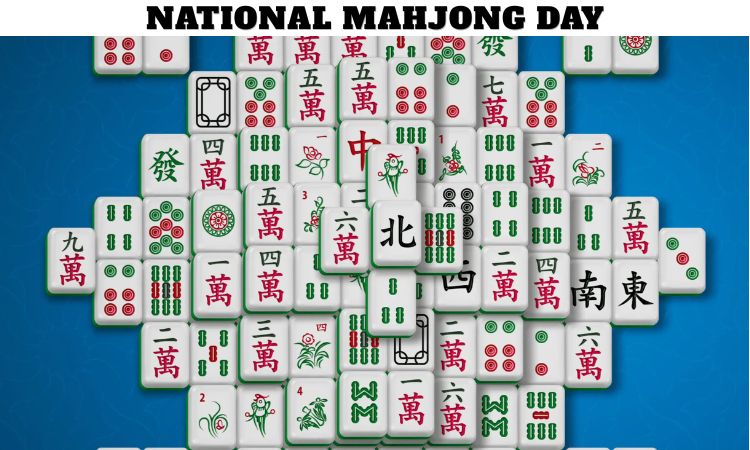
Every year on April 30, enthusiasts across generations celebrate National Mahjong Day, a tribute to one of the world’s most enduring and intellectually engaging games. Mahjong is more than a pastime. It is a cultural treasure, a strategic challenge, and a social ritual that has united families, friends, and communities for centuries. Originating in China and spreading globally, Mahjong has evolved into a beloved game that blends skill, luck, memory, and interpersonal connection.
National Mahjong Day recognizes the beauty of this iconic tile-based game while honoring its rich history, global influence, and continuing popularity in modern society. Whether played casually at family gatherings or competitively in organized tournaments, Mahjong remains a symbol of tradition and thoughtful entertainment.
What Is National Mahjong Day, and Why Is It Celebrated on April 30?
National Mahjong Day is an annual celebration dedicated to appreciating Mahjong’s historical roots, cultural significance, and widespread appeal. Observed every April 30, the day encourages players of all skill levels to engage with the game, teach new participants, and celebrate the traditions that Mahjong represents.
This observance is not limited to one country or one style of play. Instead, it embraces Mahjong’s international legacy, from Chinese classical Mahjong to American, Japanese Riichi, and other regional adaptations.
April 30 serves as a reminder that Mahjong has transcended borders, becoming a global game that preserves heritage while continuously evolving.
How Did Mahjong Originate and Become a Global Phenomenon?
Mahjong is widely believed to have originated in China during the Qing Dynasty in the 19th century, though some historians suggest earlier roots. Initially enjoyed by the Chinese elite, the game rapidly spread across social classes due to its strategic complexity and communal appeal.
By the early 20th century, Mahjong had expanded internationally, especially to the United States, Japan, and Southeast Asia. Each region adapted the game’s rules and styles, contributing to Mahjong’s diverse global identity.
Its enduring popularity stems from its perfect combination of:
- Strategy
- Observation
- Memory
- Probability
- Social interaction
Today, Mahjong is played both traditionally with physical tiles and digitally through apps and online platforms.
What Makes Mahjong Different From Other Strategy Games?
Mahjong stands apart because it combines strategic planning with elements of chance and cultural symbolism. Unlike many board games, Mahjong requires players to build winning hands through tile collection while reading opponents’ moves and adapting quickly.
The game’s uniqueness lies in:
- Pattern recognition
- Tactical discarding
- Defensive strategy
- Probability assessment
- Cultural symbolism of tiles
Every round is dynamic, requiring both patience and quick decision-making. This complexity has helped Mahjong remain relevant for generations.
Why Is Mahjong Deeply Connected to Culture and Tradition?
Mahjong is not simply a game; it is a cultural institution. In many households, Mahjong gatherings symbolize family unity, celebration, and tradition. During festivals and holidays, families often play together, strengthening relationships while preserving heritage.
The tiles themselves often carry symbolic meanings, including dragons, winds, flowers, and seasons. These elements reflect philosophical and cultural concepts rooted in Chinese history.
As Mahjong spread globally, it retained its traditional core while adapting to local customs, making it both culturally specific and universally accessible.
How Does Mahjong Improve Cognitive Skills and Mental Agility?
Mahjong is often praised for its mental benefits because it demands concentration, memory, and analytical thinking.
Regular Mahjong play may support:
- Improved pattern recognition
- Sharper memory
- Enhanced strategic planning
- Faster decision-making
- Social engagement
Many players value Mahjong not only as entertainment but also as an intellectually stimulating activity that promotes lifelong mental fitness.
Its strategic depth can be compared to chess, while its social nature adds an extra dimension of enjoyment.
What Are the Different Types of Mahjong Played Worldwide?
Mahjong has evolved into several popular variations, each with unique rules and strategies:
- Chinese Classical Mahjong
- American Mahjong
- Japanese Riichi Mahjong
- Hong Kong Mahjong
- Taiwanese Mahjong
Each variation offers different scoring systems, tile combinations, and gameplay styles, ensuring that Mahjong appeals to diverse audiences.
This adaptability has allowed Mahjong to flourish globally while maintaining its traditional identity.
Why Is Mahjong a Powerful Social Experience?
One of Mahjong’s greatest strengths is its ability to bring people together. Traditionally played with four players, Mahjong encourages communication, observation, and shared experiences.
Social benefits include:
- Strengthening family bonds
- Building friendships
- Encouraging intergenerational interaction
- Preserving cultural traditions
- Fostering respectful competition
For many players, Mahjong is as much about connection as it is about winning.
National Mahjong Day celebrates this social legacy by encouraging people to gather around the table.
How Can Beginners Learn Mahjong Successfully?
Although Mahjong may initially seem complex, beginners can learn effectively by focusing on basic concepts:
- Tile categories
- Winning hands
- Sequence building
- Pair matching
- Turn order
Many beginners start through digital apps, tutorials, or family instruction before transitioning to competitive play.
National Mahjong Day is an excellent opportunity for experienced players to introduce newcomers to the game and share its traditions.
How Has Digital Technology Expanded Mahjong’s Popularity?
Modern technology has introduced Mahjong to younger generations through mobile apps, online tournaments, and virtual communities. Digital Mahjong allows players worldwide to practice, compete, and connect regardless of location.
This digital transformation has:
- Expanded accessibility
- Preserved interest among younger players
- Increased global awareness
- Enabled international competition
Despite technological evolution, traditional face-to-face Mahjong remains cherished for its tactile and social richness.
How Can We Celebrate National Mahjong Day Meaningfully?
National Mahjong Day can be celebrated in numerous engaging ways:
- Host a Mahjong game night
- Learn a new variation
- Teach friends or family
- Join online Mahjong communities
- Explore Mahjong history
- Purchase traditional Mahjong sets
- Attend local tournaments
Celebration can be educational, social, or competitive, depending on personal interest.
Why Does National Mahjong Day Continue to Grow in Importance?
As people seek meaningful traditions and intellectually rewarding hobbies, Mahjong continues to thrive. It bridges generations, cultures, and communities while preserving history and encouraging mental sharpness.
National Mahjong Day reminds us that some games transcend entertainment to become symbols of resilience, heritage, and human connection.
On April 30, we celebrate Mahjong not just as a game, but as a living tradition that continues to inspire strategy, culture, and togetherness around the world.
Frequently Asked Questions (FAQs)
1. When is National Mahjong Day celebrated?
National Mahjong Day is celebrated annually on April 30.
2. Where did Mahjong originate?
Mahjong originated in China, likely during the Qing Dynasty.
3. How many players are typically needed for Mahjong?
Mahjong is usually played with four players.
4. Is Mahjong based on luck or skill?
Mahjong combines both luck and strategic skill.
5. What are Mahjong tiles made of?
Traditional tiles were made from bone and bamboo, while modern sets often use acrylic or plastic.
6. Can beginners learn Mahjong easily?
Yes, with practice and guidance, beginners can learn Mahjong successfully.
7. Are there different versions of Mahjong?
Yes, including Chinese, American, Japanese, Riichi, and Hong Kong styles.
8. Why is Mahjong culturally significant?
It symbolizes tradition, family bonding, and strategic thinking.
9. Is Mahjong available online?
Yes, Mahjong is widely available through apps and online gaming platforms.
10. How can people celebrate National Mahjong Day?
They can play Mahjong, learn its history, teach others, or join community events.