

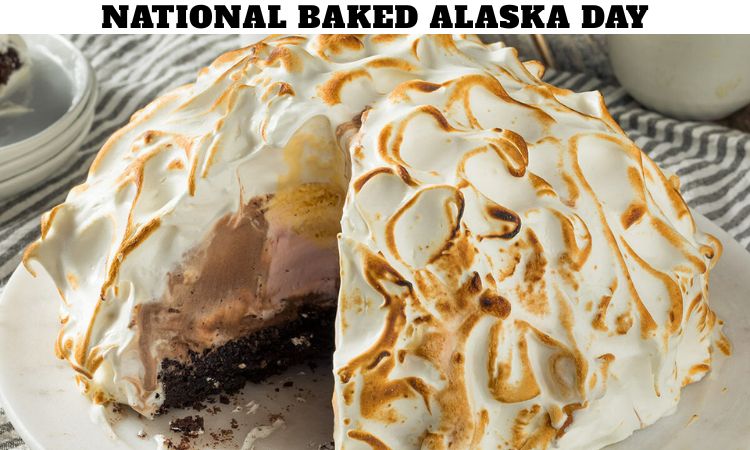
We proudly celebrate National Baked Alaska Day on February 1, honoring one of the most fascinating and visually stunning desserts in culinary history. Baked Alaska is not just a sweet treat; it is a masterful combination of science, art, and gastronomy. This iconic dessert, featuring ice cream layered on cake and enveloped in toasted meringue, has captivated dessert lovers for generations. On this special day, we recognize its rich heritage, unique preparation, and enduring popularity across the world.
What Is Baked Alaska?
Baked Alaska is a classic dessert composed of three essential elements:
A soft sponge or pound cake base
A thick layer of ice cream
A dramatic coating of fluffy meringue, browned to perfection
The dessert is briefly baked or torched at high heat, creating a stunning contrast between the warm, crisp exterior and the cold, creamy interior. This temperature paradox is what makes Baked Alaska legendary.
The History of Baked Alaska
The origins of Baked Alaska trace back to the 19th century, when advances in food preservation and refrigeration inspired culinary innovation. The dessert gained prominence in 1867, when it was reportedly created to celebrate the United States’ acquisition of Alaska. The contrast between hot meringue and ice cream symbolized the dramatic temperature extremes of the region.
Over time, Baked Alaska became a staple in fine dining restaurants, luxury hotels, and celebratory banquets, solidifying its reputation as a dessert of elegance and ingenuity.
Why February 1 Is National Baked Alaska Day?
February 1 provides the perfect opportunity to indulge in a dessert that celebrates contrast—hot and cold, light and rich, classic and theatrical. National Baked Alaska Day encourages us to revisit this timeless recipe, appreciate its craftsmanship, and enjoy a dessert that never fails to impress.
The Culinary Science Behind Baked Alaska
One of the most fascinating aspects of Baked Alaska is the science that makes it possible. The secret lies in meringue, which acts as an insulating barrier. Whipped egg whites trap air, creating a structure that slows heat transfer. When baked briefly at high temperatures, the meringue browns while the ice cream remains frozen inside.
This brilliant technique demonstrates how culinary science and creativity merge to create a dessert that defies expectations.
Classic Ingredients Used in Baked Alaska
Traditional Baked Alaska recipes rely on high-quality ingredients to achieve the perfect balance of flavor and texture:
Sponge cake or pound cake for a sturdy base
Premium ice cream, often vanilla, chocolate, or strawberry
Egg whites and sugar to create glossy, stable meringue
Optional flavorings such as vanilla extract or cream of tartar
Each component plays a critical role in ensuring the dessert’s signature structure and taste.
Popular Variations of Baked Alaska
While the classic version remains beloved, modern chefs have reimagined Baked Alaska with innovative twists:
Chocolate Baked Alaska with brownie bases
Fruit-infused ice creams like mango, raspberry, or passion fruit
Mini Baked Alaskas for individual servings
Alcohol-flambéed Baked Alaska, adding drama and depth
These variations showcase the dessert’s versatility and global appeal.
How Baked Alaska Became a Symbol of Celebration?
Throughout history, Baked Alaska has been associated with luxury, celebration, and spectacle. Its dramatic presentation—often baked or flambéed tableside—makes it a centerpiece dessert for holidays, weddings, anniversaries, and fine-dining experiences.
National Baked Alaska Day reinforces this celebratory spirit, inviting everyone to enjoy a dessert that transforms any occasion into a memorable event.
Baked Alaska in Modern Culinary Culture
In today’s culinary world, Baked Alaska continues to inspire chefs and home bakers alike. It frequently appears in culinary competitions, cooking shows, and gourmet menus, admired for its technical challenge and visual impact.
The dessert has also found new life on social media, where its dramatic reveal—cutting into a warm exterior to expose ice cream—captures instant attention.
How We Can Celebrate National Baked Alaska Day?
We can celebrate National Baked Alaska Day in many meaningful and delicious ways:
Preparing a homemade Baked Alaska using classic or modern recipes
Visiting a bakery or restaurant that serves this iconic dessert
Sharing the history and joy of Baked Alaska with family and friends
Experimenting with unique flavors and presentations
This day is about appreciation, indulgence, and honoring culinary craftsmanship.
Why Baked Alaska Remains Timeless?
The enduring appeal of Baked Alaska lies in its contrast, creativity, and elegance. Few desserts offer such a dramatic sensory experience—warm meringue, cold ice cream, soft cake—all in one bite. Its ability to balance complexity with comfort ensures its place as a timeless classic.
The Global Appeal of Baked Alaska
Although rooted in Western culinary traditions, Baked Alaska has gained international popularity. Chefs around the world adapt the dessert using local flavors, regional cakes, and unique ice cream varieties, making it a truly global indulgence.
Conclusion: Honoring National Baked Alaska Day
National Baked Alaska Day is more than a celebration of a dessert—it is a tribute to innovation, tradition, and culinary excellence. By honoring this iconic creation, we preserve a piece of gastronomic history while continuing to inspire creativity in modern kitchens.